
Blue Earth Capital achieved over $100 million in commitments for the first close of its dedicated impact secondaries strategy, announced in mid-January 2026.
This milestone draws participation from prominent institutional investors, including anchor investor Proparco, the Ursimone Wietlisbach Foundation, and Germany’s Stella Foundation, signalling growing confidence in structured liquidity solutions within the impact investing ecosystem.

Blue Earth Capital’s focus on innovative impact strategies across environmental and social sectors.
The Switzerland-based specialist impact investor targets high-quality secondary opportunities globally, spanning developed and emerging markets.
The strategy emphasises sectors such as climate action, circular economy, financial inclusion, healthcare, and education, providing exposure to seasoned, mission-driven assets while addressing liquidity constraints that have historically deterred broader institutional engagement.
Addressing Liquidity Challenges in Impact Investing
Impact investing has matured significantly, yet persistent illiquidity in primary commitments,often involving long holding periods and limited exit options restricts participation from risk-sensitive institutions.
Secondary markets offer a pathway to mitigate these barriers by enabling earlier liquidity, reduced duration risk, and access to mature portfolios with demonstrated impact and performance.
Blue Earth Capital’s dedicated strategy builds on its experience in secondaries since 2021, positioning the firm to catalyse market development.
By facilitating transactions that provide sellers with capital recycling opportunities and buyers with discounted, diversified exposure, the approach enhances overall market efficiency and investor confidence.
Nicolas Muller, Head of Private Equity Partnerships at Blue Earth Capital, stated, “The first close of our dedicated impact secondaries offering marks an important milestone, underscoring our role as a catalytic player in addressing a key challenge in impact investing: liquidity.”
Institutional Appeal and Risk Mitigation Features
The commitments reflect appeal to sophisticated allocators seeking to incorporate impact without excessive exposure to blind-pool or concentration risks. Secondary investments deliver exposure to vetted assets, often at attractive pricing, while shortening time to distributions and supporting efficient portfolio construction.

Illustration of private equity secondaries as a mechanism for liquidity and portfolio rebalancing in institutional strategies.
A dedicated emerging markets sleeve, supported by Proparco through an EU-backed first-loss tranche via the EFSD+, enhances risk-adjusted returns in higher-risk regions such as Africa and India.
READ ALSO:How BII’s Entry Strengthens Inside Capital’s Institutional Backing
This structure mobilises additional private capital, lowers perceived barriers, and encourages participation from institutions cautious about frontier exposures.
Proparco CEO Françoise Lombard commented, “As an anchor investor, our objective is to enhance market liquidity, strengthen exit pathways, and reinforce long-term investor confidence in emerging regions.”
Broader Implications for Scaling Impact Capital
By introducing reliable liquidity mechanisms, secondary strategies like Blue Earth’s can unlock capital recycling, thus enabling existing impact investors to redeploy proceeds into new opportunities and attract new entrants deterred by traditional illiquidity.
This encourages greater scale, deeper market infrastructure, and sustained support for mission-aligned enterprises addressing global challenges.
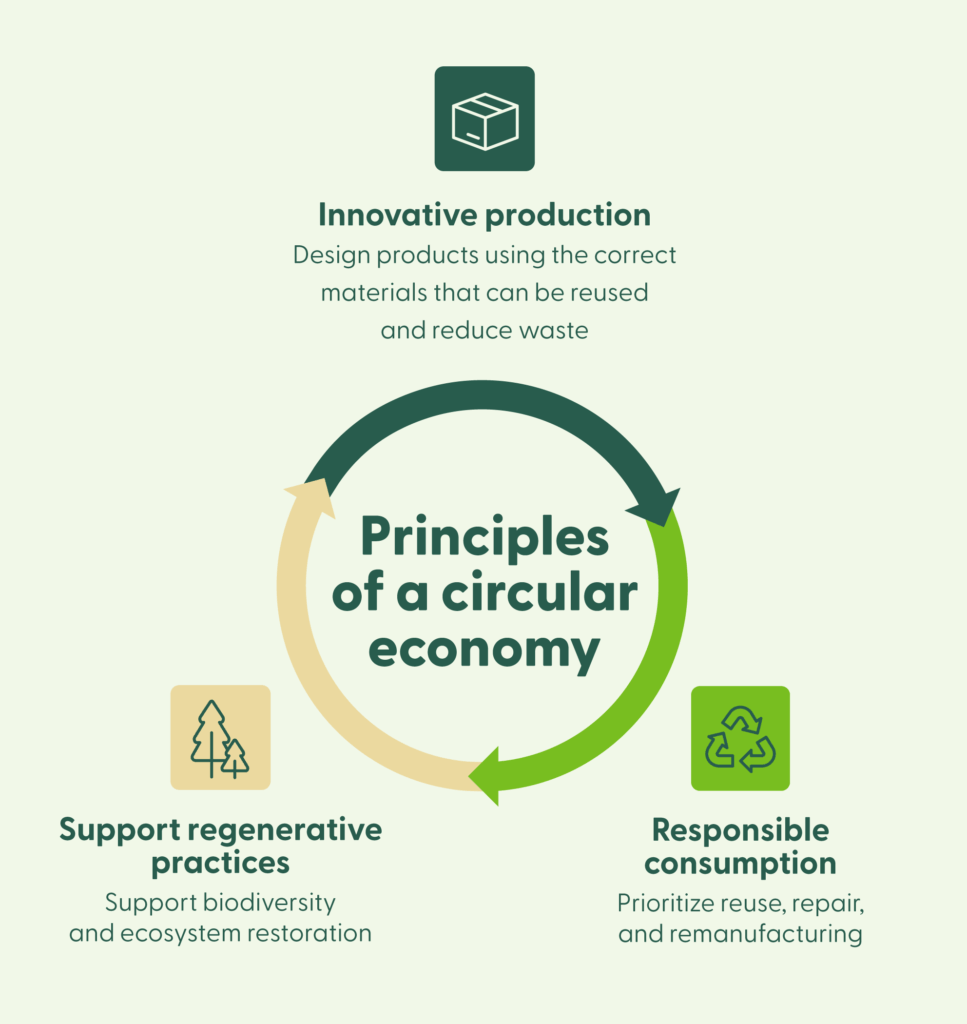
Circular economy principles, representing one of the high-impact sectors targeted by the strategy.
Early transactions, including a GP-led continuation vehicle in organic waste management and LP-led stakes in impact funds across India and Africa, illustrate the strategy’s practical application in delivering both financial returns and measurable outcomes.
Blue Earth Capital’s successful first close exceeding $100 million highlights the potential of impact secondaries to broaden institutional involvement by resolving liquidity hurdles and improving risk profiles.
As the impact investing landscape evolves, such innovations promote efficiency, inclusivity, and capital flow toward high-priority sectors worldwide.
As of January 19, 2026, this development reinforces the role of structured secondary markets in scaling sustainable finance.
For the most current information, consult official sources from Blue Earth Capital and its partner institutions.
Blue Earth Capital Overview
Blue Earth Capital manages a significant impact-focused portfolio, with Blue Earth Capital AUM estimated at over USD 1 billion, and operates as part of the broader Blue Earth Capital Partners Group ecosystem with strong historical links to Partners Group.
Founded by experienced investment professionals, discussions around Blue earth capital founder and firm culture frequently appear on forums such as Blue Earth Capital WSO, particularly among candidates exploring Blue Earth Capital careers in private equity, private credit, and impact investing.
Ronnie Paul is a seasoned writer and analyst with a prolific portfolio of over 1,000 published articles, specialising in fintech, cryptocurrency, climate change, and digital finance at Africa Digest News.


Leave a Reply