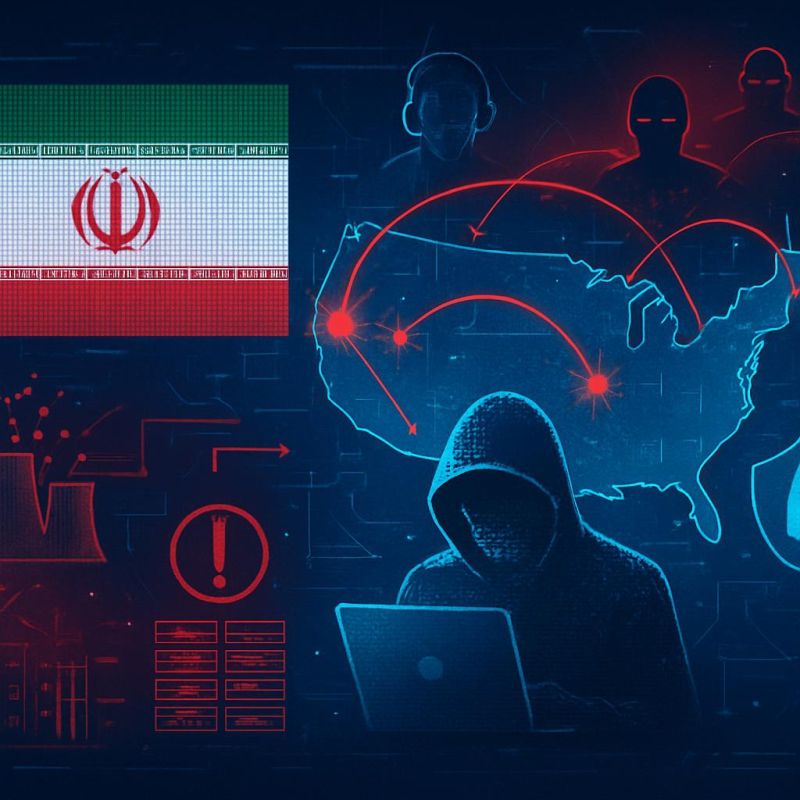
The intensification of regional hostilities in early 2026 has extended beyond physical energy infrastructure into the digital domain.
Between January and mid-March 2026, multiple cyber incidents attributed to Iranian proxy groups targeted cloud facilities operated by major hyperscalers in the United Arab Emirates and Bahrain.
Key events include:
- 14 January 2026: Distributed denial-of-service (DDoS) attacks on AWS availability zones in the UAE, causing intermittent outages lasting up to 11 hours.
- 22 February 2026: Sophisticated ransomware and data exfiltration attempts on Microsoft Azure infrastructure in Bahrain, disrupting payment processing for several regional banks.
- 5 March 2026: Coordinated probing of Oracle Cloud regions supporting fintech applications, resulting in temporary service degradation for cross-border payment platforms.
These incidents have directly affected banking, payments, and fintech operations, highlighting the vulnerability of shared cloud infrastructure in geopolitically sensitive locations.
The attacks have forced financial institutions to reassess their reliance on third-party hyperscalers and accelerated discussions around sovereign cloud strategies.
Analysis: Heightened State-Sponsored Threats and Resilient Cybersecurity Spending
The 2026 incidents reflect a broader shift toward state-sponsored cyber operations aimed at disrupting economic activity rather than solely targeting military assets.
Iranian-linked groups have demonstrated increasing sophistication in supply-chain attacks, ransomware deployment, and infrastructure sabotage, often using proxies to maintain plausible deniability.
Despite the overall slowdown in Middle East and Africa (MEA) IT spending projected by IDC to fall to 3–4% growth in a short-conflict scenario, cybersecurity budgets have remained resilient.
Enterprises and financial institutions are prioritising defensive measures, with spending on threat detection, zero-trust architectures, and incident response expected to grow 12–18% year-on-year in 2026.
This divergence suggests a strategic recalibration: while general IT projects face deferral, security investments are viewed as non-discretionary to protect core revenue streams and customer data.
The combination of physical strikes on energy assets and cyber operations against cloud infrastructure creates a hybrid threat environment that amplifies operational risk for fintech platforms operating across borders.
Case Studies: Impacts on Hyperscalers’ AI/Fintech Projects and Proxy Attacks on Fuel/Finance Systems
Two categories of impact have emerged:
Disruption to Hyperscalers’ AI and Fintech Projects
AWS and Azure facilities supporting AI training workloads and real-time payment processing experienced partial outages.
One major regional neobank reported a 48-hour delay in transaction reconciliation, affecting corporate clients in the UAE and Saudi Arabia. Several AI-driven credit-scoring and fraud-detection models hosted on affected platforms required temporary failover to secondary regions, increasing latency and operational costs.
Proxy Attacks on Fuel and Finance Systems
Iranian-backed actors have targeted supervisory control and data acquisition (SCADA) systems at refineries and fuel distribution networks, as well as payment gateways linked to energy trading platforms.
In one documented case, a proxy group compromised a regional fuel-trading fintech’s API layer, temporarily halting settlement for petroleum imports and causing knock-on liquidity pressure on downstream importers in East Africa.
READ ALSO:MENA Fintech Boom Under Pressure: Will the 2026 Conflict Delay Deals or Drive Consolidations?
These examples illustrate how cyber operations can sweep across physical energy infrastructure and digital financial systems, creating systemic risk for regional economies.
Recommendations: Adoption of Zero-Trust Models and Insurance
To mitigate escalating threats, financial institutions and fintech platforms should prioritise the following measures:
- Zero-Trust Architectures: Implement continuous verification of users, devices, and workloads regardless of location. Segment critical payment and data flows to limit lateral movement in the event of a breach.
- Multi-Region and Sovereign Cloud Strategies: Diversify workloads across geographically dispersed availability zones and, where feasible, sovereign cloud environments to reduce single-point-of-failure exposure.
- Cyber Insurance Expansion: Secure policies that explicitly cover ransomware, business interruption, and cyber-physical attacks, including those linked to state-sponsored activity. Insurers are increasingly offering parametric products tied to outage duration.
- Collaborative Threat Intelligence: Participate in sector-specific information-sharing platforms (e.g., FS-ISAC or regional CERTs) to improve early detection of proxy campaigns.
Looking Ahead
The 2026 Iran conflict has demonstrated that cyber operations targeting cloud infrastructure and critical energy systems can produce rapid and cascading effects on fintech operations.
While cybersecurity spending has proven resilient, the combination of physical disruptions and digital attacks is slowing innovation cycles and raising compliance costs.
Organisations that proactively adopt zero-trust principles, diversify infrastructure, and secure comprehensive insurance coverage will be better positioned to maintain continuity and capitalise on long-term digital growth opportunities in the region.
As geopolitical tensions persist, resilience in payments and financial infrastructure will increasingly determine competitive advantage.
Ronnie Paul is a seasoned writer and analyst with a prolific portfolio of over 1,000 published articles, specialising in fintech, cryptocurrency, climate change, and digital finance at Africa Digest News.


Leave a Reply