The continent that gave the world M-Pesa, pioneered mobile money adoption, and demonstrated that financial inclusion could be achieved without physical branch networks is now at the frontier of a second transformation: the application of artificial intelligence to banking, payments, credit, and financial infrastructure at scale.
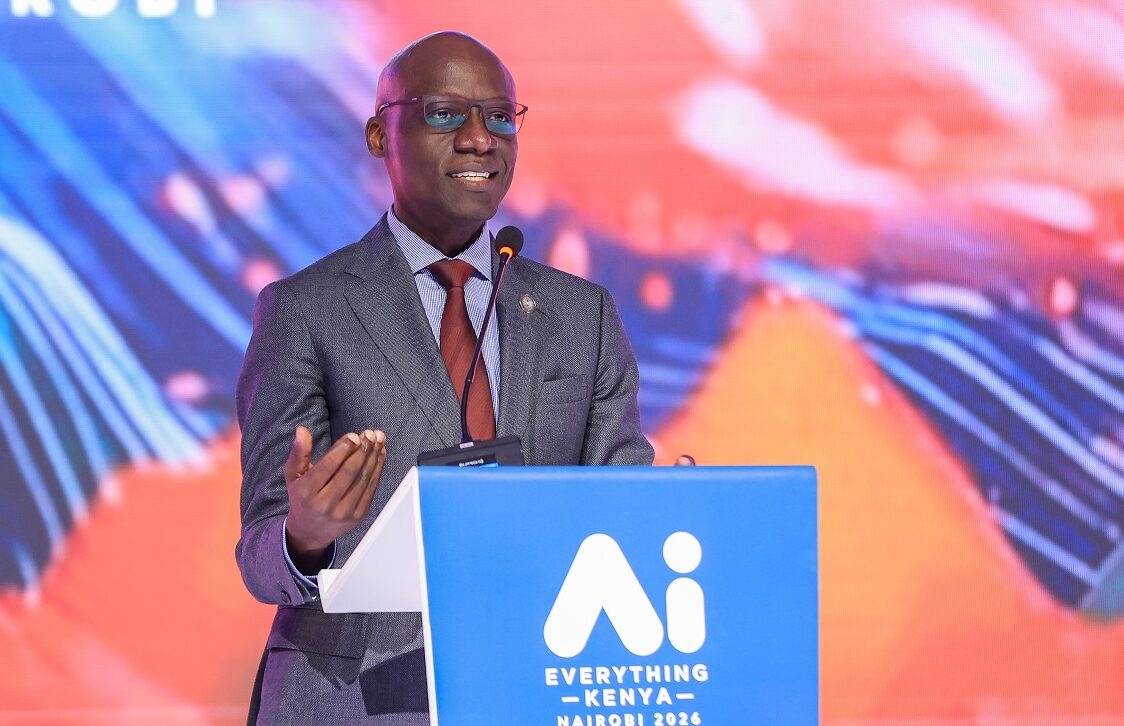
At AI Everything Kenya 2026, the financial services conversation goes far beyond theory.
The CIOs, CTOs, Chief Data Officers, and fintech founders in the room are actively deploying AI, and the results are already reshaping how millions of Africans access, manage, and grow their money.
AI in African Banking: From Experiment to Infrastructure
Across Africa’s leading banks, AI has moved from pilot project to core infrastructure. Credit scoring models trained on alternative data are extending lending to previously unbankable customers.
Fraud detection systems are reducing losses in real time. Customer service automation is handling millions of interactions monthly at a fraction of the cost of human agents.
The depth of banking expertise at AI Everything Kenya 2026 reflects how advanced this transformation has become. Dennis Volemi (Group CTO, KCB Bank Group), Alex Siboe (CIO, Stanbic Bank), Hartnell Ndungi (Chief Data Officer – Africa, ABSA Group), and Samwel Magesa (Chief Data Officer, NBC Bank) are not exploring what AI might do for African banking. They are managing what it is already doing.
Payments and the Infrastructure Layer
Payment infrastructure is the circulatory system of any economy, and Africa’s payments landscape is one of the most dynamic in the world.
Mobile money interoperability, real-time payment rails, cross-border remittance corridors, and digital wallet ecosystems are all evolving rapidly.
Mayur Patel of M-KOPA represents the asset finance and embedded payments model using data from connected devices to extend credit to customers who have never held a bank account.
Dotun Daniel Adekunle of OPay and Lasbery Chioma Oludimu of Yellowcard bring the high-growth digital payments and crypto infrastructure perspective – platforms processing millions of transactions daily across multiple African markets.
READ ALSO:AI Everything Kenya 2026: Why Digital Infrastructure Is the Foundation of Africa’s AI Economy
Mastercard’s presence through Victor Ndlovu, Daniel Huba, and Amit Mehta emphasises how global payment networks are increasingly building Africa-specific strategies rather than applying global templates to local markets.
Financial Inclusion: The AI Opportunity
Africa has the world’s largest financially excluded population, and AI is the most powerful tool yet developed to close that gap.
Alternative credit scoring, AI-powered KYC, voice-based banking interfaces, and predictive savings products are all enabling financial institutions to serve customers who were previously too costly to reach profitably.
Nadeem Juma of Credable Group and Abdelrahman El Badawy of the Nairobi Business Angel Network represent the intersection of fintech innovation and early-stage capital where new financial inclusion models get their first institutional backing.
Risk, Regulation, and Responsible AI in Finance
The speed of AI adoption in financial services creates as many risks as it resolves.
Algorithmic bias in credit decisions, data privacy in open banking environments, and systemic risk from AI-driven trading are all live concerns for African regulators and compliance officers.
Beverlyn Amboka, Deputy CISO at the Central Bank of Kenya, represents the regulatory and security layer that ensures AI adoption in finance remains safe, fair, and accountable. That voice is as important as any fintech founder in the room.
The Decade Ahead
Africa’s fintech sector is projected to be among the fastest-growing in the world through 2030.
AI is the primary driver of that growth as the operational backbone of the next generation of financial services.
The institutions and founders shaping that future are in Nairobi. The conversation starts at AI Everything Kenya 2026.


Leave a Reply