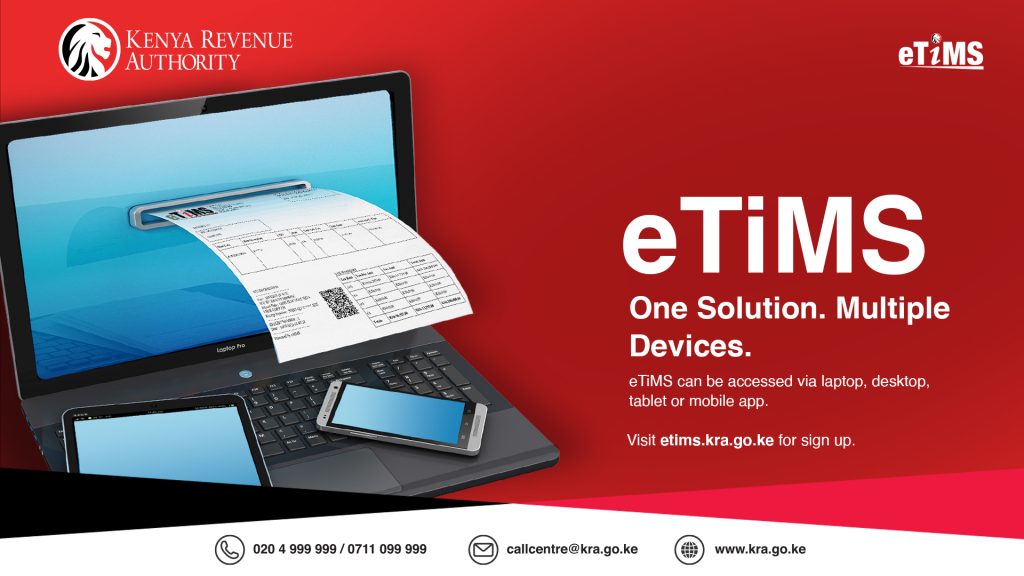
Search for “eTIMS-compliant software” in Kenya and you’ll find no shortage of vendors claiming to be integrated.
The trouble is that “eTIMS-integrated” means very different things depending on who’s saying it, and the gap between those meanings can cost you time, money, and a working compliance setup.
Some platforms have eTIMS built into their core product. Others rely on a certified third-party add-on that bolts on afterward.
Both can get you compliant, but they come with different costs, dependencies, and long-term reliability. Here’s an honest breakdown of where the major accounting, ERP, and fintech platforms actually stand.
First, the Technical Backbone: VSCU and OSCU
Before looking at specific vendors, it helps to understand how any “integration” actually works under the hood. KRA doesn’t hand out a single plug-and-play connector; it offers two system-to-system integration routes:
- VSCU (Virtual Sales Control Unit): suited to businesses that batch-invoice or aren’t always online, such as bulk invoicing from an accounting system at end of day.
- OSCU (Online Sales Control Unit): suited to always-connected environments like retail counters and point-of-sale terminals, where invoices need to be transmitted the moment a sale happens.
Whatever software or platform you’re evaluating, the honest question to ask a vendor is: Which of these does your integration use?
Has it been tested in a live production environment? And can you show me a real invoice being generated with a valid KRA QR code and control unit invoice number? A vendor who can’t answer clearly is a signal to dig deeper before you commit.
Accounting and ERP Platforms
QuickBooks
QuickBooks, both desktop and QuickBooks Online, does not have eTIMS integration built by Intuit itself.
Kenyan businesses using QuickBooks generally connect to eTIMS through third-party add-ons built specifically for the Kenyan market, such as locally developed connectors that link QuickBooks to a KRA-approved integration layer, or by working with a certified eTIMS integrator to build a custom bridge.
This works, but it means an extra vendor relationship, an extra point of failure, and often an extra recurring cost layered on top of your QuickBooks subscription.
Sage
The same pattern holds for Sage’s ERP products (Sage 300, Sage X3, and Sage Intacct): Sage Group has not shipped native eTIMS compliance as a standard feature for the Kenyan market.
Businesses running Sage typically achieve compliance by engaging a certified Sage implementation partner in Kenya (Greytrix Africa is the most commonly cited example) to build and maintain the eTIMS connection as a separate, ongoing engagement.
If you’re already on Sage or being sold into it, budget for this as a distinct line item rather than assuming it comes with the package.
Odoo
Odoo is a notable exception among the larger global platforms: its Kenyan fiscal localisation, available from version 17.0 onwards, includes native eTIMS support built into the product itself, using the OSCU integration route.
This covers automatic product code mapping to KRA’s classification system, real-time invoice transmission, multi-branch support, and a sandbox environment for testing before going live.
Odoo Kenya Ltd is registered as a certified third-party integrator with KRA, which is part of why the localisation is relatively well documented compared to bolt-on solutions.
As with any ERP, the quality of your actual deployment still depends heavily on the implementation partner you use.
ERPNext and Other Kenya-Built ERPs
ERPNext, the open-source ERP built on the Frappe framework is typically deployed in Kenya through a locally configured localisation that bundles eTIMS compliance, M-Pesa’s Daraja API for payment reconciliation, and Kenyan statutory payroll (PAYE, NSSF, SHA, Affordable Housing Levy) into the implementation.
Because ERPNext is open source, there’s no software license fee; you pay your implementation partner for setup, configuration, and support instead.
This makes it a genuinely different cost model from Sage or QuickBooks, though as with Odoo, the eTIMS functionality itself is delivered through a Kenya-specific localisation layer rather than being a global out-of-the-box feature of the base product.
READ ALSO : How eTIMS Affects Restaurants, Retailers, and Service Businesses in Kenya
Alongside these larger platforms, a growing number of Kenya-built ERPs and POS systems, offered by KRA-approved integrators such as Dynamic Mobility, Symatech Labs, and Dejavu Technologies, among others, provide eTIMS connectivity either as their own native product (for example, purpose-built POS applications) or as an integration service layered onto systems like SAGE, Microsoft Dynamics, QuickBooks, Odoo, and Zoho.
Payment and Fintech Platforms
Pesapal
Pesapal is registered as an approved eTIMS third-party integrator and has built eTIMS connectivity directly into several of its products.
Its RACK point-of-sale system generates fiscalised, KRA-approved invoices, quotations, and receipts as part of standard functionality, and its Forecourt Management System (FMS), built for fuel stations, which faced a separate KRA mandate to integrate fuel dispensers with eTIMS from mid-2025, transmits pump-level transaction data to KRA in real time while also handling M-Pesa and card payments at the till.
Pesapal has also partnered with at least one major bank to roll out its forecourt system at scale across thousands of fuel stations in Kenya and the wider region.
M-Pesa
It’s worth being precise about what “M-Pesa integration” means here, because it operates on two different levels.
At the business tool level, plenty of POS systems, e-commerce platforms, and accounting software connect to M-Pesa through Safaricom’s Daraja API (directly, or via a payment gateway like Pesapal) to accept payments and reconcile them against sales records, including, in integrated systems, against the eTIMS invoice for that sale.
This kind of M-Pesa-to-eTIMS reconciliation is already common in POS products built for the Kenyan market.
At the infrastructure level, KRA itself has been public about plans to deepen the connection between eTIMS and payment channels, including M-Pesa, directly as part of a broader rebuild of its iTax systems intended to pull tax records from real-time transaction data rather than relying mainly on end-of-period filings.
This is a KRA-led infrastructure initiative rather than a product any individual business signs up for: it’s about the tax authority’s own systems talking to payment rails more directly, with the stated aim of pre-populating parts of a taxpayer’s return automatically.
As of mid-2026 this was described as an active build-out rather than a finished, universally live feature, so it’s worth checking KRA’s own announcements for the current state if this affects your filing process directly.
What “eTIMS-Integrated” Actually Means Before You Buy
Given how differently that phrase gets used across vendor marketing, a few questions are worth asking before you commit to any platform:
- Is the integration native to the product or a third-party bolt-on? Both can work, but a bolt-on means an extra vendor relationship and an extra thing that can break or lapse.
- Which route does it use, VSCU or OSCU, and does that match how your business actually operates (batch invoicing vs. always-online retail)?
- Has it been tested and demonstrated in a live production environment, not just described in a sales deck? Ask to see an actual invoice with a KRA QR code and control unit invoice number.
- What happens if the integrator goes away or KRA updates its requirements? Native, vendor-maintained integrations (like Odoo’s Kenya localisation) tend to be more resilient to this than a bespoke connector built by a small third-party shop.
- Does it also solve your actual operational pain points, such as M-Pesa reconciliation, multi-branch reporting, or offline invoicing, or does it only solve the narrow compliance requirement while leaving everything else manual?
The Bottom Line
There’s no single “most eTIMS-integrated” platform. The right choice depends on what you’re already running and how much of your workflow you want automated versus handled through a certified integrator.
Odoo and Kenya-localized ERPNext deployments currently offer some of the more built-in experiences among ERP options; QuickBooks and Sage both work in Kenya but depend on third-party connectors rather than anything Intuit or Sage Group ships natively, and on the payments side, Pesapal has positioned itself specifically around bundling eTIMS compliance into its POS and forecourt products, while M-Pesa’s role is evolving from “payment rail businesses connect to” toward deeper integration at KRA’s own infrastructure level.
Whatever you choose, verify the claim rather than taking a landing page at face value: ask for a live demo invoice, confirm which KRA integration route is used, and factor in who’s responsible for keeping the connection working after you’ve signed the contract.
This article reflects publicly available vendor information and KRA announcements as of mid-2026. Integration partnerships, product features, and KRA’s own infrastructure plans change quickly in this space. Confirm current details directly with any vendor before purchasing, and check kra.go.ke for the latest on KRA’s system-to-system integration requirements.


Leave a Reply