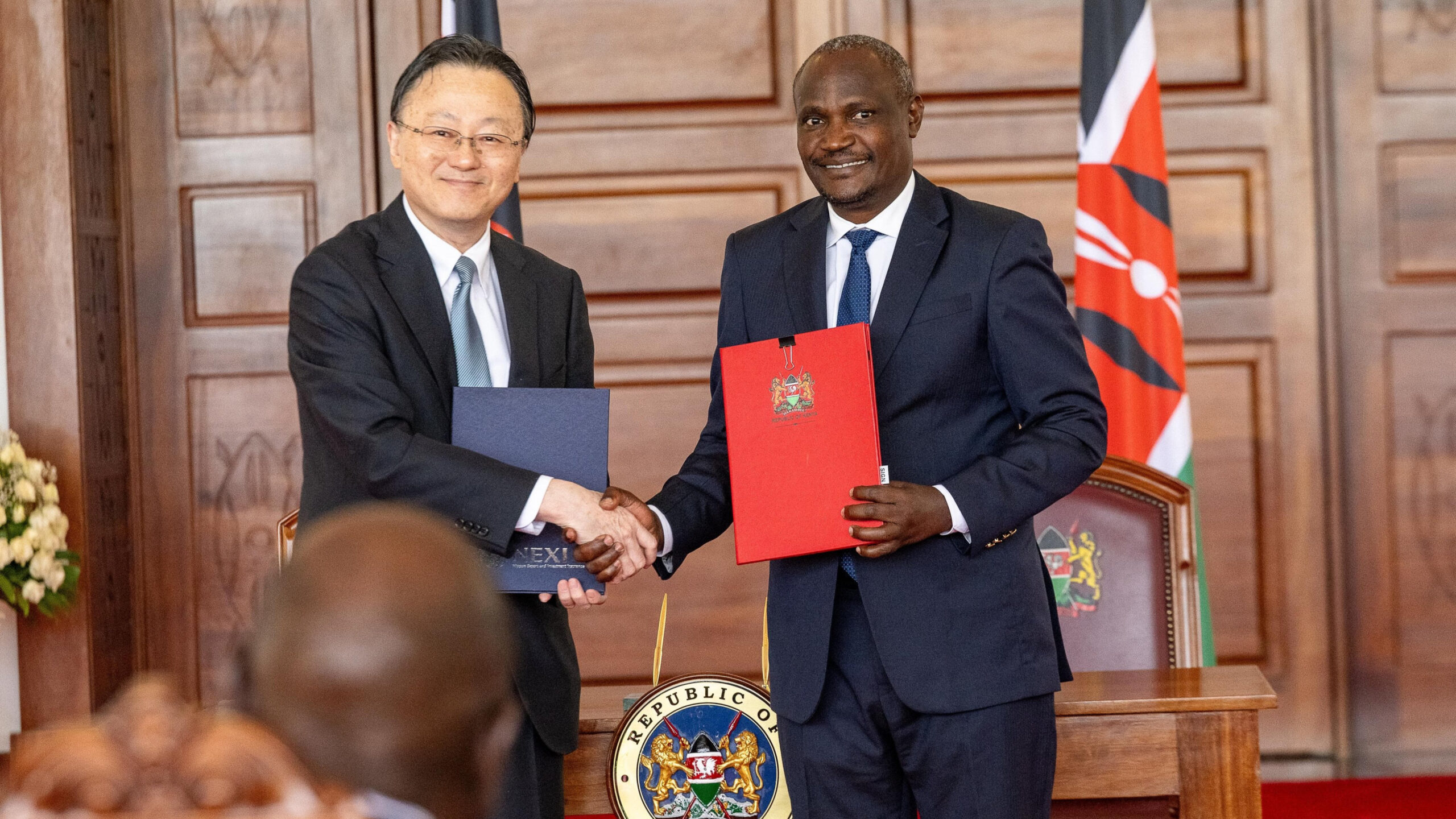
Kenya plans to return to the Japanese debt market in the 2026/27 financial year.
The government is targeting Sh64.6 billion, equivalent to about JP¥80.89 billion, through its second Kenya Samurai bond 2026 issuance.
This follows Kenya’s successful debut in Japan’s capital market during the 2025/26 fiscal year.
The planned borrowing was disclosed by the National Treasury.
It forms part of President William Ruto’s administration’s strategy to diversify external financing sources.
The goal is to help fund the country’s ambitious Sh4.8 trillion budget while reducing reliance on more expensive commercial loans.
Why Kenya Yen Financing Sovereign Debt Makes Sense
Treasury Cabinet Secretary John Mbadi has described access to the Japanese market as a key pillar of Kenya’s new borrowing strategy.
He said the government is actively seeking cheaper and more sustainable financing options as it works to narrow its fiscal deficit.
Samurai bonds are yen-denominated debt securities issued in Japan by foreign governments or corporations.
They typically carry lower borrowing costs than commercial Eurobonds, largely because Japan has maintained low interest rates for years.
According to Mbadi, Kenya yen financing sovereign debt through Samurai instruments can carry interest rates between 0.5 percent and 3 percent, depending on the borrower’s credit profile.
That makes it significantly cheaper than many international commercial loans.
Kenya External Borrowing 2026/27 Strategy in Context
Kenya external borrowing 2026/27 plans extend well beyond the Samurai bond alone.
READ ALSO:
The government’s overall fiscal deficit for the year stands at Sh1.146 trillion.
Domestic markets are expected to cover the largest share, with net domestic borrowing estimated at around Sh1.03 trillion.
On the external side, Treasury has also budgeted Sh170.5 billion through a World Bank Development Policy Operation.
An additional Sh21.3 billion is expected from a similar African Development Bank facility.
Kenya has also taken up a $750 million tranche, roughly Sh97 billion, from the World Bank’s Development Policy Operations funding programme this year.
Together, these instruments reflect a deliberate move away from relying too heavily on any single financing source.
The Growing Kenya Japan Samurai Financing Relationship
The Kenya Japan Samurai financing relationship has deepened steadily over the past year.
In August 2025, Kenya secured its first Samurai facility, worth about 25 billion yen or roughly $169 million, backed by Nippon Export and Investment Insurance.
That initial deal supported vehicle assembly and efforts to reduce electricity transmission losses.
Building on that foundation, Kenya closed a larger Sh22.1 billion yen-denominated financing facility in June 2026.
The agreement was signed in Nairobi and involved a consortium of eight Japanese commercial banks, including Sumitomo Mitsui Banking Corporation, MUFG Bank, and Mizuho Bank.
That facility channels funding toward local vehicle assembly, electricity loss reduction, and general budget support, with a seven-year repayment period.
Reducing Dollar Exposure
Kenya’s push toward yen financing reflects a broader concern about currency concentration.
As of the end of April 2026, the US dollar accounted for 54.4 percent of Kenya’s external debt stock.
The yen, by contrast, represented just 4.6 percent.
Japan remains one of Kenya’s biggest bilateral lenders overall, with outstanding loans of Sh77.23 billion as of April 2026, trailing only China and France in bilateral lending volume.
By expanding its yen-denominated borrowing, Kenya aims to reduce its exposure to dollar volatility and interest rate swings tied to US monetary policy.
This mirrors similar diversification efforts Kenya has pursued through yuan-denominated borrowing and discussions around Shariah-compliant bonds.
What Comes Next
The Samurai bond forms just one piece of Kenya’s broader 2026/27 borrowing mix, which also includes a planned Eurobond of around Sh145 billion aimed at refinancing existing debt.
As Kenya works to manage its debt servicing costs while funding its budget, continued engagement with Japan’s capital markets looks likely to remain a recurring feature of the country’s external financing strategy in the years ahead.


Leave a Reply