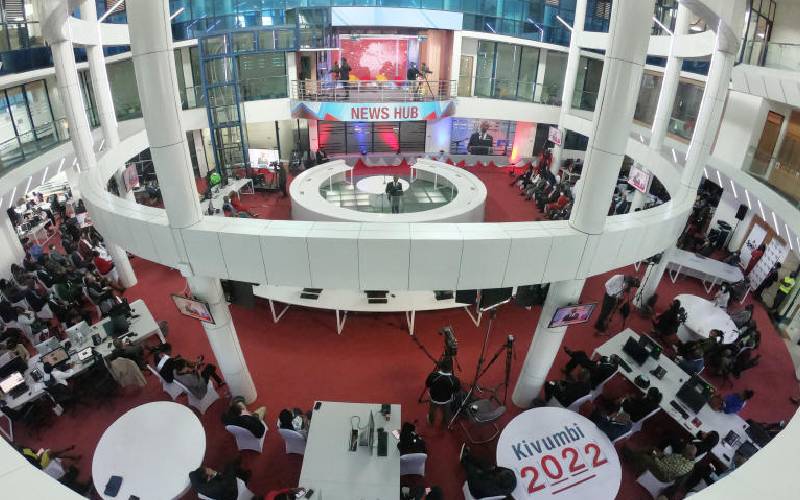
Standard Group publishes The Standard, Kenya’s oldest newspaper, and owns KTN television. It has been printing the news since 1902, and it has also been losing money for years: a KSh1.26 billion loss in 2023 and a KSh1.1 billion loss in 2024.
A KSh1.5 billion rights issue meant to rescue the balance sheet was approved and then suspended. The shares are among the least traded on the exchange, and the company is controlled by a vehicle linked to the family of the late President Daniel arap Moi.
History and Founding Story
The paper began in 1902 as The African Standard, a weekly founded in Mombasa by Alibhai Mulla Jeevanjee, an Indian born businessman.
In 1905 he sold it to Maia Anderson and Rudolf Franz Mayer, who renamed it the East African Standard. T
he British conglomerate Lonrho bought the paper in 1963, just before Kenyan independence. In 1995, Lonrho sold it back to Kenyan investors, and in 1977 and again in 2004, the name was changed back and forth between The Standard and the East African Standard.
Television came in 1989, when the group acquired the Kenya Television Network, KTN, which was Kenya’s first private TV channel.
The group later added Radio Maisha, Spice FM, Berur FM, the weekly tabloid The Nairobian, Standard Digital, a courier business, and an outdoor advertising arm, Think Outdoor. It is controlled by S.N.G. Holdings Limited, a company associated with the family of the late President Moi.
The group has had a turbulent relationship with the state. In 2006, armed police raided its offices and took KTN off the air, an episode still remembered as a landmark attack on press freedom.
In July 2026, the Committee to Protect Journalists reported that a Standard editor escaped seizure by armed men after the president criticised the paper, and Wikipedia records a public exchange between President Ruto and the group on social media.
The commercial story is of slow decline. After a 2016 staff rationalisation programme and a wave of legal claims, losses mounted, advertising shrank, and the company has had three chief executives in three years.
An attempt by an investor group linked to the family of former President Uhuru Kenyatta to buy the company reportedly failed over price, before that group turned its attention to Nation Media Group.
Core Business Lines / Revenue Streams
Standard Group has two reporting segments, print and broadcasting, with digital growing inside both.
- Print: The Standard (daily), The Nairobian (weekly tabloid), and a courier service. Print circulation and advertising are in long term decline.
- Broadcasting: KTN Home, KTN News (a 24-hour news channel), Radio Maisha, Spice FM, Berur FM, and related stations. Television and radio advertising and sponsorship are the other main revenue sources.
- Digital: Standard Digital, the group’s websites, video, and social media platforms. Management set a target of 35% digital revenue growth in 2025.
- Outdoor advertising and other services: Think Outdoor billboards and the courier business.
Revenue has fallen steeply. In 2024 it dropped 23% to about KSh1.84 billion (from about KSh2.3 billion in 2023), as advertisers and government contracts pulled back.
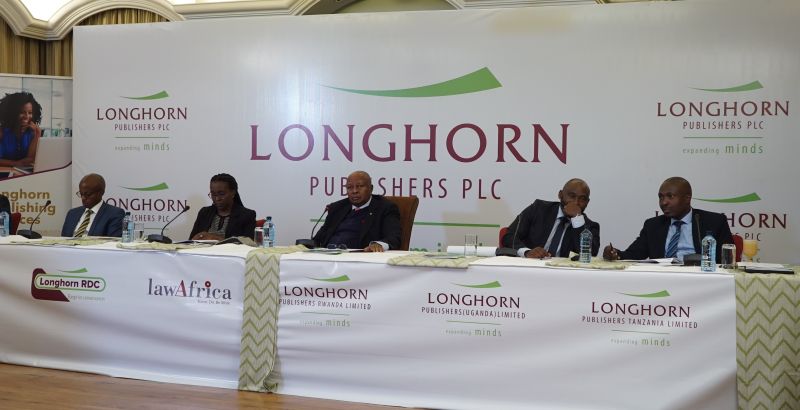
READ ALSO:Inside the NSE: Longhorn Publishers (LKL)
Competitive Position in Its Industry
The Standard calls itself the second largest national newspaper, behind Nation Media Group’s Daily Nation, and KTN competes for TV audiences with Royal Media Services (Citizen TV) and Nation’s NTV. The other listed media company on the NSE is Nation Media Group, which is also struggling.
The financial position is weak. The group’s loss after tax was KSh1.26 billion in 2023 and about KSh1.1 billion in 2024, with a loss per share of KSh13.46 in 2024.
In the first half of 2025, revenue fell about 24% to KSh789 million, but costs fell faster (operating costs down 26% to KSh879 million, finance costs down 17%), and the loss narrowed to KSh133 million from KSh200 million.
Operating cash flow was positive, at KSh189 million. At 30 June 2025, however, current liabilities of KSh5.1 billion were far larger than current assets of KSh2.1 billion. Management has said that public sector debt owed to the group is a big issue and that the balance sheet does not look good.
Ownership Structure
The register is dominated by a single controlling holder.
- S.N.G. Holdings Limited: The parent company, which is associated with the Moi family. A Business Today report (undated, but several years old) said the Moi family, businessman Kulei, and close associates held over 90% of the group.
- Everyone else: A small free float of well under 10%, held by retail and institutional investors.
Why It’s Listed on the NSE Specifically
As a listed company, Standard Group can ask shareholders for fresh money through a rights issue, and the CMA approved one in May 2025: 283.7 million new shares at KSh5.29 each, in a ratio of 11 new shares for every 3 held, to raise about KSh1.5 billion for repaying liabilities, working capital, and growth.
On 4 February 2026, however, the board suspended the issue, citing market conditions and financing options, and said the suspension was not a cancellation.
For investors, the listing offers a rare chance to own a historic Kenyan media brand, but with a controlling holder who has so far not put in fresh capital on a scale that would end the losses.
Current Stock Price
The stock is extremely thinly traded: indicative trading liquidity over the twelve months to early September 2025 was only about US$27,000 (around KSh3.5 million), so prices can move sharply and may be hard to trade at all.
Business Today has reported speculators driving the price up at times. Share prices move daily. For a live quote, check the NSE’s official market data page or a licensed brokerage platform before making any decisions.
How to Buy Standard Group Shares
You don’t need to be in Kenya to buy SGL shares; it can be bought locally or from abroad:
- Open a CDS (Central Depository System) account. This is Kenya’s electronic share registry account, required to hold any NSE listed stock. It’s opened through a licensed stockbroker or investment bank.
- Choose a licensed NSE stockbroker or investment bank. Examples include firms like Standard Investment Bank, AIB-AXYS Africa, Genghis Capital, and Faida Investment Bank. A full list of licensed trading participants is available on the NSE website.
- Fund your trading account via bank transfer, mobile money (M-Pesa is widely supported), or card, depending on the broker.
- Place an order for SGL through the broker’s trading platform, app, or by instructing your broker directly. Because the stock barely trades, use limit orders and expect that you may not find a seller or buyer at your price.
- For non resident and diaspora investors, several online platforms (such as mystocks.africa and similar cross border brokerages) let you open an account remotely, fund it in USD or your local currency, and buy NSE listed shares like SGL without needing an in country presence, though you should confirm licensing and custody arrangements before using any platform.
- Hold and track. Shares are held electronically in your CDS account. Do not expect dividend income: no dividend was declared for 2024, and none was recommended for the first half of 2025. Watch for the status of the suspended rights issue, which would dilute holders who did not take up their rights.
This profile is for informational and editorial purposes and is not investment advice. Stock prices, especially, change constantly, so always verify current figures with the NSE or a licensed broker before making any investment decision. Other figures reflect the most recent publicly reported data as of 2026 and may change with new financial disclosures. Standard Group is loss making with current liabilities well above current assets, and its shares trade very thinly.



Leave a Reply