M-KOPA, a celebrated fintech company providing pay-as-you-go smartphones and solar kits across Africa, has been put into the spotlight for reasons beyond its innovative business model.
A constitutional petition filed by Elizabeth Njoki, a former manager at M-KOPA Kenya Limited from 2012 to 2023, accuses the UK-headquartered company of racial discrimination in its 2019 employee shareholding restructuring.
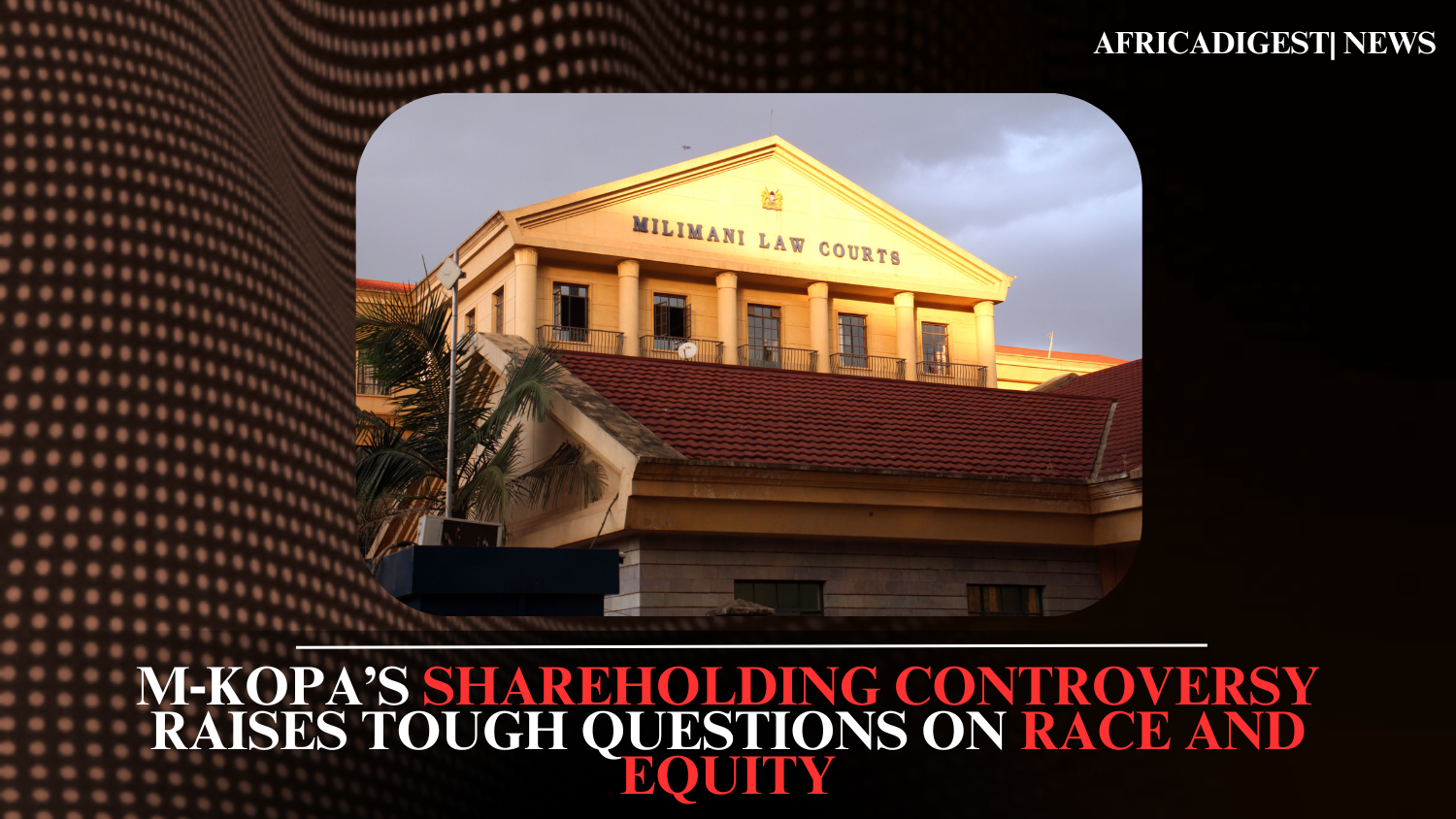
This lawsuit, submitted in Kenya’s Employment and Labour Relations Court, raises critical questions about equity, corporate governance, and accountability in Africa’s booming tech sector.
The Heart of the Allegation: A Discriminatory Shareholding Scheme
The 2019 Restructuring
M-KOPA’s board, concerned about dilution risks to institutional investors like British International Investment (BII) and Generation Investment Management after Treehouse Investments converted debt into equity, introduced a new class of shares called “Growth Shares.”
These shares, which came with superior benefits such as buyback rights, preferential pricing at $1 per share, and guaranteed exits at fair market value, were predominantly allocated to expatriate and white employees.
READ ALSO:M-KOPA’s $2B Disbursal Puts African Fintech on CNBC’s World Stage
Meanwhile, African employees, primarily Kenyan staff, were either excluded or reclassified as “Minor Holders,” a designation that stripped them of key shareholder rights, including voting privileges, access to company information, and participation in shareholder meetings.
The Numbers Tell a Story
Court documents reveal a huge disparity:
- Between 2019 and 2022, Growth Shares increased from zero to over 3.3 million, while Preferred Shares grew from 3.4 million to 12.6 million, with institutional investors maintaining their 73% ownership stake.
- Ordinary shareholders, mainly Kenyan staff, saw their collective stake drop from 27% to just 7% (or as low as 2.6% per some sources) without their knowledge or consent.
- Of the first 48 recipients of Growth Shares, only seven were of African descent, and in a subsequent Series B round, no Kenyan employees were included.
Njoki alleges that this restructuring created a two-tier system that systematically disadvantaged African employees while protecting white expatriates and global investors from dilution.
A “Sham” Recapitalisation
The petition further claims that a 2021 recapitalisation artificially suppressed M-KOPA’s valuation by using outdated benchmarks, rejecting comparisons with competitors like Tala. This allegedly enabled further share reallocations favouring growth shareholders, worsening the inequity.
The Human Cost: Silenced and Sidelined
Njoki’s filings paint a troubling picture of how the company responded to employee concerns.
When she sought clarification about her share options, she claims she faced threats of legal consequences and job repercussions, including being labelled a “bad leaver,” which would disqualify her from receiving shares.
Court documents include emails warning that seeking legal advice could have severe consequences, highlighting a culture of intimidation.
“I was silenced for asking questions,” Njoki stated in her petition.
M-KOPA’s Defence: A Legal Counterattack
M-KOPA Holdings, represented by Anjarwalla & Khanna LLP, has sought to dismiss the petition, arguing:
- Shareholder disputes should be heard in the courts of England and Wales, as M-KOPA is UK-incorporated.
- No employment relationship exists between Njoki and M-KOPA Holdings, making the Employment and Labour Relations Court an inappropriate venue.
- The allegations are baseless, with the company asserting that race has never influenced its compensation decisions.
M-KOPA emphasises that less than 1% of its employees are expatriates, with most being African expatriates (e.g., Kenyans working in South Africa).
The company describes the restructuring as a standard startup governance practice to protect investors, denying any racial disparity in its equity programs.
The Bigger Picture: Implications for Africa’s Tech Sector
A Test Case for Equity
This lawsuit is more than a corporate dispute; it’s a litmus test for how Africa’s tech sector navigates the intersection of local ownership, foreign investment, and equitable practices.
M-KOPA, with $411 million raised and $1.5 billion in credit extended to 5 million customers across Kenya, Nigeria, Ghana, Uganda, and South Africa, is a fintech darling.
Yet, Njoki’s allegations challenge its image as a socially responsible company, raising questions about who truly benefits from Africa’s tech boom.
Potential Fallout
If the court rules in Njoki’s favour, M-KOPA could face:
- A mandated restructuring of its share scheme, potentially diluting existing investors’ stakes.
- Financial strain on its $750 million annual revenue and partnerships with giants like Safaricom and Mastercard.
- Public backlash in Kenya, where it serves a significant customer base, potentially eroding trust in its pay-as-you-go model.
- Increased regulatory scrutiny from bodies like the Central Bank of Kenya, with possible fines or stricter oversight.
- Similar lawsuits in other markets, like Nigeria and South Africa, amplify legal and reputational risks.
Why This Matters: Ethical Questions in Fintech
M-KOPA’s model has been recognised for promoting financial inclusion, but Njoki’s petition suggests a disconnect between its public mission and internal practices. The case underscores broader ethical concerns:
- Equity vs. Exclusivity: Are African employees, who form the operational core, being systematically excluded from the rewards of their labour?
- Foreign Influence: With high-profile investors like BII and Generation Investment Management, does foreign capital prioritise global interests over local stakeholders?
- Accountability: Can African startups balance growth with fair governance in the face of international pressures?
READ ALSO:How Did M-KOPA Make the Financial Times List Four Years in a Row?
What’s Next: A Legal and Cultural Reckoning
The Employment and Labour Relations Court in Nairobi will determine whether the case proceeds in Kenya or is redirected to English and Welsh courts.
Regardless of jurisdiction, the outcome could set a precedent for how African tech startups address equity inclusion and navigate foreign investment.
As Kenya’s “Silicon Savannah” grows, this case highlights the urgent need for transparent, inclusive corporate structures that reflect the diversity of their workforce and customer base.
A Call for Change
Elizabeth Njoki’s lawsuit against M-KOPA is a bold stand against alleged racial discrimination and a call for accountability in Africa’s tech sector.
It challenges us to rethink who benefits from the continent’s startup boom and whether fintech’s promise of inclusion extends to its own employees.
As the legal battle unfolds, one thing is clear: the fight for equity is as critical inside the boardroom as it is in the communities M-KOPA serves.
Ronnie Paul is a seasoned writer and analyst with a prolific portfolio of over 1,000 published articles, specialising in fintech, cryptocurrency, and digital finance at Africa Digest News.


Leave a Reply