Kenya’s fiscal math has been tightening for months: debt repayments now swallow almost 40% of government revenue, while the Treasury confronts a Sh901 billion ($6.9 billion) hole in the 2025/26 budget and stalled IMF talks over new taxes.
Something had to give. On 4 December 2025, the government executed its most consequential divestiture in two decades, selling a 15% stake in Safaricom to South Africa’s Vodacom for Sh204.3 billion ($1.57 billion) at Sh34 per share, a price pitched 20–23.6% above recent trading levels.
Layer in Sh40.2 billion ($309 million) for dividend rights on the state’s remaining 20% holding, and the deal swells to Sh244.5 billion ($1.88 billion).
The cash becomes seed capital for Kenya’s new National Infrastructure Fund and inaugural sovereign wealth fund, earmarked for roads, energy, irrigation and airports.
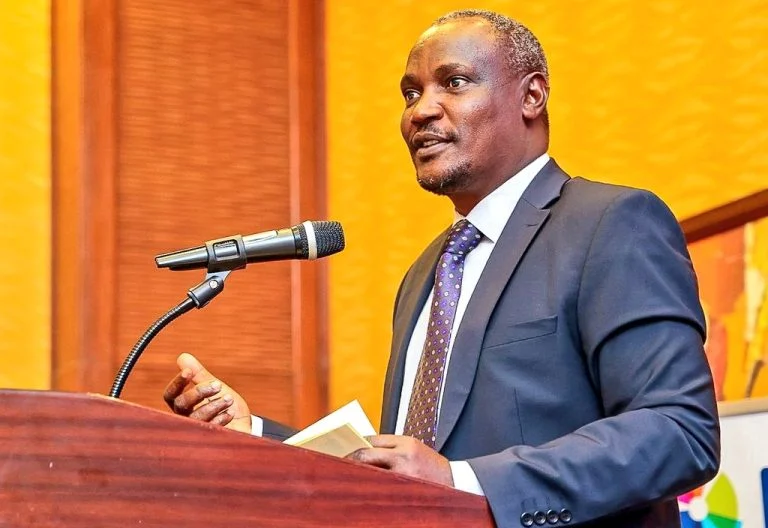
Finance Minister John Mbadi framed it as a “first step in unlocking capital without raising taxes or debt.” Vodacom, meanwhile, moves from major shareholder to outright controller, lifting its effective Safaricom stake from 35% to 55% and securing the crown jewel of African fintech: M-Pesa’s 38 million Kenyan users and Safaricom’s hard-won foothold in Ethiopia.
With clearances now progressing through Parliament, CBK, CMA, COMESA, South Africa’s Public Service Commission and Ethiopia’s Ministry of Technology, the transaction is on track for a Q1 2026 close.
It is a reshaping of East Africa’s telecom landscape that blends fiscal relief with strategic consolidation.
Kenya’s exchequer entered FY2025/26 cornered by an $80 billion external debt portfolio making up roughly 60% of GDP and the breakdown of IMF negotiations over further tax hikes.
Privatisation became the state’s release valve. Safaricom was the obvious lever: Africa’s most profitable telco, posting a Sh42.8 billion profit in H1 2025 (up 52%), anchored by M-Pesa’s 100 million daily transactions and expansion into Ethiopia since 2022.
The state has held 35% of Safaricom since the 2008 IPO, collecting Sh1.57 trillion in taxes, fees and dividends by September 2025. But with liquidity thin and market appetite high, divesting part of this stake became the least painful path to plugging the gap.
Vodacom already held 35% of Safaricom indirectly through Vodafone Kenya. It is now acquiring the government’s 15% directly and an additional 5% via an internal Vodafone transaction, taking its total Safaricom exposure to 55% for $2.1 billion (Sh272B).
CEO Shameel Joosub framed it plainly: “Acquiring control strengthens our leadership and accelerates digital inclusion in Kenya and Ethiopia.”
Safaricom CEO Peter Ndegwa kept it diplomatic: “Vodacom has been a trusted partner from day one.”
Inside the Deal: Premium Pricing, Dividend Sweeteners
Vodafone Kenya is purchasing 6.01 billion shares (15%) at Sh34, a full 33.9% above the six-month VWAP of Sh25.47.
Combined with the dividend-rights payment and internal transfers, Vodacom emerges with majority control while the Kenyan government retains a strategic 20% block.
Notably, Vodacom has requested a CMA exemption from triggering a takeover offer, allowing Safaricom to stay NSE-listed and preserving liquidity for local investors.
| Component | Stake Shift | Value (KSh) | Premium |
|---|---|---|---|
| Govt Sale | 15% (to Vodacom) | 204.3B | 20–23.6% |
| Dividend Rights | On remaining 20% | 40.2B | N/A |
| Vodacom Internal | +5% indirect | 68.1B ($0.5B) | Internal |
| Total to Vodacom | 55% | 272.6B ($2.1B) | — |
Market reactions were measured: Safaricom rose 4% to Sh29.25, while Vodacom dipped 2% on investor concerns over dilution.
READ ALSO:Why Safaricom Should Think Twice Before Splitting M-Pesa
For Treasury, the sale is primarily a fiscal manoeuvre. With debt obligations tightening and the politically risky option of new taxes off the table, Safaricom offered a high-value asset whose partial sale did not compromise state control.
The government retains 20%, enough for veto rights on strategic matters, while benefiting from future dividends and tax flows.
The proceeds shore up FY2025/26 financing and capitalise both the National Infrastructure Fund and a new sovereign wealth fund seen as tools for crowding in private capital, leveraging concessional finance and reducing future borrowing.
Mbadi underscored that the valuation was “transparent and market-based,” specifically rejecting claims of a fire sale.
Why Vodacom Jumped
For Vodacom, this is less a purchase than a continental playbook. Majority control unlocks deeper integration of M-Pesa into Vodacom’s fintech stack across its 10 African markets, adds Safaricom Ethiopia’s early-stage network to its cross-border portfolio, and positions Vodacom as the undisputed leader in sub-Saharan telecom-fintech convergence.
M-Pesa remains Africa’s most valuable financial rails asset, with 38 million active users in Kenya processing 100 million transactions a day.
Ethiopia, though currently at around 1 million subscribers, is considered Vodacom’s single largest future growth lever. Vodafone Group CEO Margherita Della Valle called the deal “a growth opportunity in one of Africa’s most attractive markets.”
Spectrum consolidation, shared tower infrastructure and harmonised digital services are expected benefits, though exact partnership estimates remain undisclosed.
The transaction is still subject to approvals from Kenya’s Cabinet, Parliament, CBK, CMA and the Communications Authority, alongside regulators in South Africa, COMESA and Ethiopia. A Q1 2026 closing remains the working timeline.
Political pushback has been louder than usual. MPs, including Ndindi Nyoro, have questioned the optics of ceding control of a national cash cow, though the Treasury argues that retaining 20% plus regulatory oversight preserves national interest.
If approvals move cleanly, Mbadi’s bet on “unlocking capital without raising taxes or debt” may mark a turning point in Kenya’s approach to financing growth and, for Vodacom, a $2.1B ticket into the next decade of African connectivity and fintech scale.
Vodafone Kenya Overview
Vodafone Kenya services continue to attract interest, with users frequently searching for Vodafone Kenya customer care, Vodafone Kenya phones, and the official Vodafone Kenya customer care number or Vodafone Kenya contact number for support.
The telco also offers modern connectivity options such as Vodafone Kenya eSIM, plus regional services like Vodafone Kenya roaming for travellers.
Financial solutions remain part of its legacy through Vodafone M-Pesa, which played a foundational role in mobile money innovation alongside M-PESA Kenya, now one of the world’s most successful mobile payment ecosystems.
Ronnie Paul is a seasoned writer and analyst with a prolific portfolio of over 1,000 published articles, specialising in fintech, cryptocurrency, climate change, and digital finance at Africa Digest News.




Leave a Reply