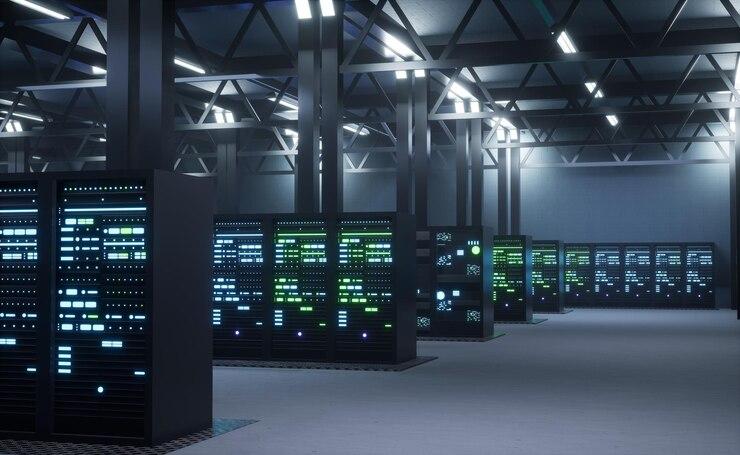
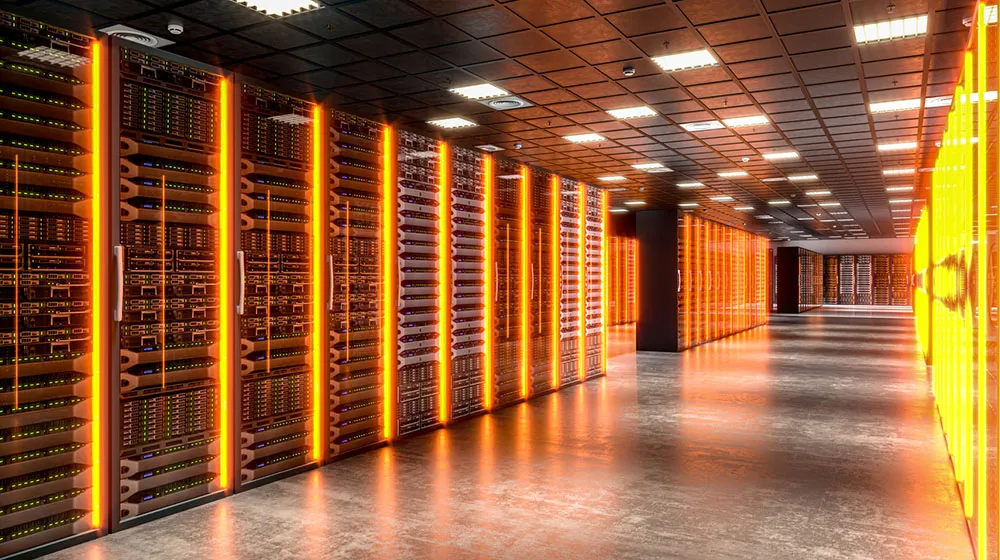
Modern data centres represent highly engineered environments that support the continuous operation of critical digital infrastructure.
Their design integrates multiple interdependent systems to ensure high availability, energy efficiency, security, and scalability.
The essential components can be grouped into power systems, cooling infrastructure, networking architecture, security layers, and redundancy mechanisms.
Each element is optimised to maintain service continuity while addressing the substantial demands of contemporary computing workloads.

Power Systems
Reliable power delivery forms the foundation of data centre operations. Modern facilities employ a multi-layered power architecture to protect against outages and fluctuations.
Key elements include:
- Uninterruptible Power Supplies (UPS) that provide instantaneous battery backup during brief interruptions.
- Backup diesel generators that activate for extended utility failures.
- Power Distribution Units (PDUs) that route electricity to individual racks.
- Redundant utility feeds and transfer switches for seamless failover.
These systems are configured to achieve near-zero downtime, with battery banks and generators sized to bridge transitions and sustain operations for hours or days.

Cooling Infrastructure
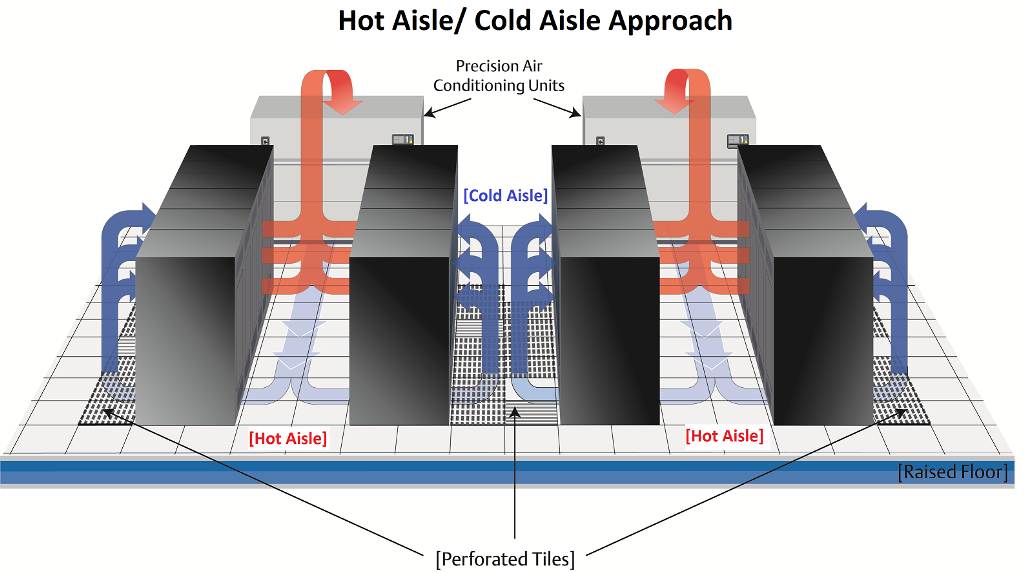
Servers generate significant heat, necessitating advanced cooling to maintain optimal operating temperatures (typically 18–27°C). Modern designs prioritise energy efficiency and precision.
Primary approaches include:
- Computer Room Air Conditioning (CRAC) or Computer Room Air Handling (CRAH) units.
- Hot aisle/cold aisle containment to separate exhaust and intake air.
- Raised floors for underfloor air distribution or overhead ducting.
- Increasing adoption of liquid cooling (direct-to-chip or immersion) for high-density deployments.
Efficient cooling directly impacts Power Usage Effectiveness (PUE), a key metric for operational sustainability.
READ ALSO:What Is a Data Centre? A Complete Beginner’s Guide
Networking Architecture
High-performance connectivity ensures rapid data movement within the facility and to external networks.
Core components comprise:
- Top-of-rack (ToR) and end-of-row switches for intra-rack and inter-rack communication.
- Spine-leaf architecture for scalable, low-latency fabrics.
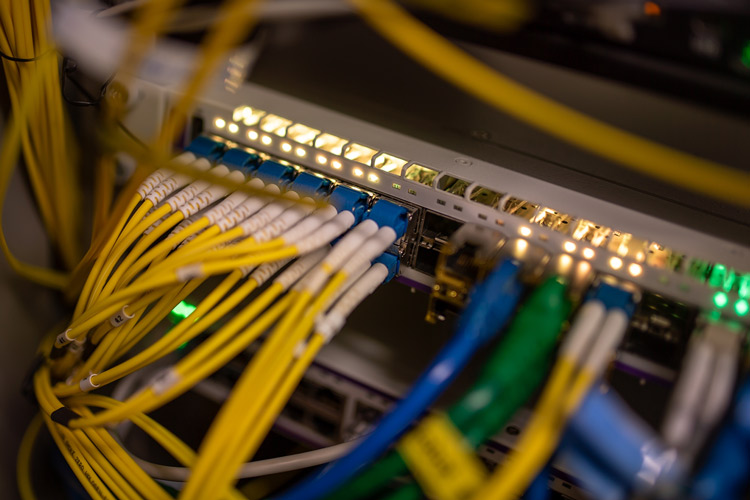
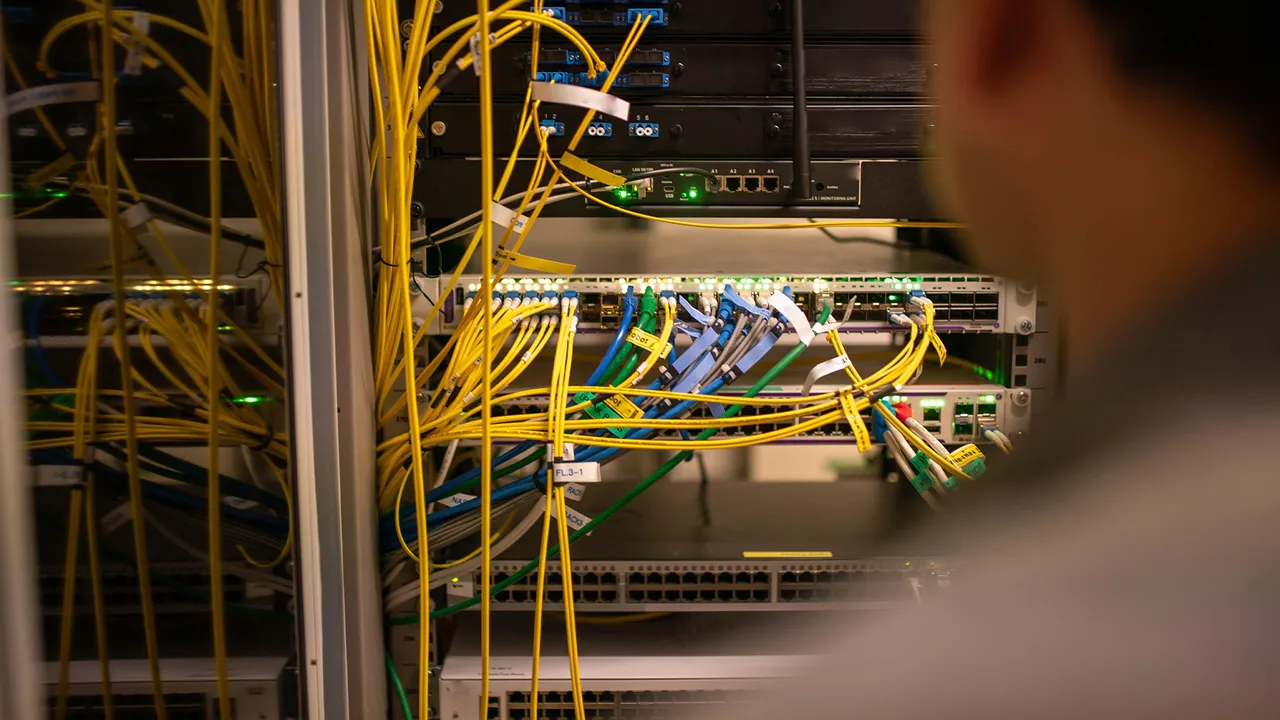
- Fibre optic cabling (single-mode and multi-mode) for high-bandwidth links.
- Structured cabling systems with patch panels for maintainability.
These elements support speeds from 10 Gb/s to 400 Gb/s and beyond, enabling cloud-scale workloads.
Security Layers
Data centres implement defence-in-depth strategies encompassing physical, network, and procedural controls.
Physical security features:
- Perimeter fencing, mantraps, and biometric access controls.
- Continuous video surveillance and intrusion detection systems.
- 24/7 on-site security personnel.
Network and cyber security includes firewalls, intrusion prevention systems, encryption, and segmented zones. Compliance with standards such as ISO 27001 and SOC 2 is standard practice.
Redundancy Fundamentals
Redundancy eliminates single points of failure across critical systems.
Common configurations include:
- N+1 (one additional unit beyond required capacity).
- 2N (fully duplicated independent paths).
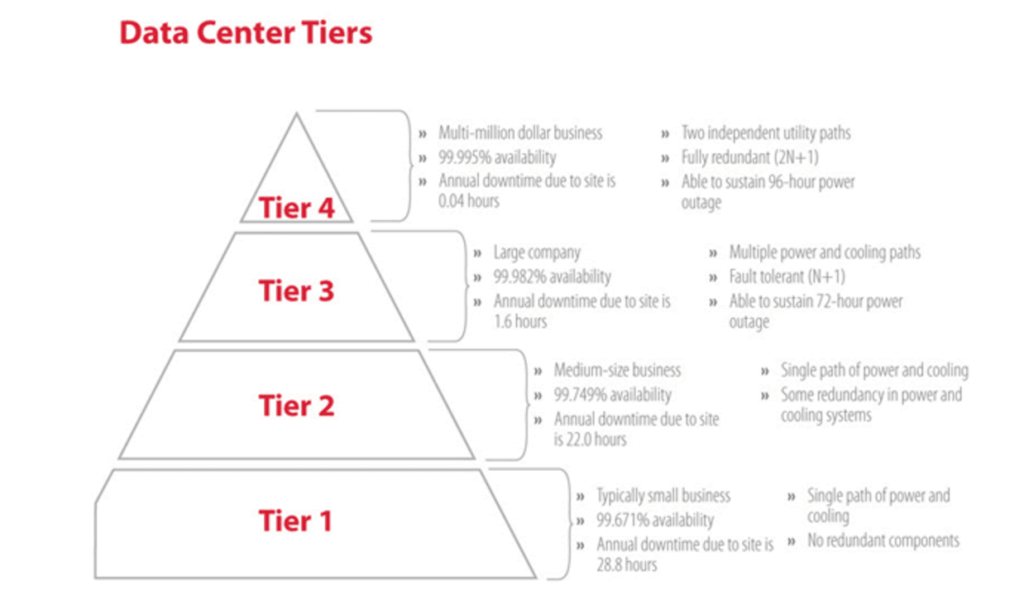
- Tier classifications (Uptime Institute Tiers I–IV), where higher tiers provide greater fault tolerance.
Redundant power, cooling, and network paths ensure that component failure does not interrupt service.
The essential components of a modern data centre including power systems, cooling infrastructure, networking, security layers, and redundancy work in concert to deliver the reliability, performance, and protection demanded by today’s digital ecosystem.
Advances in efficiency and sustainability continue to refine these elements, enabling facilities to support increasingly complex workloads while minimising environmental impact.
A thorough understanding of these fundamentals is valuable for professionals engaged in infrastructure planning, operations, or investment decisions.
For deeper technical specifications, industry resources from the Uptime Institute or major providers remain authoritative references.
Ronnie Paul is a seasoned writer and analyst with a prolific portfolio of over 1,000 published articles, specialising in fintech, cryptocurrency, climate change, and digital finance at Africa Digest News.





Leave a Reply