Every Kenyan entrepreneur eventually faces the same question.
Should you collect payments through a Till Number, a PayBill, or Pochi la Biashara?
Each option comes from Safaricom’s Lipa na M-Pesa suite, but they serve different kinds of businesses.
Picking the wrong one can cost you customers or eat into your margins.
Here is a clear breakdown to help you choose correctly in 2026.
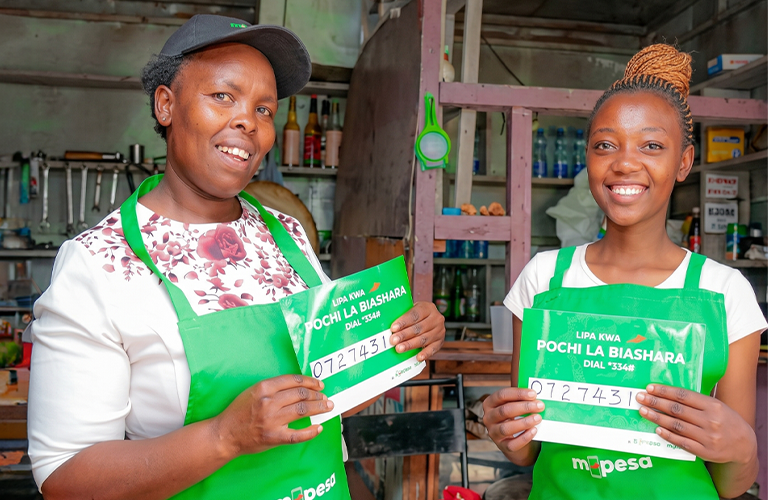
Pochi la Biashara: Best for Small Traders and Side Hustles
Pochi la Biashara is a business wallet that lives inside your existing personal M-Pesa line. You do not receive a new number.
Instead, customers send money to your regular phone number, and the funds land in a separate business pocket rather than mixing with your personal cash.
This makes Pochi ideal for boda boda riders, food vendors, kiosk owners, freelancers, and anyone selling on a small scale without formal registration.
Setup takes minutes through the phone menu, with no paperwork required.
Customers pay the standard M-Pesa send money tariff when paying into a Pochi account.
There is no monthly fee for the business owner, and you can withdraw funds directly from the Pochi wallet at an agent.
You can also use the balance to pay bills or buy goods without moving it to your main account first, and you earn a small commission if you sell airtime through the wallet.
The tradeoff is that Pochi is tied to a personal line.
It does not carry the professional look of a dedicated business number, and it is not designed for businesses that plan to scale quickly.
Till Number: Best for Retail Shops and Walk in Customers
A Till Number, formally called Lipa na M-Pesa Buy Goods, is built for physical retail.
Think shops, restaurants, salons, pharmacies, and supermarkets where customers pay at the point of sale.
The biggest advantage of a Till is that payment is completely free for the customer.
Safaricom removed customer charges on Till transactions years ago, which removes friction at checkout.
The business instead pays a settlement fee, typically between 0.5 and 1.5 percent of the transaction value, deducted before the money reaches your account.
To register a Till Number, visit a Safaricom shop with your KRA PIN certificate, business registration certificate or single business permit, your ID, and proof of your business address.
READ ALSO:
Activation usually takes between 48 and 72 hours, and registration itself is free.
Because customers pay nothing extra, a Till Number tends to convert better at checkout than a PayBill.
If your business depends on quick, in person transactions, this is usually the right choice.
PayBill: Best for Account Based and Recurring Billing
A PayBill is a six or seven digit business number used when payments need to be linked to a specific account or reference number.
Utility companies, schools, landlords, SACCOs, and subscription services rely on PayBill because it lets them match each payment to a particular customer or invoice.
Unlike a Till, the customer pays the M-Pesa transaction fee when using a PayBill, and they must enter an account number alongside the amount.
This extra step makes sense for billing relationships but adds friction for simple retail sales.
PayBill fees are negotiated directly with Safaricom.
Small and medium businesses typically pay between 1 and 1.5 percent, while high volume corporates can negotiate lower rates.
Registration requires more thorough documentation than a Till, including a longer business history.
Making the Right Choice
If you run a side hustle or informal trade, start with Pochi la Biashara.
It requires no paperwork and keeps your business money separate from day one.
If you run a retail shop or restaurant with walk in customers, a Till Number is usually best, since customers pay nothing extra and are more likely to complete the transaction.
If your business bills customers against specific accounts, such as rent, school fees, or subscriptions, PayBill is the only practical option.
One more thing to keep in mind. Businesses earning above five million shillings a year, or those registered for VAT, must link their Till or PayBill to an eTIMS compliant system for electronic tax invoicing.
Confirm your obligations with KRA or your accountant before scaling up, so your payment channel keeps you compliant as your business grows.


Leave a Reply