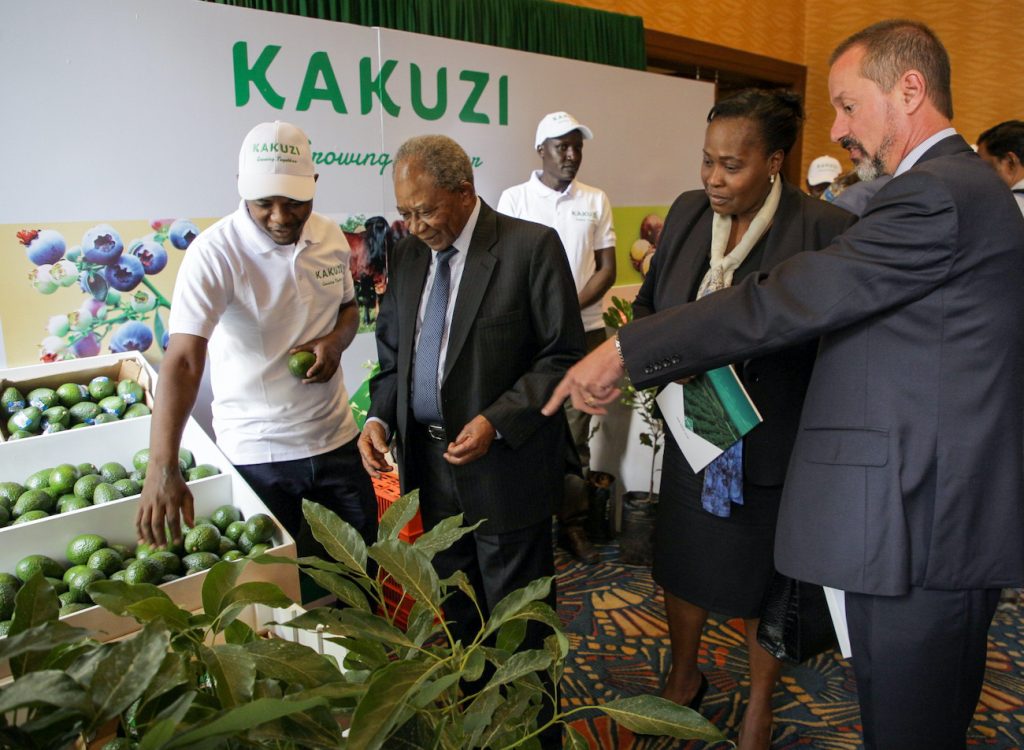
Kakuzi is East Africa’s largest avocado producer and one of the oldest agricultural estates on the NSE, with roots stretching back to a colonial-era sisal plantation.
History and Founding Story
Kakuzi’s origins trace back to 1906, when Oxford graduate and distinguished athlete Donald Farquharson Seth-Smith, together with his partner and principal backer Lord Cranworth, acquired roughly 10,117 hectares of land in what was then British East Africa.
The original crop planted on the estate was sisal, in huge demand at the time for rope manufacturing, and the operation grew through two related companies: Kakuzi Fibrelands Limited, a public company growing sisal and coffee (coffee had been produced on the estate since 1919), and a neighbouring sisal operation, Sisal Limited, which later expanded into tea by acquiring land in the Nandi Hills.
Sisal Limited’s tea ambitions led it to acquire the neighbouring Siret Tea Estate, complete with its own processing factory, in 1948, after an earlier arrangement selling green leaf to a neighbour’s factory proved unsatisfactory.
In 1966, Kakuzi Fibrelands Limited and Sisal Limited merged to form Kakuzi Plc, bringing the company’s modern structure into being.
The company’s shares listed on the Nairobi exchange in 1951 (predating the formal 1966 merger that created the combined entity), and by 1990, UK-based agricultural holding group Camellia Plc had built majority interests in Kakuzi through its subsidiaries, Eastern Produce Plc and Lawrie Group Plc, a relationship that continues to define the company’s ownership today.
The company’s modern history took a dark and defining turn in 2019 and 2020.
Avocado farmers and other community members in Murang’a County raised allegations of serious human rights abuses, including rape and violence, against security guards employed by Kakuzi, with claims stretching back to 2009.
UK law firm Leigh Day announced it was representing victims and preparing a legal claim in the High Court in London against Camellia Plc over the alleged abuses.
The fallout was swift and severe: major British retailers including Tesco, Sainsbury’s, and Lidl suspended their avocado and macadamia supply from Kakuzi pending investigation, and Kakuzi itself, alongside an unnamed affiliate, ultimately spent a combined £4.8 million (roughly KSh675 million) on legal costs related to the dispute.
In 2021, in the wake of the crisis, Kakuzi became the first corporate in Sub-Saharan Africa to establish an Independent Human Rights Advisory Committee, chaired by former Kenyan Attorney General Professor Githu Muigai, and the company also appointed its second-largest shareholder, John Kibunga Kimani, to the board for the first time, following earlier complaints from minority shareholders about being locked out of board representation.
Kenya’s Capital Markets Authority also opened an investigation into Kakuzi over separate allegations of profit shifting abroad and corporate governance concerns tied to majority shareholder Camellia.
Core Business Lines / Revenue Streams
Kakuzi operates a diversified agricultural estate spanning two separate locations in Kenya, with avocados as its single largest revenue driver.
- Avocados (the core engine): Kakuzi is the largest avocado producer in East Africa, farming 408 hectares and exporting approximately 45% of Kenya’s total avocado export volume, growing both Fuerte and Hass cultivars for markets in the UK, Continental Europe, and Asia. This remains the company’s dominant revenue segment, though it is also the most exposed to volatile global pricing, as recent results have shown.
- Macadamia nuts: Processed through a macadamia processing plant with an installed capacity of 2,000 tonnes of saleable kernel, one of the largest such facilities in East Africa, adding a second major export crop alongside avocados.
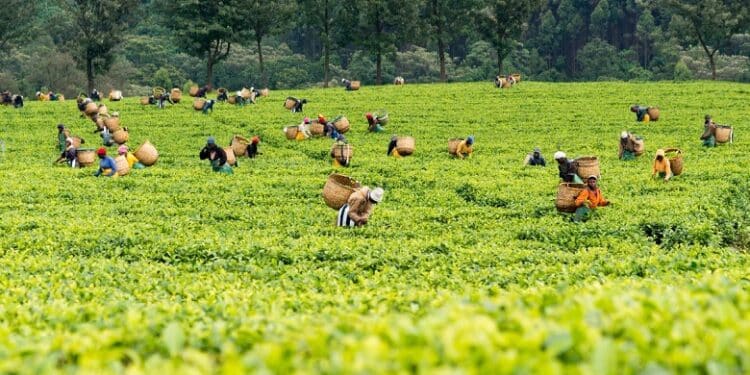
- Tea: Grown and processed at the company’s Nandi Hills estate, roughly 330 to 350 kilometres northwest of Nairobi and entirely separate from the main Makuyu operation, a legacy of the original Siret Tea Estate acquisition.
- Blueberries: A newer, actively expanding product line; the company’s blueberry operation was being extended to 22 hectares by the end of 2026, part of a push toward higher-value horticultural diversification.
- Forestry and livestock: Commercial forestry (producing timber products including poles and fencing, with continued strong demand from the local pole market) and livestock farming (beef and dairy cattle) round out the group’s agricultural base.
- Domestic value addition: The Kakuzi Farm Market, the company’s direct-to-consumer domestic channel, crossed KSh50 million in annual sales for the first time in a recent period, selling cold-pressed macadamia oil, ready-to-eat nuts, avocado fruit, blueberry packs, and loose-leaf tea, a small but growing complement to the company’s dominant export business.
Competitive Position in Its Industry
Kakuzi’s standout competitive position is in avocados, where its status as East Africa’s largest producer, exporting nearly half of all Kenyan avocado volume, gives it genuine scale advantages in a market where Kenya itself has become one of the world’s fastest-growing avocado exporters.
The company holds an extensive set of international certifications (FSSC 22000, GlobalG.A.P, GRASP, SPRING, Halal, SMETA, and Rainforest Alliance) that support its access to demanding European and Asian retail markets.
That scale and market access, however, has not insulated the company from volatile global commodity pricing, and 2026 has proven to be a genuinely difficult year.
The company issued a formal profit warning alongside its half-year results for the six months to 30 June 2026, reporting that net profit had collapsed 97.6% to just KSh7.1 million, down from KSh295.5 million in the same period the year before, with profit before tax falling from KSh435.2 million to just KSh10.4 million.
The causes were a combination of factors: avocado operating profit fell 45.3% to KSh215.9 million as global avocado supply stayed high and prices came under pressure, macadamia swung from profit into loss as international prices weakened, dry farm conditions hurt yields, and shipping routes were disrupted by conflict in the Middle East, specifically affecting freight logistics for the company’s growing blueberry exports.
Forestry was the one bright spot, with operating profit rising to KSh73.3 million on continued demand for poles.
The board did not recommend an interim dividend for the period, a sharp reversal from the company’s stronger recent years, which had included a doubling of net profit to KSh845.8 million in 2022 and a record dividend raise that same year.
Kakuzi’s main listed peers in the agricultural sector include Sasini, Williamson Tea Kenya, Kapchorua Tea Kenya, and Limuru Tea, though Kakuzi’s particular combination of avocado dominance, macadamia processing scale, and a genuinely global certification and compliance framework sets it apart from more narrowly tea-focused competitors.
Ownership Structure
Kakuzi is majority controlled by its long standing UK-listed parent, with a notable and historically contentious relationship between that controlling shareholder and the company’s Kenyan minority investors.
- Camellia Plc: The controlling shareholder, holding a 50.70% stake through its subsidiaries Bordure Limited and Lintak Investments. Camellia is itself a London-listed (AIM) holding company for a diversified group of international agricultural businesses spanning tea, avocados, and other crops across multiple countries including India, Bangladesh, Malawi, and South Africa, alongside its Kenyan operations through Kakuzi and sister company Eastern Produce Kenya.
- John Kibunga Kimani: The company’s second-largest shareholder, a prominent individual Kenyan investor who was appointed to Kakuzi’s board for the first time in the aftermath of the 2020 human rights controversy, following earlier complaints that minority shareholders lacked adequate board representation.
- General public and institutional investors: The remainder is held by a broad base of roughly 1,300 shareholders, the large majority of whom, according to Camellia’s own public statements distancing itself from day-to-day control of the company, are Kenyan.
Camellia has publicly stated that it does not control Kakuzi’s board or its day-to-day operations, describing the company as managed by its own independent board on behalf of its shareholders, a characterisation that regulators and minority shareholders have at times publicly questioned, particularly during the Capital Markets Authority’s governance investigation.
Why It’s Listed on the NSE Specifically
Kakuzi’s NSE listing, dating to 1951, predates the vast majority of companies in this series and reflects the colonial-era origins of Kenya’s formal capital markets themselves, when large agricultural estates were among the first entities to seek public share capital in the territory.
As the company’s structure solidified through the 1966 merger and subsequent decades of growth, the listing gave it continued access to local capital for expansion into new crops, most recently blueberries, while also giving Kenyan investors direct ownership exposure to one of the country’s most significant agricultural exporters.
READ ALSO:Inside NSE:Kapchorua Tea Kenya (KAPC)
The listing’s significance has taken on a different, more consequential dimension in recent years: as a publicly listed company subject to Kenyan securities regulation, Kakuzi’s governance and disclosure obligations gave the Capital Markets Authority a formal basis to investigate allegations against its majority shareholder, and gave minority investors, including its second-largest shareholder, a clear avenue to demand, and ultimately secure, greater board representation following the 2020 crisis.
For investors today, Kakuzi’s NSE listing offers direct exposure to Kenya’s avocado export boom, alongside the genuine and ongoing governance and reputational risks that come with a company whose controlling shareholder sits thousands of kilometres away in London.
Current Stock Price
Kakuzi’s share price has shown considerable volatility tied closely to its results announcements. Recent trading data put the stock at around KSh427.75 to KSh439.00, with a 52-week range of roughly KSh353.50 to KSh440.00 and a market capitalisation in the region of KSh8.3 to KSh8.6 billion.
The stock has previously demonstrated how sharply it can move around earnings: in one notable episode, the share price plunged 37.5% in a single day despite the company announcing record 2022 earnings and raised dividends, before rebounding 76.9% over the following month to reach a new high, illustrating the kind of thin-volume volatility that can affect even an established, well-known NSE counter.
Given the company’s September 2026 profit warning flagging a further decline in full-year earnings of at least 25%, the share price should be expected to remain sensitive to further updates on crop pricing and shipping disruptions through the rest of the year.
Share prices move daily. For a live quote, check the NSE’s official market data page or a licensed brokerage platform before making any decisions.
How to Buy Kakuzi Shares
You don’t need to be in Kenya to buy KUKZ shares; it can be bought locally or from abroad:
- Open a CDS (Central Depository System) account. This is Kenya’s electronic share registry account, required to hold any NSE listed stock. It’s opened through a licensed stockbroker or investment bank.
- Choose a licensed NSE stockbroker or investment bank. Examples include firms like Standard Investment Bank, AIB-AXYS Africa, Genghis Capital, and Faida Investment Bank. A full list of licensed trading participants is available on the NSE website.
- Fund your trading account via bank transfer, mobile money (M-Pesa is widely supported), or card, depending on the broker.
- Place an order for KUKZ through the broker’s trading platform, app, or by instructing your broker directly, specifying the number of shares or amount you want to invest. Be aware that Kakuzi has historically traded on relatively thin volumes, which can contribute to sharp single-day price swings.
- For non resident and diaspora investors, several online platforms (such as mystocks.africa and similar cross border brokerages) let you open an account remotely, fund it in USD or your local currency, and buy NSE listed shares like KUKZ without needing an in country presence, though you should confirm licensing and custody arrangements before using any platform.
- Hold and track. Shares are held electronically in your CDS account. Kakuzi has a track record of paying dividends in stronger years, including a final dividend of KSh16.00 per share for the 2025 financial year, but the board did not recommend an interim dividend for the first half of 2026 given the sharp profit decline, so check the latest financial disclosures closely before assuming income from the shares.
This profile is for informational and editorial purposes and is not investment advice. Stock prices, especially, change constantly, so always verify current figures with the NSE or a licensed broker before making any investment decision.
Other figures reflect the most recent publicly reported data as of 2026 and may change with new financial disclosures.
Given the company’s recent profit warning and its history of significant governance and human rights controversies, readers may wish to research these matters further before forming a view on the stock.



Leave a Reply