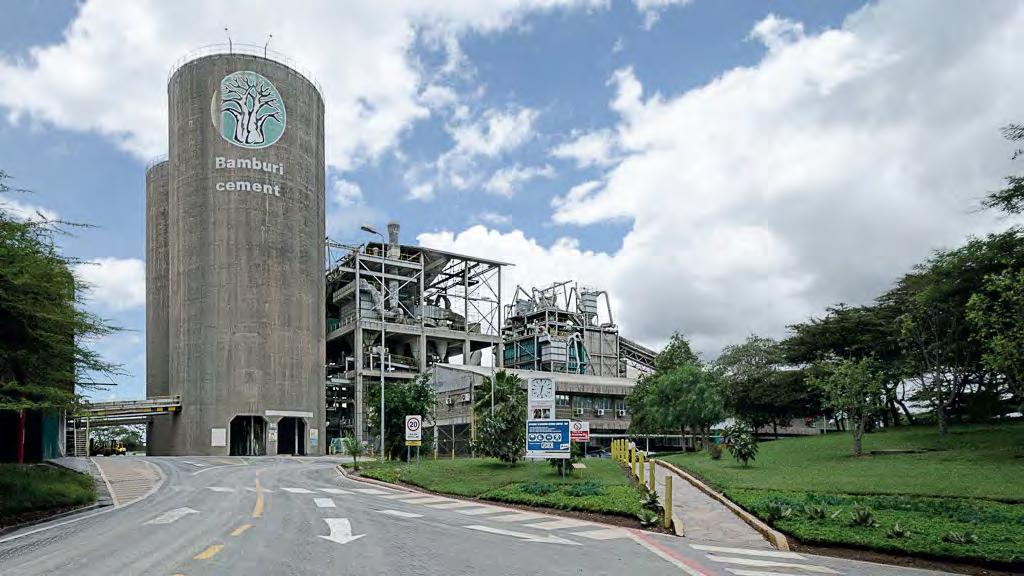
Bamburi Cement was founded in 1951 by Felix Mandl, a director of the Swiss firm Cementia Holding, as a partnership between Cementia and the British company Blue Circle Industries, operating out of what was then British Kenya.
Its first plant began production in Mombasa in 1954 with an annual capacity of 140,000 tonnes, modest compared with the roughly 1.1 million tonnes the same site produces today.
Ownership consolidated over the following decades through a chain of European corporate mergers. In 1989, the French group Lafarge acquired Cementia, becoming an equal shareholder alongside Blue Circle.
Lafarge then bought out Blue Circle outright in 2001, becoming the world’s largest building materials company at the time and Bamburi’s principal shareholder.
A new one million tonne clinker grinding plant was added just outside Nairobi in 1998, lifting total capacity to 2.1 million tonnes.
In 2015, Lafarge itself merged with Swiss rival Holcim to form LafargeHolcim, later renamed simply Holcim Group in 2021, bringing Bamburi under the Holcim banner for the next several years.
The company’s defining recent chapter began in July 2024, when Holcim confirmed plans to divest its Kenyan business, and Tanzania’s Amsons Group, through its Kenyan subsidiary Amsons Industries (K) Ltd, launched a cash takeover offer for 100 percent of Bamburi’s shares at Sh65 each, valuing the company at roughly Sh23.6 billion.
The offer closed in December 2024 with Amsons securing 96.54 percent of Bamburi’s shares, crossing the threshold under Kenyan law that allows a majority acquirer to compulsorily buy out remaining minority shareholders in a process known as a squeeze-out.
By June 2025, Amsons had increased its holding to 99.98 percent, leaving just ten minority shareholders holding a combined 67,082 shares.
The Nairobi Securities Exchange suspended trading in Bamburi’s shares effective February 28, 2025, to facilitate the buyout, and that suspension has since been repeatedly extended while the company moves toward a formal delisting after 55 years as a publicly traded company.
Core Business Lines and Revenue Streams
Bamburi remains the leading cement manufacturer in East Africa, built around a familiar set of building materials products:
- Cement manufacturing: producing cement under well known local brand names including Nguvu, PowerMax, PowerPlus, Powercrete, Tembo, Fundi, Duracem, and Powerwhite, sold to everyone from individual homebuilders to large construction contractors.
- Ready mix concrete and precast products: supplying ready mixed concrete and precast concrete products for construction projects, through subsidiaries including Bamburi Special Products Ltd, known for its BamburiBlox paving blocks.
- Quarry rehabilitation and land management: through Lafarge Eco Systems Ltd, which manages the company’s mining reserve lands and rehabilitates quarries once they’ve been mined out, including a well known nature park built from a former quarry near Mombasa.
- A retained minority stake in a domestic rival: Bamburi also holds a 12.5 percent minority shareholding in East African Portland Cement Company, another NSE listed cement manufacturer, a legacy of its former parent Lafarge’s broader Kenyan cement holdings.
The company’s main operating business today is squarely focused on Kenya, having sold its 70 percent stake in Uganda’s Hima Cement for roughly $84 million in March 2024, a move that streamlined its footprint shortly before the Amsons takeover.
Financially, the business has performed strongly since the takeover: first half 2026 results showed profit hitting a nine year high of about Ksh 1.37 billion, which the company attributed to improved profitability and disciplined management of working capital, alongside a swing in operating cash flow from an outflow of Ksh 290 million the prior year to an inflow of Ksh 2.25 billion.
READ ALSO:Inside the NSE: Limuru Tea (LIMT)
Competitive Position in the Industry
Bamburi has long been, and remains, the largest cement manufacturer in Kenya and the broader East African region, with its Mombasa plant ranking as the second largest cement plant in sub-Saharan Africa.
It competes against a handful of other listed and unlisted cement producers in Kenya, including East African Portland Cement Company, in which Bamburi itself holds a minority stake, alongside newer entrants that have expanded Kenya’s cement manufacturing capacity in recent years.
Its new owner, Amsons Group, brings its own competitive weight to the table: a Tanzania based conglomerate that already operated cement businesses under the Camel Cement and Mbeya Cement brands before acquiring Bamburi, Amsons’ combined cement manufacturing capacity across the region grew to roughly 13,000 metric tonnes per day following the Bamburi deal.
Amsons has also announced plans to invest a further $400 million in Bamburi’s Kenyan operations over three years, signaling an intent to expand rather than simply extract value from the acquisition, and its indirect 12.5 percent stake in East African Portland Cement, inherited through the Bamburi deal, has drawn regulatory scrutiny given Amsons’ now substantial combined influence across Kenya’s cement sector.
Bamburi’s strong recent profitability, even while suspended from public trading, suggests its underlying competitive position in the Kenyan cement market remains solid, insulated for now from the usual pressure public markets place on quarterly results.
Ownership Structure
Bamburi’s ownership underwent a complete transformation in the space of about eighteen months.
Before the takeover, the company’s principal shareholders were Fincem Holding Limited and Kencem Holding Limited, both subsidiaries of Holcim, each holding 29.30 percent for a combined 58.6 percent controlling stake, alongside other significant holders including Standard Chartered Nominees (15.68 percent) and Aksaya Investment Holdings Limited (11.75 percent).
Following Amsons Industries’ takeover offer, completed in December 2024, that entire ownership picture changed: Amsons acquired 96.54 percent of Bamburi’s shares outright, and by June 2025 had pushed its holding to 99.98 percent, leaving just ten minority shareholders with a combined 67,082 shares, a tiny fraction of the company’s roughly 363 million issued shares.
Those remaining holdouts are now subject to a compulsory buyout, known as a squeeze-out, at Sh65 per share, the same price Amsons paid in its original offer, under Kenyan Capital Markets Authority rules that require majority acquirers to offer minority shareholders fair compensation and an exit route before a company is delisted.
Once that process completes, Bamburi Cement is expected to become a wholly or near wholly owned subsidiary of Amsons Industries (K) Ltd, itself part of the Tanzania based Amsons Group.
Why It’s Listed on the NSE Specifically
Bamburi’s NSE history explains a lot about why the company was listed for so long, and also helps explain why that listing is now ending:
- One of Kenya’s oldest industrial listings: Bamburi has traded on the Nairobi Securities Exchange since 1970, giving it one of the longest listing histories of any company in this series, reflecting its status as a flagship Kenyan industrial company for more than half a century.
- Local incorporation and regulation during its publicly traded decades: as a company incorporated and operating in Kenya, the NSE was the natural venue for public capital and disclosure throughout its decades as a Lafarge and later Holcim subsidiary.
- A listing that outlived several changes of foreign parent: Bamburi’s NSE listing persisted through ownership moving from Cementia to Lafarge to LafargeHolcim to Holcim Group, each change happening at the level of its foreign controlling shareholder while the Kenyan listed entity itself remained publicly traded throughout.
- Why the listing is now ending: under Kenyan securities law, once an acquirer crosses certain ownership thresholds (75 percent gives the option to seek delisting, and over 90 percent triggers the right to compulsorily buy out remaining minority shareholders), it can choose to take the company private rather than maintain the costs and disclosure obligations of a public listing. Amsons explicitly reserved this option in its original offer documents, and having pushed its stake to 99.98 percent, a formal delisting looks like the near certain final outcome, which is precisely why Bamburi’s story in this series ends differently from every other company covered so far.
Current Stock Price
Bamburi Cement does not currently have a tradeable share price. Trading in BAMB shares was suspended on the Nairobi Securities Exchange effective February 28, 2025, and that suspension has been extended multiple times since, most recently remaining in force as of September 2026, pending completion of the compulsory buyout and expected delisting.
The last price the stock traded at before suspension was around Sh54 to Sh56.50, though the figure that actually matters for any remaining shareholder is the squeeze-out price of Sh65 per share, which is what Amsons is legally required to pay minority holders who did not accept the original offer.
If you’re looking at a “current price” for BAMB on an older data source or app, treat it as historical only. There is no live, tradeable market price for this stock right now, and there won’t be one again once the delisting is finalized.
What This Means If You’re a Shareholder, or Thinking About Becoming One
Because this stock cannot currently be bought through the ordinary NSE trading process described elsewhere in this series, this section replaces the usual “how to buy” steps with what the situation actually means in practice:
- You cannot buy new BAMB shares through the NSE right now. With trading suspended, there is no order book, no broker can place a buy order for you, and no CDS transfer of new shares can happen through the ordinary exchange mechanism.
- If you already hold shares, you are entitled to be paid out. Under Kenya’s Capital Markets Act, Amsons is required to offer fair compensation, currently set at Sh65 per share, to any minority shareholder swept up in the compulsory acquisition process. If you hold Bamburi shares and haven’t yet received payment or instructions, it’s worth contacting your stockbroker or the company’s registrar directly.
- You have the right to challenge the terms if you disagree. Kenyan law gives minority shareholders the right to apply to the courts either to prevent the compulsory acquisition entirely or to seek different terms, if they believe the offered price doesn’t reflect fair value.
- Watch for the formal delisting notice. Once Amsons completes the buyout of all remaining shareholders, expect a formal delisting announcement from the NSE, at which point BAMB will be removed from the exchange entirely and the company will operate as a private subsidiary of Amsons Industries (K) Ltd.
- If you want exposure to Kenya’s cement sector going forward, the remaining NSE listed option in this space is East African Portland Cement Company, though note that Amsons, through its Bamburi acquisition, has also picked up a 12.5 percent minority stake there, giving the same Tanzanian conglomerate indirect influence across more of Kenya’s listed cement sector than might be immediately obvious.
As with any company going through a takeover and delisting, the details here, particularly around timing and final payout mechanics, can change as the process concludes.
If you currently hold Bamburi shares, your stockbroker or the company’s share registrar is the right place to confirm your specific situation rather than relying on a general overview like this one. This isn’t financial or legal advice.



Leave a Reply