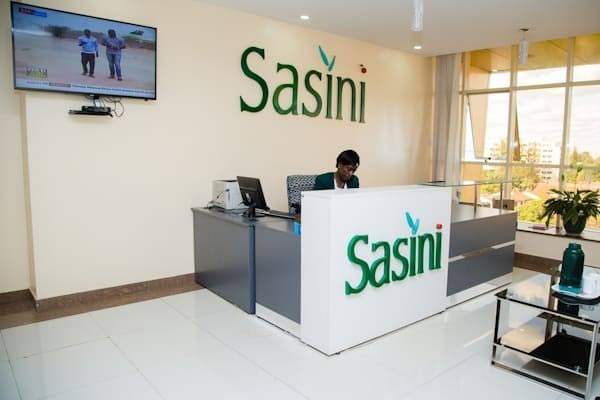
Sasini’s roots go back to 1952, eleven years before Kenya’s independence, when the business began as a single farm coffee growing operation in what was then the Kenya Colony.
Growth came quickly: having concluded early on that agricultural risk was best managed through diversification, the young company acquired three more coffee farms in Kiambu District by 1959.
The company expanded into tea in 1964, buying a significant stake in its first tea operation, Kipkebe Limited, on the western side of the Rift Valley, and raised that stake to full ownership by 1965, the same year the company first listed, making Sasini one of the oldest companies on the Nairobi Securities Exchange.
Further acquisitions followed, including a majority stake in Mweiga Estate Limited, a coffee farming operation in the highland coffee zones around Mount Kenya. For decades the business operated as Sasini Tea and Coffee Limited, with its two flagship crops at the center of everything it did.
The 2000s brought a further wave of diversification and corporate tidying up. The company changed its registered name to Sasini Limited in 2007 to reflect its broader portfolio beyond tea and coffee, and then to Sasini PLC in 2017 to comply with Kenya’s updated Companies Act.
Since 2007, the group has pushed further into value added activities, including packing branded tea and coffee products for retail, running its own coffee milling operations, and building export trade operations based in Mombasa, moving beyond raw commodity farming into consumer facing and trading businesses.
More recently, Sasini has made headlines less for growth than for a very public reversal: in 2026, the company terminated a planned Sh7.9 billion (about $61 million) sale of its Gulmarg Division coffee estate in Kiambu County after the buyer failed to meet contractual obligations, a setback the company disclosed in its half year results released on June 4, 2026.
Core Business Lines and Revenue Streams
Sasini operates through five reporting segments, reflecting both its original crops and its later diversification:
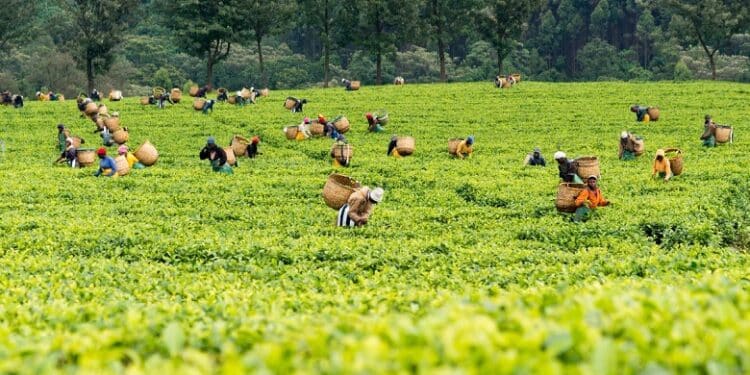
- Tea: growing and processing tea on estates in the Highlands west of the Rift Valley, near Sotik.
- Coffee: Sasini’s founding business, with bulk coffee grown across eight independent estates in the Central Highlands around Mount Kenya, processed at the company’s own pulping and wet processing facility, plus commercial milling and marketing of coffee for other growers.
- Macadamia: processing and marketing macadamia nuts, certified to the British Retail Consortium Global Standard for export markets.
- Avocado: sourcing, processing, and exporting avocado fruit, a newer but fast growing part of the group’s portfolio.
- Others: dairy operations and livestock, forestry, renting of growing land, and leasing of plant and machinery.
Both the tea and coffee operations carry Rainforest Alliance certification, a widely recognized sustainability standard in the global commodities trade that can support better pricing and access to certain export markets.
Financially, the group’s performance has been volatile, tracking commodity prices and costs closely.
The 2024 financial year brought a net loss of Ksh 562.87 million despite revenue rising over 20 percent, as rising costs, including sales costs up more than 45 percent, along with higher finance and administrative expenses, outpaced the revenue gain.
Trailing figures more recently point to a return to profitability, though as with any agribusiness, results can swing sharply from one year to the next depending on weather, global commodity prices, and input costs.
Competitive Position in the Industry
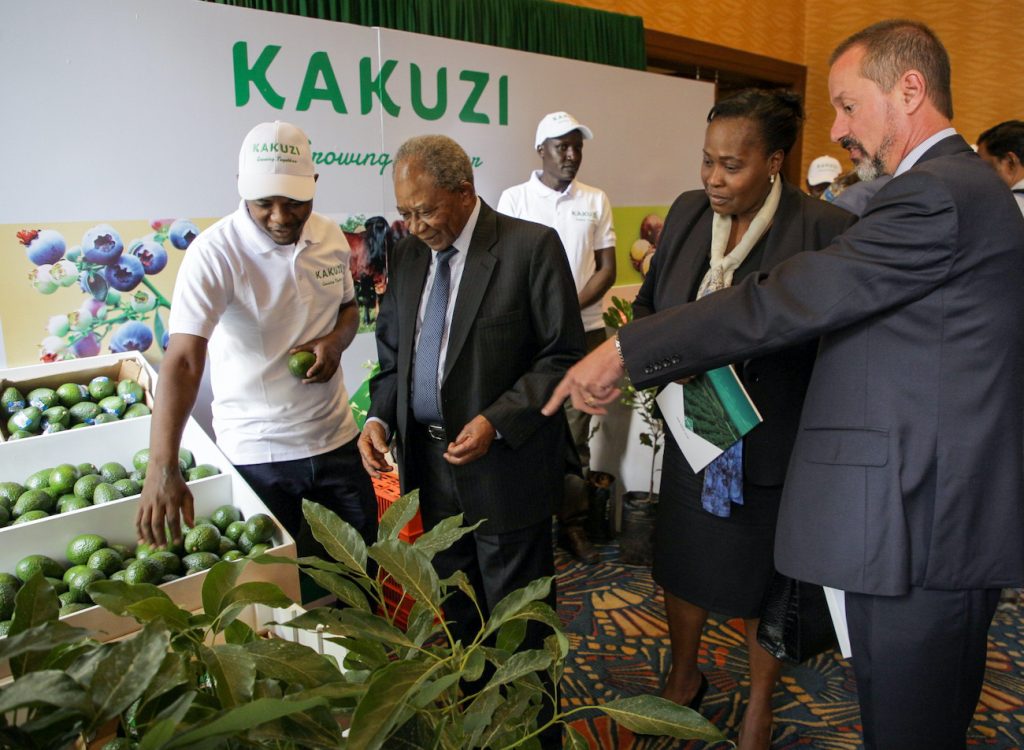
Sasini is one of the largest and most diversified agribusiness companies on the NSE, competing in a sector that includes several other listed tea and coffee growers such as Kakuzi, Williamson Tea Kenya, and Kapchorua Tea Company.
Among that peer group, Sasini stands out for the breadth of its portfolio, spanning tea, coffee, macadamia, avocado, dairy, livestock, and forestry, rather than concentrating on a single crop the way some of its smaller listed peers do.
Its scale and diversification give it some insulation against price swings in any one commodity, a meaningful advantage in a sector where global coffee and tea prices can move sharply on weather events, exchange rates, and shifts in international demand.
At the same time, the company’s land holdings themselves have become a point of commercial interest, as reflected in the large, though ultimately failed, proposed sale of its Gulmarg coffee estate in 2026, a reminder that part of Sasini’s value lies not just in its annual crop output but in the underlying agricultural land it owns.
The sector overall faces structural challenges common to Kenyan agribusiness, including rising input and labor costs, climate variability affecting yields, and competition from other origin countries in global coffee and tea markets, all of which show up directly in Sasini’s year to year profitability.
Ownership Structure
Sasini has one of the most concentrated and well known ownership structures of any company on the NSE.
It is majority controlled by the family of the late Kenyan business magnate Naushad Merali, one of the country’s most prominent tycoons, through three investment vehicles, Legend Investments Limited, Yana Towers Limited, and East Africa Batteries Limited. Together these three entities have held a combined stake of approximately 65.46 percent in recent years.
A separate significant shareholder, Gulamali Ismail, has held an additional stake of around 7.92 percent, bringing the combined holding of the largest four shareholders to roughly 74 percent as of the company’s most recent annual report.
The remaining shares are spread among more than 6,000 shareholders, the great majority of whom are Kenyan, according to the company’s own disclosures, alongside a modest amount of foreign institutional ownership.
Industry wide ownership data has placed Sasini among the NSE’s more locally owned companies, with local institutions controlling close to 78 percent of shares in one recent analysis, a notably different profile from the foreign parent controlled banks and insurer covered elsewhere in this series.
READ ALSO:Inside the NSE: Kakuzi (KUKZ)
Why It’s Listed on the NSE Specifically
Sasini’s NSE listing reflects both its deep Kenyan roots and the practical realities of running a large agribusiness:
- One of the exchange’s oldest listed companies: Sasini has traded on the Nairobi Securities Exchange since 1965, giving it one of the longest continuous listing histories of any company covered in this series, predating most of the banks by several decades.
- A genuinely Kenyan company from the outset: founded in colonial era Kenya and built up through acquisitions of Kenyan farms and estates, Sasini’s entire operating base, its tea, coffee, macadamia, and avocado growing land, sits inside the country, making a domestic listing the natural fit.
- Broadening ownership beyond a single family: even with the Merali family holding a clear majority stake, the public listing has brought in thousands of other Kenyan shareholders, giving ordinary investors a way to hold a stake in some of the country’s most historic agricultural land and brands.
- Capital markets access for a capital intensive business: agribusiness requires significant investment in land, processing facilities, and working capital that fluctuates with harvest cycles, and a public listing gives Sasini access to capital markets financing and the discipline of public reporting that supports that kind of long term asset base.
Current Stock Price
As of October 2, 2026, SASN closed at Sh23.80 on the Nairobi Securities Exchange, down about 2.9 percent on the day, giving the company a market capitalization of roughly Sh5.43 billion. The stock has had a strong run over the past year, up close to 29 percent, and its 52 week range has spanned roughly Sh17.05 to Sh33.90.
Sasini’s dividend history has been inconsistent in recent years, with the board opting not to declare a final dividend in at least one recent year following weaker annual results.
Given the company’s exposure to volatile commodity prices and the still unresolved status of its large Gulmarg estate following the collapsed 2026 sale, the stock can move on company specific news as well as broader market conditions.
Treat this figure as a historical snapshot rather than today’s price, and check the live quote through the NSE website, your broker’s trading platform, or a data source such as African Markets or myStocks before making any decisions.
How to Buy Sasini PLC Shares
Buying SASN shares follows the standard process used across the Kenyan market:
- Open a CDS account. A Central Depository System (CDS) account holds your shares electronically. You can open one through the Central Depository and Settlement Corporation (CDSC), though most investors do this through a licensed stockbroker as part of onboarding.
- Choose a licensed stockbroker. You’ll need an NSE licensed brokerage, such as Faida Investment Bank, AIB-AXYS Africa, or Genghis Capital, to place trades. Most offer mobile or online trading platforms.
- Fund your trading account. Deposit money into the account linked to your broker, typically through bank transfer or mobile money, depending on what the brokerage supports.
- Place your buy order. Specify the ticker (SASN), the number of shares, and your price, either a market order at the prevailing price or a limit order at a price you set. Orders match through the NSE’s electronic trading system.
- Diaspora and foreign investor options. Kenyans abroad and foreign investors can buy SASN shares too. Many Kenyan brokerages support remote account opening with certified identification, and some platforms allow USD settlement, letting diaspora investors trade without being physically present in Kenya.
- Track your holding. Once the trade settles, usually within a few business days, the shares reflect in your CDS account. You can follow price movement, annual results, and corporate actions, including any further developments on the company’s land holdings, through your broker’s platform, the NSE website, or financial data sites carrying live NSE quotes.
As with any equity investment, and especially one tied closely to agricultural commodity cycles like this one, share prices can go down as well as up. This isn’t financial advice. It’s worth doing your own research, or speaking with a licensed financial advisor, before buying.



Leave a Reply