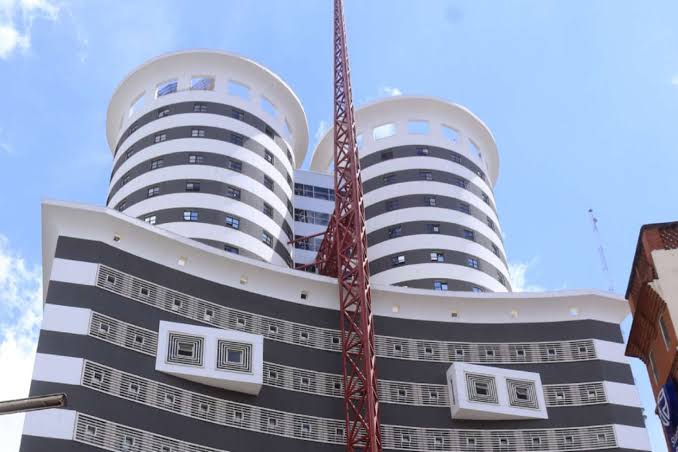
Nation Media Group is the publisher of the Daily Nation and the owner of NTV, and for 66 years it was held by the Aga Khan network.
That chapter closed in 2026, when Tanzanian businessman Rostam Azizi took control.
The company he bought is the largest independent media house in East and Central Africa, but it has lost money for three straight years, its shares trade far below their old highs, and the deal was structured so that minority shareholders were not offered an exit.
Here’s the full picture.
History and Founding Story
NMG began in 1959, when Prince Karim Aga Khan IV acquired the Kiswahili weekly Taifa Leo and set up East African Newspapers (Nation Series) Limited.
The aim was to create an independent press for the years leading up to independence. T
he first Daily Nation appeared on 20 March 1960, and by the time Kenya became independent in 1963 it was already a leading source of news and analysis.
In 1973 the company became the first media company to list on the Nairobi Stock Exchange.
The group then grew steadily: it created The EastAfrican as a regional weekly, launched Business Daily, and in 1999 entered broadcasting with NTV Kenya and Easy FM (now Nation FM).
It expanded regionally by acquiring Uganda’s Monitor Publications, publisher of the Daily Monitor, and by setting up Mwananchi Communications in Tanzania.
It later cross listed in Uganda, Tanzania, and Rwanda, so the shares now trade on four exchanges.
The past few years have been difficult. Print circulation and advertising have fallen, revenue dropped 12.5% in 2024 to KSh6.23 billion, and the company cut staff and trimmed costs.
In September 2025, AKFED moved its 54.08% stake into a wholly owned vehicle, NPRT Holdings Africa Limited, and Kenya’s Capital Markets Authority (CMA) granted an exemption from making a mandatory takeover offer.
Then on 10 March 2026, AKFED announced it would sell the whole of NPRT to Taarifa Limited, an affiliate of Rostam Azizi’s Taifa Group, with the documents signed at the Serena Hotel in Nairobi.
Taarifa completed the acquisition on 31 August 2026, after exemptions from takeover rules in Kenya, Tanzania, and Uganda.
The Aga Khan University’s Graduate School of Media and Communications continues the network’s involvement in journalism training.
READ ALSO:Inside the NSE: TPS Eastern Africa / Serena Hotels (TPSE)
Core Business Lines / Revenue Streams
NMG earns money mainly from advertising, copy sales, and increasingly digital audiences, across more than 30 brands.
- Print: Daily Nation, Sunday Nation, Business Daily, Taifa Leo, and The EastAfrican in Kenya and the region; the Daily Monitor in Uganda; and Mwananchi, Mwanaspoti, and The Citizen in Tanzania. Print is the shrinking legacy business.
- Broadcast: NTV Kenya and Nation FM, plus NTV Uganda and radio stations KFM and Dembe FM in Uganda.
- Digital: Nation.Africa, streaming, podcasts, newsletters, and social media products. The group says it reaches more than 62 million digital users and is pivoting toward revenue from audiences rather than advertising alone.
- Printing and distribution: Commercial printing for third parties and a national distribution network (Nation Carriers).
- Regional operations: Businesses in Kenya, Uganda, Tanzania, and Rwanda employing over 1,000 people.
Competitive Position in Its Industry
NMG is the largest independent media group in the region and holds the strongest newspaper brands in Kenya.
In broadcasting it competes with Royal Media Services (Citizen TV) and other Kenyan groups, and the other listed media company on the NSE is Standard Group.
Like newspapers everywhere, it faces falling print readership and advertisers who have moved to digital platforms, including global tech companies that NMG cannot match on scale.
The financial results show how hard this has been. The group made a net profit of KSh318.5 million in 2022, then lost KSh205.7 million in 2023, KSh254.4 million in 2024, and about KSh308.6 million in 2025, on revenue of roughly KSh6.04 billion in 2025.
The first half of 2025 was a near break even (operating loss before tax of KSh48.7 million, down 86% from a year earlier), but that did not last.
In the first half of 2026, turnover fell 4.8% to KSh2.85 billion and the net loss widened to KSh357.2 million (loss before tax KSh440.8 million). Management blamed subdued consumer spending and inflation, and no dividend was recommended.
Business Today notes this puts the company on track for another full year loss in 2026.
The new owner has said NMG will remain an independent newsroom and that he plans to deepen its reach across Kenya, Uganda, Tanzania, and Rwanda.
A reset of the board followed completion of the deal, and the new directors include a former National Bank of Kenya chief executive and Jubilee Holdings group chief executive Dr. Julius Kipngetich.
Ownership Structure
The register has a single controlling block, and a fresh owner.
- NPRT Holdings Africa Limited: 54.08%, equal to 92,618,177 shares. NPRT is now owned by Taarifa Limited, controlled by Rostam Azizi, so he holds indirect control. Azizi is a Tanzanian businessman and founder of Taifa Group, with other media interests including Habari Corporation in Tanzania. Until August 2026, NPRT belonged to the Aga Khan Fund for Economic Development, ending a 66 year association.
- Other shareholders: The remaining shares, a little under 46%, are held by institutions, pension funds, and retail investors across the four exchanges. MarketScreener puts the free float at about 36%.
Minority investors should note what the regulators decided. Taarifa said from the start that it would not make an offer for the remaining shares, and it received exemptions to that effect in Kenya, Tanzania, and Uganda.
It also said it would not delist the company from the NSE or its other exchanges. In effect, the control premium went to AKFED, not to ordinary shareholders.
Why It’s Listed on the NSE Specifically
NMG listed in 1973, in the same era as other long established Kenyan companies, as a way to widen ownership of a company that its founder described as a vehicle for an independent press.
Public shareholding gave the business capital to buy modern printing presses, expand into Uganda and Tanzania, and launch television, while the Aga Khan network kept effective control through its majority stake.
The cross listings in Kampala, Dar es Salaam, and Kigali reflect its regional audience. The listing has also mattered in the recent change of control: it required public disclosures, regulatory approvals, and a decision from the CMA on whether minority shareholders were owed an offer.
For investors, NMG remains the main way to own a stake in an East African media group, but at a price that reflects years of losses and a change of control that did not include them.
Current Stock Price
NMG closed at about KSh13.40 on 28 August 2026, up 5.9% on the day, giving a market value of roughly KSh2.3 billion, according to MarketScreener.
That is far below the stock’s history: over the past year it has ranged from KSh11.30 to KSh20, over five years from KSh10.05 to KSh26.50, and over ten years it has traded as high as KSh116 (the old price level reflects a much larger past valuation, before years of declines).
The takeover news produced a sharp but short lived jump. The share closed at KSh13.25 on 10 March 2026, hit KSh17 within days (a two year high), and had slipped back to the KSh12 to KSh13 range by July and August, with a quote of KSh12.10 on 21 July 2026.
Trading is thin, so single day moves can be large. Share prices move daily. For a live quote, check the NSE’s official market data page or a licensed brokerage platform before making any decisions.
How to Buy Nation Media Group Shares
You don’t need to be in Kenya to buy NMG shares; it can be bought locally or from abroad:
- Open a CDS (Central Depository System) account. This is Kenya’s electronic share registry account, required to hold any NSE listed stock. It’s opened through a licensed stockbroker or investment bank.
- Choose a licensed NSE stockbroker or investment bank. Examples include firms like Standard Investment Bank, AIB-AXYS Africa, Genghis Capital, and Faida Investment Bank. A full list of licensed trading participants is available on the NSE website.
- Fund your trading account via bank transfer, mobile money (M-Pesa is widely supported), or card, depending on the broker.
- Place an order for NMG through the broker’s trading platform, app, or by instructing your broker directly. Because the stock trades thinly, limit orders are advisable.
- For non resident and diaspora investors, several online platforms (such as mystocks.africa and similar cross border brokerages) let you open an account remotely, fund it in USD or your local currency, and buy NSE listed shares like NMG without needing an in country presence, though you should confirm licensing and custody arrangements before using any platform. NMG is also tradable in Uganda, Tanzania, and Rwanda.
- Hold and track. Shares are held electronically in your CDS account. Do not expect income: no dividend was recommended for the first half of 2026, and the last payment I could confirm was KSh1.50 per share, paid in mid 2023. Check the latest announcements for any change under the new owner.
This profile is for informational and editorial purposes and is not investment advice. Stock prices, especially, change constantly, so always verify current figures with the NSE or a licensed broker before making any investment decision. Other figures reflect the most recent publicly reported data as of 2026 and may change with new financial disclosures. NMG is loss making and has just changed hands, so check for further announcements from the company and regulators.



Leave a Reply