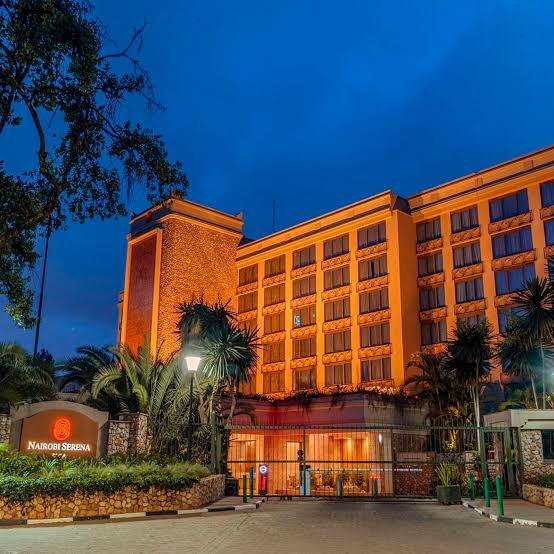
TPS Eastern Africa is the listed company behind Serena Hotels, the safari lodge and hotel chain whose properties sit inside Kenya’s best known national parks.
It was created as a development project by the Aga Khan network rather than as a conventional hotel business, and it is still controlled by that network today, with a tiny public float.
Its profits are swingy, its dividend is small, and its biggest assets are buildings in places where almost nobody else is allowed to build. Here’s the full picture.
History and Founding Story
The Serena story began in the early 1970s (the company dates the brand to 1970), when the Aga Khan Fund for Economic Development (AKFED), part of the Aga Khan Development Network, set up Tourism Promotion Services (TPS) in Kenya.
The idea was to use well designed hotels and safari lodges as a catalyst for tourism, jobs, and local development in places where such investment would otherwise not happen, often at the request of governments.
Its flagship, Nairobi Serena Hotel, opened on 16 February 1976.
The Serena safari lodges, with their distinctive architecture and ecological focus, earned a reputation for quality, service, and environmental responsibility, and the brand’s early lodges in Amboseli, Tsavo West, and the Mara became some of the most recognisable in East Africa.
The company that investors can buy today was created in 2006. TPS Eastern Africa Limited listed on the Nairobi Stock Exchange on 20 March 2006, after a successful share exchange offer for the older, already quoted Tourism Promotion Services Limited, which was then delisted.
The restructuring combined the Serena businesses in Kenya, mainland Tanzania, and Zanzibar under one listed company, which at the time was described as the only Kenyan listed tourism and hospitality company with operations across those markets.
Through other Aga Khan entities, the wider Serena group also operates hotels in places such as Pakistan, Tajikistan, and, historically, Afghanistan.
In May 2010, the company announced a rights issue to raise more than KSh1.2 billion for regional expansion, including buying a majority stake in Upekee Lodges, acquiring the assets of Mbuzi Mawe Tented Camp and Mountain Village, capitalising a development vehicle called Jaja Limited, and refurbishing the Nairobi and Kigali Serena hotels.
The portfolio then stood at 23 properties. Today the group says it operates 33 to 35 hotels, resorts, safari lodges, and camps across Kenya, Tanzania, Zanzibar, Uganda, Rwanda, the Democratic Republic of the Congo, Mozambique, Pakistan, and Tajikistan.
Core Business Lines / Revenue Streams
Serena makes money by running upscale accommodation and the services around it.
- Safari lodges and camps (the signature business): Properties inside or beside national parks and conservancies, including Amboseli Serena Safari Lodge, Mara Serena Safari Lodge, Kilaguni Serena Safari Lodge (Tsavo West), Lake Elmenteita Serena Camp, and Sweetwaters Serena Camp at Ol Pejeta.
- City hotels: Nairobi Serena Hotel, Kigali Serena, and other urban properties serving business travellers, conferences, and events.
- Beach and resort properties: Serena Beach Resort and Spa in Mombasa and Zanzibar properties.
- Food, beverage, and events: Restaurants, conferencing, and weddings add revenue beyond room nights.
- Regional spread: Operations in Tanzania, Uganda, Rwanda, and other markets reduce the group’s dependence on Kenya alone, though group results are still heavily tied to East African tourism.
The business is highly seasonal. The second half of the year, which includes the peak safari season, normally delivers a much larger share of annual profit than the first half, so half year figures can look weak even in a good year.
Competitive Position in Its Industry
Serena’s position rests on location and reputation more than on size.
Many of its lodges sit in protected areas where new construction is tightly restricted, which makes them hard to replicate. It also has a long record of recognition: Nairobi Serena has repeatedly been named Kenya’s leading hotel and Africa’s leading green hotel, and several Kenyan lodges carry Gold eco ratings recognised by the Global Sustainable Tourism Council.
The company says its reforestation programme has run since 1991, and an impact study it commissioned estimated that its East African operations generated the equivalent of more than US$300 million of GDP between 2013 and 2024.
Against that, the company faces competition from international hotel groups and other lodge operators, and its results are volatile. Net profit rose from KSh457.5 million in 2023 to KSh1.32 billion in 2024 (earnings per share of KSh4.54, up from KSh1.43).
In 2025, earnings per share fell to KSh2.77, with a net profit margin of around 7.5%. The first half of 2025 produced a small loss per share of KSh0.05, against a restated profit of KSh2.34 a year earlier (the earlier figures were restated for lease accounting and non controlling interests).
In the first half of 2026, operating profit before depreciation, finance costs, and tax was KSh517.1 million, down 4%, and management said it was cautiously optimistic about the second half.
Total assets were about KSh19.9 billion at mid 2025, so the balance sheet is large relative to the stock’s market value of roughly KSh4.6 billion.
READ ALSO:Inside the NSE: Sameer Africa (SMER)
Ownership Structure
TPS Eastern Africa is controlled by the Aga Khan network and has a very small public float.
- Aga Khan Fund for Economic Development (AKFED): The controlling shareholder. One recent company profile gives AKFED a 64.58% stake, while an older reference gave 45%, so check the current register before publishing a figure.
- Aga Khan University Foundation: A further shareholder, with 2.42% in the recent profile (4% in the older reference).
- Other holders: Related Aga Khan entities and the general public. MarketScreener puts the free float at only about 13.8%, which is consistent with the Aga Khan network holding the large majority.
AKFED is also the long standing anchor shareholder at Diamond Trust Bank Kenya and Jubilee Holdings.
The network’s founder and leader, Aga Khan IV, died on 4 February 2025 aged 88.
Why It’s Listed on the NSE Specifically
The 2006 listing was a restructuring and a capital raising platform at the same time.
By swapping the shares of the older TPS company into a new holding company, the Aga Khan network brought its Kenyan, Tanzanian, and Zanzibari Serena businesses under a single listed vehicle that could raise money from the public to expand, without giving up control.
That purpose showed in 2010, when the company used a rights issue of more than KSh1.2 billion to fund new lodges and refurbishments.
The listing also fits the network’s usual model: AKFED holds a controlling stake in each of its listed East African businesses, and the public market provides transparency and access to capital.
For investors, it offers a rare way to own a regional safari and hotel business, though the thin float makes it hard to trade in size.
Current Stock Price
On 4 September 2026, the share closed at about KSh18.00, up 6.19% on the day, according to AfricanFinancials.
Earlier in 2026 it traded between about KSh14.80 and KSh16.30. A year, three year, and ten year view shows how far it has fallen from its past: over ten years the price has ranged from KSh10.50 to KSh38, and over three years from KSh11 to KSh20.15. At KSh16.30, the market value was about KSh4.6 billion, which implies roughly 283 million shares in issue (my calculation).
Trading is thin: indicative liquidity over the twelve months to early September 2026 was only about US$566,000 (around KSh73 million).
Share prices move daily. For a live quote, check the NSE’s official market data page or a licensed brokerage platform before making any decisions.
How to Buy TPS Eastern Africa Shares
You don’t need to be in Kenya to buy TPSE shares; it can be bought locally or from abroad:
- Open a CDS (Central Depository System) account. This is Kenya’s electronic share registry account, required to hold any NSE listed stock. It’s opened through a licensed stockbroker or investment bank.
- Choose a licensed NSE stockbroker or investment bank. Examples include firms like Standard Investment Bank, AIB-AXYS Africa, Genghis Capital, and Faida Investment Bank. A full list of licensed trading participants is available on the NSE website.
- Fund your trading account via bank transfer, mobile money (M-Pesa is widely supported), or card, depending on the broker.
- Place an order for TPSE through the broker’s trading platform, app, or by instructing your broker directly. Because the free float is small, limit orders are advisable and large orders may take time to fill.
- For non resident and diaspora investors, several online platforms (such as mystocks.africa and similar cross border brokerages) let you open an account remotely, fund it in USD or your local currency, and buy NSE listed shares like TPSE without needing an in country presence, though you should confirm licensing and custody arrangements before using any platform.
- Hold and track. Shares are held electronically in your CDS account. The company pays one dividend a year: KSh0.35 per share for 2025 (the same as for 2024), with a record date of 26 June 2026 and payment on 30 July 2026, a yield of roughly 2% to 2.4%. No interim dividend was recommended for the first half of 2026, in line with usual practice.
This profile is for informational and editorial purposes and is not investment advice. Stock prices, especially, change constantly, so always verify current figures with the NSE or a licensed broker before making any investment decision. Other figures reflect the most recent publicly reported data as of 2026 and may change with new financial disclosures.




Leave a Reply