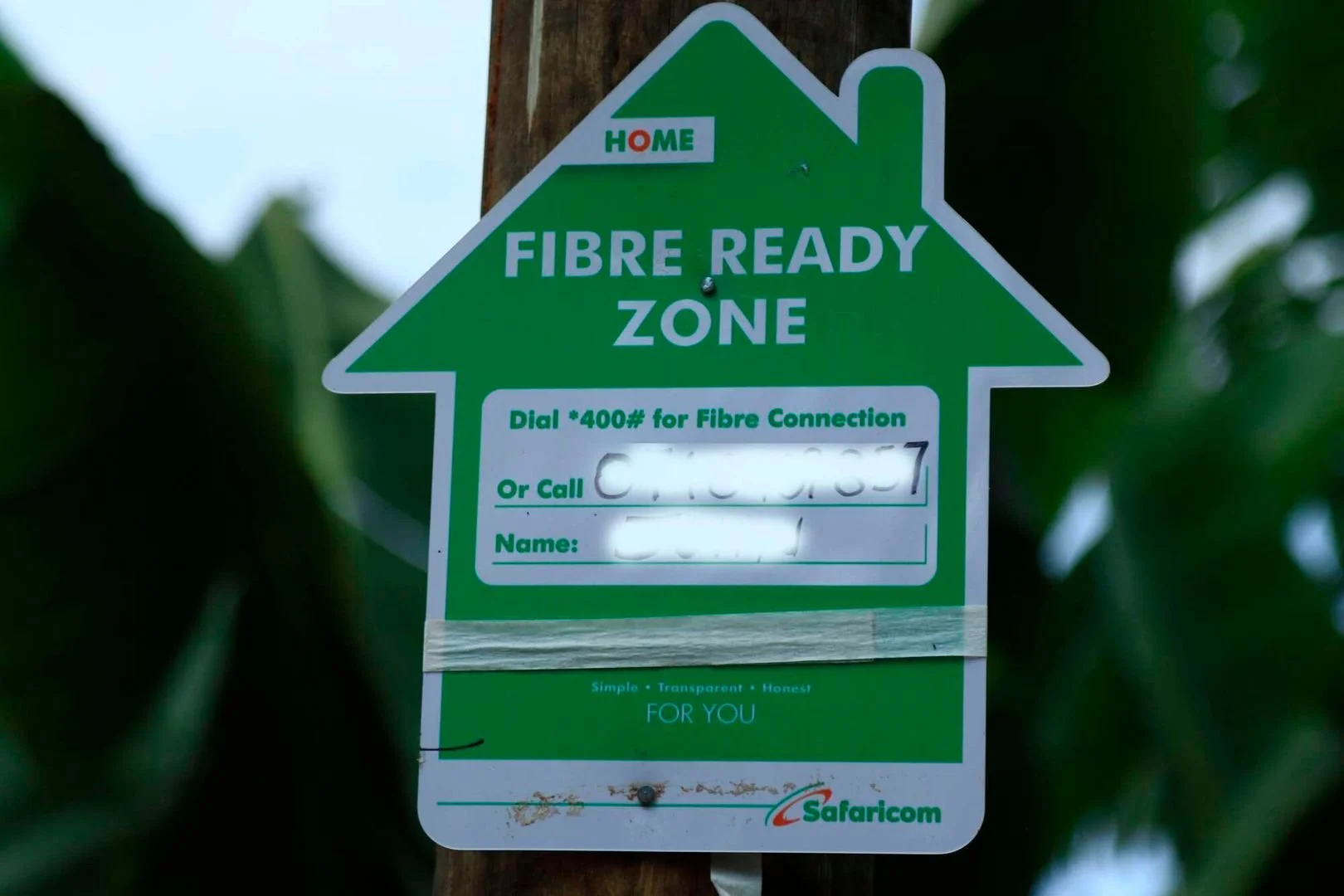
As competition intensifies in Kenya’s fixed internet space, Safaricom is fighting back, offering a limited-time 25% discount on business fibre installations.
This strategic discount, revealed at a Nairobi business forum, targets small and medium-sized enterprises (SMEs) in fibre-ready buildings, positioning Safaricom as a strong rival to satellite internet provider Starlink, which is facing challenges in Kenya.
Why Safaricom’s Price Cut Matters
Safaricom, Kenya’s telecom giant, commands a 36.5% share of the fixed broadband market, serving 678,118 customers.
The temporary price reduction brings its entry-level 15 Mbps plan to KES 2,249 ($17.44) monthly, down from KES 2,999, and the premium 100 Mbps package to KES 4,724 ($36.62) from KES 6,299.
This move not only makes high-speed internet more accessible but also intensifies competition in a market where SMEs are increasingly vital to economic growth.
The timing is critical. Starlink, the satellite internet provider, has seen its Kenyan user base drop from 19,000 to approximately 17,000 by March 2025, largely due to network congestion issues.
Despite Starlink’s efforts to boost capacity with new ground stations near Nairobi, Safaricom is seizing the moment to attract businesses with cost-effective, reliable fibre solutions.
Key Stat: Kenya’s internet penetration reached 97% in 2024, with SMEs driving demand for affordable, high-speed connectivity, according to reports by the Communications Authority of Kenya.
READ ALSO:Has Starlink Peaked in Kenya’s ISP Market?
A Strategic Play for SME Dominance
Safaricom’s price slash is more than a discount; it’s a calculated strategy to capture the SME market, a segment also targeted by competitors like Liquid Intelligent Technologies and Jamii Telecom.
To sweeten the deal, Safaricom is bundling its fibre offer with new business credit products, making it easier for small firms to adopt high-speed internet without straining cash flow.
The company’s focus on SMEs aligns with Kenya’s economic landscape, where small businesses contribute over 30% to GDP and employ more than 80% of the workforce (Kenya National Bureau of Statistics, 2024).
By offering tailored connectivity and financial solutions, Safaricom is positioning itself as a one-stop shop for SME growth.
Safaricom vs. Starlink: The Broadband Battle
Starlink’s satellite internet has been a game-changer for rural and underserved areas, but its high costs of KES 50,000 ($387.60) for the Gen 3 kit and KES 6,500 ($50.39) for unlimited monthly data make it less competitive for urban SMEs. Safaricom’s response?
Affordable 5G home routers are priced at KES 3,000 ($23.26), with plans starting at the same price, offering a budget-friendly alternative for rural and peri-urban users.
Interestingly, Safaricom’s relationship with Starlink is not purely competitive. In May 2025, the telco hinted at a potential partnership, following Airtel Africa’s similar move.
However, Safaricom has also lobbied the Communications Authority for stricter satellite internet regulations, a move some see as an effort to curb Starlink’s growth.
In June 2024, Safaricom formally requested a review of satellite provider rules, citing market fairness.
Did You Know? Safaricom’s 5G network now covers 14% of Kenya’s population, with plans to expand to 25% by 2026 (Safaricom Annual Report, 2024).
What This Means for Kenyan Businesses
For SMEs, Safaricom’s price cut is a golden opportunity to access high-speed fibre at a lower cost, enabling:
- Enhanced Productivity: Faster internet supports cloud-based tools, e-commerce, and digital marketing.
- Cost Savings: Reduced connectivity costs free up capital for other business investments.
- Scalability: Bundled credit products help SMEs grow without financial strain.
READ ALSO:Is Starlink a Better Option Than Safaricom Home Faiba?
For consumers in rural areas, Safaricom’s 5G routers offer a viable alternative to Starlink’s pricier plans, especially for those sensitive to upfront costs. With Starlink’s 50 GB plan at KES 1,300 ($10.08), Safaricom’s 5G offerings remain highly competitive.
Safaricom’s 25% fibre price cut is a smart move in Kenya’s broadband wars, blending affordability with strategic timing to beat Starlink and capture the SME market.
By combining lower prices with business credit products and a robust 5G offering, Safaricom is not just defending its 36.5% market share; it’s paving the way for Kenya’s digital future.
Will this move solidify Safaricom’s dominance, or will Starlink’s satellite innovations fight back? Share your thoughts in the comments!
Stay connected with our blog for the latest updates on Kenya’s tech and telecom landscape.
Ronnie Paul is a seasoned writer and analyst with a prolific portfolio of over 1,000 published articles, specialising in fintech, cryptocurrency, climate change, and digital finance at Africa Digest News.







Leave a Reply