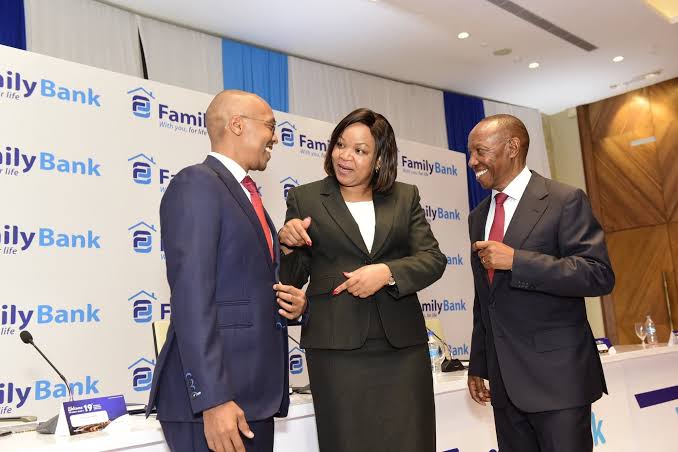
Family Bank is one of the newest arrivals on the Nairobi Securities Exchange, and its June 2026 debut was the largest private sector listing on the bourse in 17 years.
But the bank itself is far from new: it’s a four decade old institution built from a single Sh500,000 loan into one of Kenya’s largest mid tier lenders. Here’s the full picture.
History and Founding Story
Family Bank’s story begins in 1984, when Titus Kiondo Muya, then a young entrepreneur, registered Family Finance Building Society with a KSh500,000 loan and a conviction that ordinary Kenyans, particularly those overlooked by mainstream banks, deserved better access to credit.
Muya later traced the idea even further back, to 1961, when as a teenager he read a magazine article about how the world’s biggest institutions had started small and grew from there.
Operations began in 1985 with a single branch. Muya served as the building society’s founding chairman and chief executive for its first 23 years, steadily growing it into a recognised, community rooted financial institution.
In May 2007, after receiving a banking licence from the Central Bank of Kenya, Family Finance Building Society converted into a fully fledged commercial bank and was rebranded Family Bank Limited.
As required by Kenyan banking regulations at the time, Muya stepped down as CEO of the newly licensed bank, though he remained closely involved as chairman and later non executive chairman.
From that single branch, Family Bank grew into a network of 95 to 96 branches across 32 counties, serving well over 1.3 million customers.
In 2024, the bank marked its fortieth anniversary, and in 2025 its shareholders approved a long anticipated plan to list on the NSE.
On June 23, 2026, Family Bank shares officially began trading on the exchange under the ticker FMLY, more than four decades after Muya’s original loan.
Core Business Lines / Revenue Streams
Family Bank operates through two primary segments: Retail Banking and Wholesale Banking, historically anchored around serving customers that larger banks often overlook.
- Retail Banking: Loans, deposits, savings, and transaction services for individual customers, with a strong historical focus on small and medium scale enterprises, artisans, farmers, teachers, and junior government employees, groups that were core to the bank’s founding mission of expanding access to credit.
- Wholesale Banking: Loans, deposits, and transaction services for corporate and institutional customers, including NGOs and private organisations, a segment the bank has been actively growing as part of its push toward becoming a Tier One bank.
- Mortgages and trade finance: Property financing and import and export facilitation services round out the bank’s core lending book.
- Insurance and treasury services: The bank distributes insurance products (through channels including its Dhamana Insurance Agency, established in 2010) and runs treasury operations investing in government securities, adding non interest income alongside its lending business.
- Digital and paperless banking: Family Bank was the first bank in Kenya to introduce paperless banking through smart card technology, letting customers transact without filling out deposit or withdrawal slips, and it continues to invest heavily in digital channels, including a planned upgrade to its core banking system.
Competitive Position in Its Industry
Family Bank sits in Kenya’s mid tier banking segment, a step below the “Big Four” of Equity, KCB, Co-operative Bank, and Absa, but among the more prominent of the country’s second tier lenders.
Its branch network of roughly 95 to 96 branches makes it one of Kenya’s largest by physical footprint, even if its balance sheet remains smaller than the sector leaders.
Where Family Bank has carved out a distinct position is in its underserved customer segments and consistent growth trajectory: profit after tax more than doubled from roughly KSh2.5 billion in 2023 to KSh5.38 billion in 2025, a 55.4% jump, and that momentum carried into 2026, with first quarter profit after tax rising 52.6% year on year to KSh1.6 billion.
READ ALSO:Inside NSE:Stanbic Holdings (SBIC)
This growth, driven by expanding interest earning assets and diversified income streams, has made Family Bank one of the more closely watched turnaround and growth stories in Kenyan banking, rather than a stock investors buy purely for scale.
Its NSE debut also puts it in an interesting competitive position relative to peers who listed decades earlier: coming to market from a position of demonstrated strength, with book value per share of roughly KSh19.62 to KSh20.91 and a listing priced conservatively below fair value estimates to encourage broad participation and active trading, rather than to maximise proceeds.
Ownership Structure
Family Bank is a privately founded, now publicly traded company. It has never been state owned, and its ownership remains concentrated among a relatively small, long standing group of institutional and family shareholders even after listing.
- Founder and family: Titus Muya and his associates, including family members, held a combined 35.6% stake going into the listing, well above the 25% individual ownership cap the Central Bank of Kenya generally enforces for banks, a legacy allowance reflecting his founding role.
- Kenya Tea Development Agency (KTDA) Holdings: The single largest institutional shareholder, holding around 18.98% of the bank, reflecting deep, long standing ties between Family Bank and Kenya’s tea farming cooperative sector.
- Other early shareholders: Additional long time shareholders, including estates and family trusts connected to the bank’s founding era, round out a significant share of the register.
- Free float: Following the listing, roughly 572.7 million shares, about 34.5% of the total register, form the tradable free float available to the broader investing public on the NSE.
Notably, the Capital Markets Authority granted Family Bank’s controlling shareholders an exemption from the standard 24 month lock-in period usually required after a listing by introduction, meaning the bank’s largest holders were free to trade their shares from day one.
Why It’s Listed on the NSE Specifically
Family Bank’s NSE listing was a long time coming. Its shares had actually been trading informally on Kenya’s over the counter (OTC) market since 2006, giving existing shareholders some ability to buy and sell, but without the transparency, liquidity, or regulated price discovery of a formal exchange listing.
The bank first targeted a 2023 listing but postponed it due to unfavourable market conditions: NSE market capitalisation had fallen sharply amid high inflation and a weakening shilling.
Management held its nerve, and by 2025 and 2026 conditions had shifted decisively, with inflation easing, the shilling stabilising, and the NSE’s main index rising more than 34% through 2024.
Board Chairman Lazarus Muema described the wait as deliberate: preparing to list “from a position of strength” rather than rushing to market.
Family Bank ultimately listed by introduction rather than through a traditional IPO, meaning no new shares were issued and no fresh capital was raised directly through the transaction.
Instead, the roughly 1.66 billion shares already held by the bank’s 6,345 existing shareholders simply moved from the OTC market onto the NSE’s regulated Main Investment Market Segment.
The purpose was to broaden the shareholder base, unlock genuine liquidity for long time investors, improve price discovery, and raise the bank’s visibility and credibility as it pursues its five year strategic plan (2025 to 2029) to become a Tier One bank, all while protecting existing shareholders from the ownership dilution a capital raising share sale would have triggered.
Current Stock Price
As of mid-August 2026, Family Bank’s share price stood at around KSh25, giving the bank a market capitalisation of roughly KSh54.45 billion.
That’s well above its KSh18.00 introduction price and its debut day close of KSh26.00, though the stock has traded in a fairly wide range (a 52 week range of roughly KSh22 to KSh50) since listing on June 23, 2026, reflecting the price discovery process typical of a newly listed, previously thinly traded stock.
Share prices move daily, and newly listed stocks like FMLY can be especially volatile in their first months of trading as the market settles on a fair value.
For a live quote, check the NSE’s official market data page or a licensed brokerage platform before making any decisions.
How to Buy Family Bank Shares
You don’t need to be in Kenya to buy FMLY shares; it can be bought locally or from abroad:
- Open a CDS (Central Depository System) account. This is Kenya’s electronic share registry account, required to hold any NSE listed stock. It’s opened through a licensed stockbroker or investment bank.
- Choose a licensed NSE stockbroker or investment bank. Standard Investment Bank, which acted as Family Bank’s lead transaction adviser for the listing, is one option, alongside other firms like AIB-AXYS Africa, Genghis Capital, and Faida Investment Bank. A full list of licensed trading participants is available on the NSE website.
- Fund your trading account via bank transfer, mobile money (M-Pesa is widely supported), or card, depending on the broker.
- Place an order for FMLY through the broker’s trading platform, app, or by instructing your broker directly, specifying the number of shares or amount you want to invest.
- For non resident and diaspora investors, several online platforms (such as mystocks.africa and similar cross-border brokerages) let you open an account remotely, fund it in USD or your local currency, and buy NSE listed shares like FMLY without needing an in-country presence, though you should confirm licensing and custody arrangements before using any platform.
- Hold and track. Shares are held electronically in your CDS account. As a newly listed company, Family Bank had not yet established a regular NSE dividend track record as of its debut, so check its latest financial disclosures for updates on dividend policy.
This profile is for informational and editorial purposes and is not investment advice. Stock prices, especially, change constantly, so always verify current figures with the NSE or a licensed broker before making any investment decision. Other figures reflect the most recent publicly reported data as of 2026 and may change with new financial disclosures.








Leave a Reply