
Stanbic Holdings carries the combined DNA of two separate Kenyan banking lineages that merged relatively recently.
One side of the family tree is Stanbic Bank Kenya, which traces back to 1958, when the Ottoman Bank incorporated a local subsidiary.
That institution passed through the hands of Grindlays Bank before Standard Bank Investment Corporation acquired Grindlays’ African operations in 1992, rebranding the Kenyan business as Stanbic Bank Kenya in 1993 as part of a continent wide push to unify the Standard Bank name across Africa.
The other side of the tree is CfC Bank, which started life in 1955 as the Credit Finance Corporation of Kenya, a specialized lender created to support industrial and agricultural development in the newly independent nation.
Over the following decades it grew from a niche finance house into a full commercial bank, eventually shifting its focus toward corporate lending, trade finance, and investment services.
The two came together in June 2008, when Standard Bank Group acquired a 60 percent stake in CfC Bank, then Kenya’s sixth largest lender, and merged it with Stanbic Bank Kenya to form CfC Stanbic Holdings, with the combined entity retaining CfC Bank’s existing NSE listing.
The merger immediately created Kenya’s fourth largest lender at the time. In 2012, the group expanded regionally, opening a fully fledged branch in Juba, South Sudan.
The final piece of the modern identity fell into place in 2016: on August 5 of that year, shareholders approved dropping the CfC name entirely, rebranding the bank as Stanbic Bank and the holding company as Stanbic Holdings PLC, aligning fully with the wider Standard Bank Group brand used across the continent.
Core Business Lines and Revenue Streams
Stanbic Holdings operates through three main client facing segments, alongside a set of non banking financial services subsidiaries:
- Personal and Private Banking (PPB): savings and current accounts, mortgages, vehicle and asset finance, personal loans, and card products for individual customers, including an affluent focused Private Banking offering.
- Business and Commercial Banking (BCB): SME focused products including business overdrafts, revolving credit, term loans, commercial property finance, and construction and vacant land financing, plus government backed products like KMRC affordable housing loans.
- Corporate and Investment Banking (CIB): the group’s traditional strength, serving large corporates, financial institutions, and international counterparties with syndicated loans, trade finance, global markets solutions, and advisory services, including landmark deals such as arranging Safaricom’s Ksh 30 billion sustainability linked syndicated loan and supporting a $1.5 billion sovereign Eurobond.
- Asset management and stockbroking: through subsidiaries including SBG Securities, a licensed investment bank, and a fast growing asset management business that reached Ksh 5.3 billion in assets under management in its first full year of operation.
- Bancassurance: through Stanbic Insurance Agency, offering corporate and business insurance products.
For the 2025 financial year, the group reported profit after tax of Ksh 13.7 billion, with total assets growing 19 percent to Ksh 541.3 billion.
That growth accelerated into 2026: by the first half of the year, total assets had climbed 27 percent year on year to Ksh 602 billion, with customer deposits up 28 percent and customer loans up 24 percent, alongside a half year net profit of Ksh 6.6 billion.
READ ALSO:INSIDE NSE:BK Group (BKG)
Competitive Position in the Industry
Stanbic Holdings sits among Kenya’s Tier 1 banks but outside the very largest tier of domestic lenders (KCB, Equity, Co-operative Bank, NCBA, and I&M all carry bigger balance sheets).
The bank itself reported improving its market position to 6th place in the Kenyan banking sector during 2025, driven by digital transformation efforts and balance sheet growth.
Where Stanbic punches above its ranking is in specialized, high value banking.
It has been recognized as Kenya’s Best Investment Bank at the Euromoney Awards for Excellence in both 2025 and 2026, and as Kenya’s best transaction bank in 2025, reflecting its role arranging some of East Africa’s largest corporate and sovereign financing deals.
It has also picked up recognitions including Best Bank in Tier 1 at the Think Business Awards and a Mergers and Acquisitions Financial Advisor award at the DealMakers Africa Annual Awards.
Stanbic was also one of just four Kenyan banks (alongside Co-operative Bank, Equity Group, and KCB Group) to make the inaugural Forbes World’s Top Performing Banks 2026 list, a ranking built on profitability and asset quality rather than sheer size, underlining that the bank competes effectively on financial performance even without matching its larger domestic rivals on balance sheet scale.
On the NSE itself, Stanbic ranked among the top three best performing banking stocks during the first half of 2026.
Ownership Structure
Stanbic Holdings has a clear, stable majority ownership structure anchored in South Africa. The controlling shareholder is Stanbic Africa Holdings Limited, which has held approximately 74.9 percent of the group’s shares for years.
Stanbic Africa Holdings is itself a subsidiary of Standard Bank Group, one of Africa’s largest financial services companies, headquartered in Johannesburg.
The remaining roughly 25 percent of shares trade freely on the NSE, held by local and international institutional investors, pension funds, and individual retail shareholders.
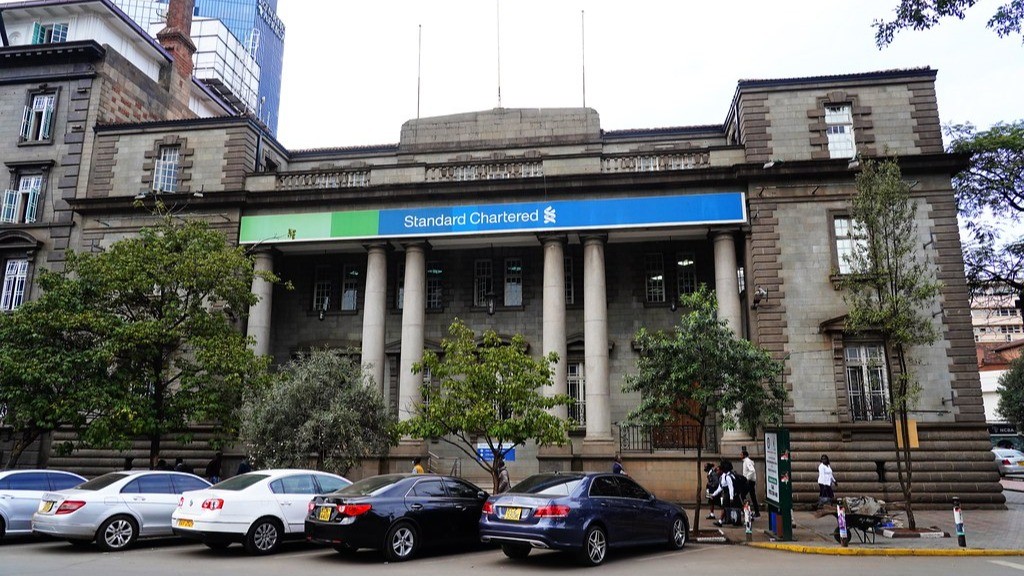
This structure closely mirrors that of Standard Chartered Kenya, another Kenyan bank majority owned by a large international banking group while maintaining a meaningful local public float and NSE listing.
Why It’s Listed on the NSE Specifically
Stanbic’s NSE listing has an interesting origin: it was inherited rather than newly created. Here’s the logic behind why it remains listed domestically:
- Continuity through the 2008 merger: when Standard Bank Group combined Stanbic Bank Kenya with CfC Bank in 2008, the merged entity retained CfC Bank’s existing NSE listing rather than starting fresh, meaning the group’s public market presence in Nairobi predates the Stanbic brand itself in Kenya.
- Local incorporation and regulation: the bank is incorporated in Kenya and regulated by the Central Bank of Kenya, making a domestic listing the natural fit for meeting local disclosure and governance obligations.
- A deliberate group wide strategy: Standard Bank Group maintains public listings for several of its African subsidiaries in their respective home markets (much as Standard Chartered does with its Kenyan and other African units), rather than consolidating all African operations into a single listing in Johannesburg, preserving local investor access and market specific accountability.
- Access to local capital and talent for regional ambitions: with a branch in South Sudan and ambitions in areas like affordable housing finance and cross border trade, a Nairobi listing keeps the bank close to the local capital markets, regulators, and corporate clients central to its East African strategy.
Current Stock Price
As of May 22, 2026, SBIC closed at Sh274.50 on the Nairobi Securities Exchange, having started the year at around Sh197.25, a gain of roughly 39 percent, and having touched an all time high near Sh300 in April 2026.
That put the group’s market capitalization at roughly Sh103 to 109 billion depending on the exact trading session.
Given the stock’s strong run and its ranking among the NSE’s top performing banking shares in 2026, prices have moved substantially over the past year and can shift quickly around results announcements.
Treat this figure as a historical snapshot rather than today’s number, and check the live price through the NSE website, your broker’s trading platform, or a live data source such as African Markets or myStocks before making any decisions.
How to Buy Stanbic Holdings Shares
Buying SBIC shares (or any NSE listed stock) follows the standard process used across the Kenyan market:
- Open a CDS account. A Central Depository System (CDS) account holds your shares electronically. You can open one through the Central Depository and Settlement Corporation (CDSC), though most investors do this through a licensed stockbroker as part of onboarding.
- Choose a licensed stockbroker. You’ll need an NSE licensed brokerage, such as Faida Investment Bank, AIB-AXYS Africa, Genghis Capital, or Stanbic’s own investment banking arm, SBG Securities, to place trades. Most offer mobile or online trading platforms.
- Fund your trading account. Deposit money into the account linked to your broker, typically through bank transfer or mobile money, depending on what the brokerage supports.
- Place your buy order. Specify the ticker (SBIC), the number of shares, and your price, either a market order at the prevailing price or a limit order at a price you set. Orders match through the NSE’s electronic trading system.
- Diaspora and foreign investor options. Kenyans abroad and foreign investors can buy SBIC shares too. Many Kenyan brokerages support remote account opening with certified identification, and some platforms allow USD settlement, letting diaspora investors trade without being physically present in Kenya.
- Track your holding. Once the trade settles, usually within a few business days, the shares reflect in your CDS account. You can follow price movement, dividend announcements, and corporate actions through your broker’s platform, the NSE website, or financial data sites carrying live NSE quotes.
As with any equity investment, share prices can go down as well as up, and this isn’t financial advice. It’s worth doing your own research, or speaking with a licensed financial advisor, before buying.




Leave a Reply