A note before starting: Eveready East Africa is a small, financially distressed manufacturer, and its own auditors have flagged going concern doubts in recent years.
This post covers the company’s history and structure honestly, including its struggles, since that context matters more here than it does for the larger, healthier companies covered elsewhere in this series.
History and Founding Story
Eveready East Africa’s story begins on March 6, 1967, when it was founded in Nakuru as Union Carbide Kenya Limited, a subsidiary of the American industrial conglomerate Union Carbide, set up specifically to manufacture and market Eveready brand batteries across Africa.
The business grew into one of the continent’s largest battery manufacturers, producing the dry cell “D” size carbon zinc batteries that became a household staple across East Africa.
Ownership of the underlying Eveready brand shifted over the following decades as its American parent changed hands: Union Carbide’s battery division was spun off and eventually became Eveready Battery Company under Ralston Purina, before passing to Energizer Holdings.
The Kenyan subsidiary changed its own name to Eveready East Africa Limited on September 30, 2004, aligning with the international brand it had always carried.
In 2006, the company listed on the Nairobi Stock Exchange’s Main Investment Market Segment, becoming a publicly traded company. For a while, business continued largely as before, but the 2010s brought serious headwinds.
Cheap imported batteries from Asia undercut Eveready’s pricing, and in 2014 the company closed its Nakuru manufacturing plant entirely, citing unsustainable competition from cheap imports.
As part of a five year strategy shift, Eveready moved from manufacturing to a more commercial, trading and distribution focused model, outsourcing its flagship D-sized battery production to a partner in Egypt and expanding into car batteries, light bulbs, and other imported or outsourced consumer products under its own brand name.
The company has continued to restructure since then, including selling off its Nakuru land and investing in real estate through a subsidiary called Flamingo Properties as a way to generate cash from its legacy manufacturing footprint.
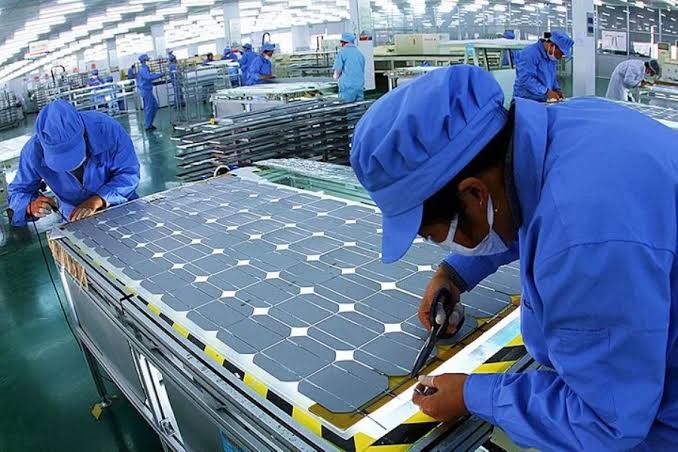
More recently, Eveready has talked publicly about repositioning toward solar and digital power products through partnerships with firms like Huawei and JinkoSolar, an attempt to move beyond the mature, price sensitive dry cell battery category that originally built the company.
Core Business Lines and Revenue Streams
Eveready East Africa today operates across three main product segments, reflecting its shift from manufacturer to distributor and marketer:
- Automotive: maintenance free and vented car batteries, battery water, and battery acid, sold under the TURBO and TURBOPlus brands.
- Household: dry cell batteries in various sizes, miniature batteries, and rechargeable batteries in carbon zinc, alkaline, and lithium constructions, sold under the Eveready and Energizer names.
- Lighting: flashlights, lanterns, and light bulbs, continuing the company’s original core product category.
Beyond these three segments, the company has also distributed cleaning and personal care products, including Clorox branded cleaning products under its EVERCLEAN line, and has traded in imported Schick razors and accessories.
Its wholly owned subsidiary, Flamingo Properties, holds real estate assets, a legacy of the company’s former manufacturing footprint, which has become an important source of liquidity as the core battery business has struggled.
Financially, the picture has been difficult for several years. Revenue fell sharply across recent reporting periods, from Ksh 82.6 million in the 2022 financial year to just Ksh 16.8 million in 2023, a decline attributed largely to cash flow constraints that left the company unable to keep adequate stock on hand.
The company posted a net loss of Ksh 43.8 million for 2023, and its auditors flagged a formal “going concern” doubt that year, a warning that signals real uncertainty about the company’s ability to continue operating without a change in its financial position.
More recent half year results have shown continued losses, with revenue of only about Ksh 4.5 million for the six months to March 2024, down 57 percent year on year, and a net loss of roughly Ksh 13 million for that period, though the Board noted the loss had narrowed from the prior year’s comparable period.
Competitive Position in the Industry
Eveready East Africa occupies a difficult competitive position. It built its original dominance on dry cell battery manufacturing, but that category has become commoditized and intensely price sensitive, with cheap imports from China and India undercutting local production costs to the point where Eveready’s own management concluded domestic manufacturing was no longer viable.
Industry commentators have pointed to a lack of government support and import protections for local manufacturers as a structural headwind the company has had to contend with, on top of its own operational challenges.
Today, Eveready is less a manufacturer competing on production scale and more a brand and distribution business, competing in categories like automotive batteries and household batteries against both international brands and low cost imported alternatives, while its legacy brand recognition in Kenya remains one of its few durable assets.
Its move toward solar and digital power products, through partnerships with established international names like Huawei and JinkoSolar, reflects a bet that it can find better margins in categories tied to Kenya’s growing demand for off-grid and renewable energy solutions than it can in mature, commoditized dry cell batteries.
READ ALSO:Inside NSE:Flame Tree Group Holdings (FTGH)
On the NSE, Eveready sits among the exchange’s smallest and most thinly capitalized listed companies, with a market capitalization in the low hundreds of millions of shillings, a small fraction of the size of any bank covered in this series.
Its stock has shown notable price volatility and periodic spikes in trading volume, reflecting its status as a speculative, closely watched small cap name rather than a stable, income generating investment.
Ownership Structure
Eveready East Africa’s single largest shareholder is East Africa Batteries Limited, which has historically held a controlling stake of around 58.6 percent, tying the Kenyan listed company closely to its original manufacturing heritage and international battery industry connections.
Public market data has shown a free float, the portion of shares available for ordinary public trading, of around 26 percent in recent years, with the remainder held by a mix of other institutional and individual shareholders beyond the controlling block.
Given the company’s financial difficulties and periods of limited public disclosure, exact, current shareholder percentages can be harder to pin down than for the larger, more actively covered companies in this series, so it’s worth checking the company’s latest annual report or AGM filings on the NSE website for up to date figures before relying on any specific breakdown.
Why It’s Listed on the NSE Specifically
Eveready’s NSE listing reflects both its Kenyan manufacturing roots and the broader logic that applies to most locally incorporated companies on the exchange:
- A Kenyan incorporated company from the start: although affiliated with an American parent brand, the Union Carbide Kenya subsidiary that became Eveready East Africa was itself incorporated in Kenya, based at its Nakuru manufacturing site, making it a genuinely Kenyan company long before its 2006 listing.
- Local incorporation and regulation: as a company incorporated and headquartered in Kenya, the NSE was the natural venue for a public listing and the associated public capital and disclosure framework.
- Raising its public profile as a well known consumer brand: Eveready’s battery and lighting products were household names across Kenya and the wider region well before the 2006 listing, giving the company an established consumer brand to build a public shareholder base around.
- A listing that has outlasted its original business model: perhaps the most notable thing about Eveready’s NSE listing today is that it has persisted through a complete transformation of the underlying business, from a manufacturer running its own Nakuru plant to a distribution and marketing focused company sourcing products from outsourced partners, illustrating how a public listing can survive even a dramatic change in what the company actually does.
Current Stock Price
As of September 18, 2026, EVRD was trading around Sh1.02 on the Nairobi Securities Exchange, with a market capitalization in the range of roughly Ksh 210 to 220 million, among the smallest of any company covered in this series.
The stock began 2026 at around Sh1.43 and has lost close to 29 percent of its value since then, continuing a multi year pattern of decline tied to the company’s ongoing financial difficulties, though it has also seen sharp, short lived rallies on heavy speculative trading volume at various points during the year.
Given how small, thinly traded, and financially distressed this stock is, even small trades can move the price significantly, and past volatility has been considerable.
Treat this figure as a historical snapshot rather than today’s number, and check the live quote through the NSE website, your broker’s trading platform, or a data source such as African Markets or myStocks before making any decision, paying particular attention to the company’s latest financial disclosures given its history of going concern warnings.
How to Buy Eveready East Africa Shares
Buying EVRD shares follows the standard process used across the Kenyan market, though the usual cautions around small, distressed stocks apply with extra force here:
- Open a CDS account. A Central Depository System (CDS) account holds your shares electronically. You can open one through the Central Depository and Settlement Corporation (CDSC), though most investors do this through a licensed stockbroker as part of onboarding.
- Choose a licensed stockbroker. You’ll need an NSE licensed brokerage, such as Faida Investment Bank, AIB-AXYS Africa, or Genghis Capital, to place trades. Most offer mobile or online trading platforms.
- Fund your trading account. Deposit money into the account linked to your broker, typically through bank transfer or mobile money, depending on what the brokerage supports.
- Place your buy order. Specify the ticker (EVRD), the number of shares, and your price, either a market order at the prevailing price or a limit order at a price you set. Given this stock’s thin and sometimes volatile trading, a limit order is worth considering to avoid an unexpectedly large price swing.
- Diaspora and foreign investor options. Kenyans abroad and foreign investors can buy EVRD shares too. Many Kenyan brokerages support remote account opening with certified identification, and some platforms allow USD settlement, letting diaspora investors trade without being physically present in Kenya.
- Track your holding. Once the trade settles, usually within a few business days, the shares reflect in your CDS account. You can follow price movement, dividend announcements (the company has not paid a dividend in many years), and corporate actions through your broker’s platform, the NSE website, or financial data sites carrying live NSE quotes. Given the company’s financial history, it is especially worth reading its published annual reports and any auditor notes before holding this stock for the long term.
As with any equity investment, and especially one with this company’s recent financial history, share prices can go down as well as up and the company itself carries meaningfully more financial risk than most others in this series. This isn’t financial advice. It’s worth doing your own research, or speaking with a licensed financial advisor, before buying.





Leave a Reply