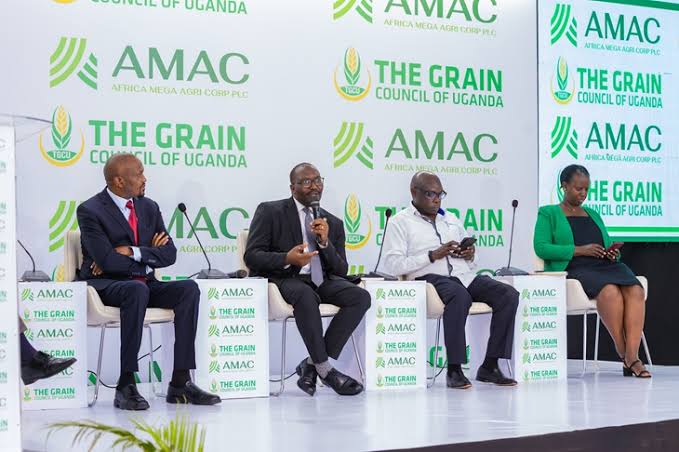
Africa Mega Agricorp is one of the smallest and most recently transformed companies on the entire NSE, and its story is really two stories in one.
For most of its existence, it was Kenya Orchards, a modest, struggling maker of bottled jams and canned beans. In late 2024, a UAE-registered investment vehicle bought majority control, renamed it, and set it on a dramatically different course, all while its stock price multiplied several times over. Here’s the full picture.
History and Founding Story
The company’s original incarnation, Kenya Orchards Limited, had operated for decades as a modest Kenyan food processor, manufacturing and selling fruit and vegetable bottled and canned products for domestic consumption.
Its product range was distinctly old-fashioned Kenyan pantry fare: fruit jams, tomato paste and sauce, maple syrup, mayonnaise, custard powder, white vinegar (sold as a meat tenderiser), corn starch, and canned goods including baked beans, matoke, and mushrooms.
The company listed on the Nairobi Securities Exchange in March 1996, and traded for nearly three decades as a small, largely overlooked retail sector counter, posting thin and often shrinking profits (just KSh1.77 million in net profit for the 2023 financial year, itself an 8.1% decline from the year before) and periodic losses and profit warnings along the way.
Everything changed in June 2024. A company called Africa Mega Agriculture Center (AMAC) Limited, itself incorporated in Kenya in late 2023 and backed by UAE-registered investment vehicle InvestAfrica FZCO, served Kenya Orchards with notice of its intention to acquire 10,863,537 ordinary shares.
This represented 84.42% of the company, through a private transaction with the company’s three largest shareholders: Westpac Holdings (34%), and company directors Thakarshi Keshav Patel (33.6%) and Vipul Thakarshi Patel (14.88%).
The deal, structured as a private sale alongside asset transfers to settle outstanding debts, was approved by shareholders at an extraordinary general meeting in August 2024, and finalised when the company received its certificate of name change from Kenya’s Registrar of Companies on 16 December 2024, officially becoming Africa Mega Agricorp Plc.
The transaction notably mirrored an earlier, similarly structured 2023 deal in which East Africa Batteries Limited, linked to the late Kenyan businessman Naushad Merali, sold a 35% stake in Eveready East Africa to that same Dubai-based InvestAfrica FZCO, another company covered elsewhere in this series.
In both cases, the buyer explicitly declined to extend its offer to remaining minority shareholders or to delist the acquired company from the NSE, a deliberate structuring choice that let InvestAfrica FZCO take effective operational control while the companies stayed publicly listed.
InvestAfrica FZCO’s ownership has itself drawn public scrutiny in Kenya: senior political figure Moses Kuria has been reported denying beneficial ownership of the entity for an extended period, even as it made these high-profile moves on struggling NSE listed firms.
Core Business Lines / Revenue Streams
Africa Mega Agricorp today describes itself in considerably more ambitious terms than its Kenya Orchards predecessor ever did, positioning itself as what the company calls “East Africa’s flagship farm-to-global trade powerhouse.”
- Legacy processed foods: The original Kenya Orchards product lines, bottled and canned fruit, vegetable, and spice products, remain part of the business, though the company’s public communications now emphasise its broader ambitions considerably more than this traditional core.
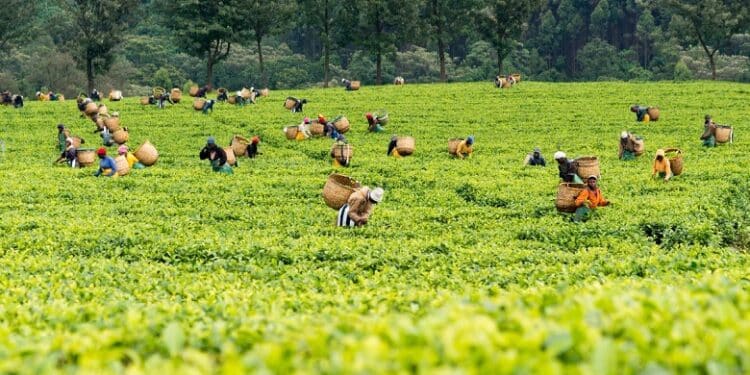
- Agricultural export trade: The company has repositioned itself around connecting Kenyan farmers, smallholders, women, and youth directly to international buyers, supporting diverse value chains including coffee, tea, avocados, mangoes, herbs, chillies, flowers, meat, and fish products, with grading, packaging, and quality verification services layered on top.
- Equipment leasing and agro-processing services: Reflecting its parent AMAC’s original specialisation, the company offers equipment leasing, processing, storage, and co-farming services to agricultural producers, a notably different model from simply manufacturing its own branded food products.
- Logistics and compliance partnerships: The company has formed strategic partnerships with logistics, banking, and certification partners, including a collaboration with global logistics giant DHL and Dubai’s DMCC (Dubai Multi Commodities Centre), aimed at ensuring regulatory compliance and enabling premium, certified, and traceable agricultural exports across what the company describes as a presence on five continents.
Whether this considerably more ambitious, internationally oriented business model translates into materially improved financial results remains to be seen in the company’s actual reported numbers, which as of the most recently available annual data still reflected the modest scale of the old Kenya Orchards business (annual revenue in the tens of millions of Kenyan shillings).
Competitive Position in Its Industry
Historically, Kenya Orchards occupied a weak and shrinking competitive position: a small, aging processed food brand competing against larger, better capitalised Kenyan food manufacturers, with persistently thin margins and a history of losses and profit warnings stretching back years (including a KSh12.5 million net loss reported for 2020).
READ ALSO:Inside the NSE: Unga Group (UNGA)
Africa Mega Agricorp’s new ownership and repositioning represent an explicit attempt to change that competitive trajectory entirely, not by competing harder in processed foods, but by pivoting toward a fundamentally different business: agricultural trade facilitation and export logistics, a sector where the company’s new backers evidently see stronger growth potential than in competing against established Kenyan food brands.
The company’s stated ambition, positioning itself as a comprehensive platform connecting East African farmers to premium international buyers, places it in a considerably more crowded and complex global competitive landscape than the domestic processed foods shelf Kenya Orchards previously occupied.
It’s worth being candid about what this means for investors: this is a genuinely high-uncertainty transformation story rather than an established, proven business model.
The company’s own board has seen significant recent turnover, with board and management changes effective 3 June 2026, including the confirmed resignations of two notable figures, Yebeltal Getachew and Michael Foley, disclosed under Capital Markets Authority rules, suggesting the company’s new strategic direction and leadership are still actively settling into place.
Ownership Structure
Africa Mega Agricorp’s ownership structure reflects its 2024 change of control, with the new majority owner choosing deliberately to retain the company’s public listing and minority shareholder base rather than taking it fully private.
- Africa Mega Agriculture Center (AMAC) Limited: The controlling shareholder, holding 84.42% of the company following the 2024 share purchase, itself backed by UAE-registered InvestAfrica FZCO. The company now operates, per its own corporate disclosures, as a subsidiary of Africa Mega Agriculture Centre Limited.
- Remaining minority shareholders: The residual roughly 15.58% of the company continues to be held by the public, including any of the original Kenya Orchards shareholders who did not sell into the 2024 transaction, since AMAC explicitly chose not to extend a buyout offer to remaining minority investors.
This structure, a dominant, foreign-linked majority owner holding well over 80% while a small public free float remains technically tradable on the NSE, is one of the more unusual ownership arrangements in this entire series, and echoes the near-identical approach InvestAfrica FZCO took with its stake in Eveready East Africa the year before.
Why It’s Listed on the NSE Specifically
Kenya Orchards’ original 1996 NSE listing fits the broader pattern of Kenyan manufacturing and consumer goods companies going public during that era, seeking access to local capital markets to fund operations and growth as a domestic food processor.
For nearly three decades, that listing provided limited drama: a small, thinly traded counter posting modest and often disappointing results.
What makes the company’s current NSE listing genuinely notable is the deliberate choice its new controlling shareholder made in 2024 to preserve it.
Rather than delisting the company after acquiring an overwhelming 84.42% stake, which would have been a common and straightforward path for a controlling investor seeking full private control, AMAC explicitly committed to keeping Kenya Orchards (as it then was) listed and accessible to NSE investors.
The practical effect is a company now majority controlled and strategically redirected by a private, foreign-backed investor, while retaining the disclosure obligations, governance oversight, and public accessibility that come with an NSE listing, a structure that gives remaining minority shareholders continued visibility into the company’s performance and strategic direction, even without a controlling say in it.
Current Stock Price
Africa Mega Agricorp’s share price has been extraordinarily volatile since the 2024 change of control, reflecting both the dramatic rerating that followed news of the takeover and the stock’s generally thin trading volumes as a small cap counter.
The share price rose from around KSh19.50 at the time the deal was first announced in June 2024, to KSh70.00 by the end of December 2024.
Recent trading data has shown prices in the range of roughly KSh100.25 to KSh117.75, implying a market capitalisation of somewhere between roughly KSh907 million and KSh1.3 billion depending on the exact date measured, an extraordinary multiple of the handful of million shillings the company was generating in annual profit under its previous Kenya Orchards identity.
Given this level of volatility and the company’s very small size and thin trading history, prospective investors should treat any single quoted price with particular caution and expect potentially large swings between data sources and dates.
Share prices move daily. For a live quote, check the NSE’s official market data page or a licensed brokerage platform before making any decisions.
How to Buy Africa Mega Agricorp Shares
You don’t need to be in Kenya to buy AMAC shares; it can be bought locally or from abroad:
- Open a CDS (Central Depository System) account. This is Kenya’s electronic share registry account, required to hold any NSE listed stock. It’s opened through a licensed stockbroker or investment bank.
- Choose a licensed NSE stockbroker or investment bank. Examples include firms like Standard Investment Bank, AIB-AXYS Africa, Genghis Capital, and Faida Investment Bank. A full list of licensed trading participants is available on the NSE website.
- Fund your trading account via bank transfer, mobile money (M-Pesa is widely supported), or card, depending on the broker.
- Place an order for AMAC through the broker’s trading platform, app, or by instructing your broker directly, specifying the number of shares or amount you want to invest. Given the company’s small size, thin free float (roughly 15.58% following the 2024 takeover), and historically limited trading volumes, expect this stock to be considerably more illiquid and volatile than larger NSE counters.
- For non resident and diaspora investors, several online platforms (such as mystocks.africa, which specifically lists AMAC.KE and allows investment from as little as USD 10) let you open an account remotely, fund it in USD or your local currency, and buy NSE listed shares like AMAC without needing an in country presence, though you should confirm licensing and custody arrangements before using any platform.
- Hold and track. Shares are held electronically in your CDS account. Given the company’s history of thin or negative profitability under its previous Kenya Orchards identity and its very recent strategic transformation, check the latest financial disclosures carefully for any dividend history or declarations before assuming income from the shares.
This profile is for informational and editorial purposes and is not investment advice. Stock prices, especially, change constantly, so always verify current figures with the NSE or a licensed broker before making any investment decision.
Other figures reflect the most recent publicly reported data as of 2026 and may change with new financial disclosures.
Given the company’s recent change of control, strategic repositioning, and small, thinly traded size, this profile in particular should be treated as higher uncertainty than most others in this series, and readers should seek the most current company announcements before making any decisions.



Leave a Reply