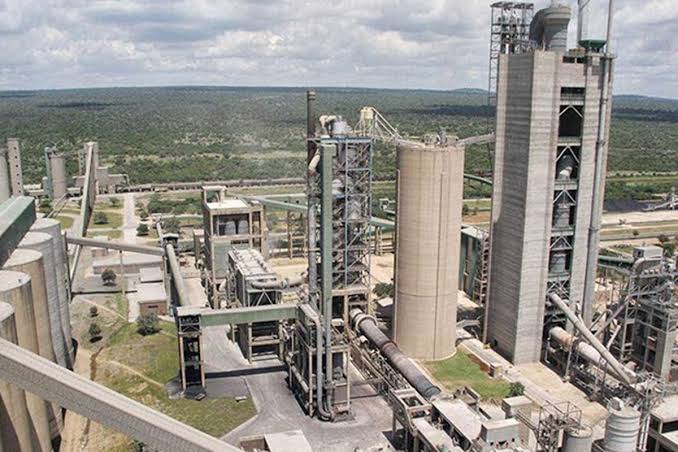
East African Portland Cement is the pioneer of cement making in East and Central Africa, maker of the Blue Triangle brand, and a company that spent years losing money before a sharp turnaround.
It has also just been through a change of control: in late 2025, a Tanzanian group bought out its Swiss parent and the national pension fund in two quick deals, leaving the Kenyan government as its main remaining institutional shareholder. Here’s the full picture.
History and Founding Story
East African Portland Cement was incorporated in Kenya in February 1933, with its first factory in Nairobi’s Industrial Area, making it the first cement manufacturer in East and Central Africa.
It started small, with one mill and a capacity of 60,000 tonnes a year, and cement deliveries began in 1934.
For its first four decades or more, the company was the only cement producer operating in Kenya, which meant it supplied the cement behind much of the country’s early housing, schools, hospitals, and roads.
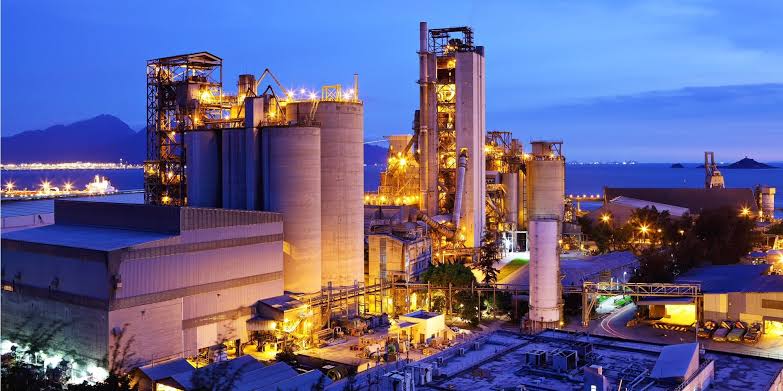
The company’s modern footprint dates to the 1950s. Construction of its Athi River factory, about 30 kilometres from Nairobi, began in the mid 1950s and was completed in 1957, when two more mills were added to bring the total to four and capacity doubled to 120,000 tonnes a year.
A rotary wet kiln followed in 1974, lifting capacity to 300,000 tonnes, a fourth mill was added in 1979, and a new kiln in 1996 doubled capacity to 600,000 tonnes.
Today the company says it can produce around 1.3 million tonnes a year, and it distributes through depots across the country, including Eldoret, Nakuru, Kisumu, Karatina, Nyahururu, Machakos, and Meru.
The past few years have been the most eventful in decades. After a long run of losses, the company returned to profit and paid a dividend in early 2025, its first since 2011.
Then, in late 2025, ownership changed hands when a Tanzanian cement group acquired the stakes held by its Swiss parent, Holcim, and by the National Social Security Fund (NSSF), a deal described below.
Core Business Lines / Revenue Streams
East African Portland Cement is a pure cement manufacturer, and nearly all of its revenue comes from selling cement.
- Cement manufacturing: The company produces cement at its Athi River plant under the Blue Triangle brand, which the construction press has long counted among Kenya’s best known cements. It sells mainly to builders, contractors, and hardware outlets through its depot network.
- Depot and distribution network: Regional depots in Eldoret, Nakuru, Kisumu, Karatina, Nyahururu, Machakos, and Meru help it reach customers outside the Nairobi area.
- Land and property: The company owns a large landholding at Athi River, and the question of how much that land is worth against the company’s low market value has featured in the debate around the recent ownership changes.
Unlike most companies in this series, the story here is about utilising and reviving existing capacity rather than launching new product lines.
Competitive Position in Its Industry
The Kenyan cement industry has become crowded since East African Portland lost its early monopoly.
Bamburi Cement is the market leader (an older industry ranking put its market share at about 32.6%), and National Cement, with its Nyumba brand, is the second largest (about 15.8% in the same ranking).
Only two cement makers are listed on the NSE, East African Portland and Bamburi, so investors who want exposure to the cement industry choose between the two.
East African Portland’s position has historically been weaker than its heritage suggests: it faced old equipment, high costs, and losses for years. The results have recently turned.
READ ALSO:Inside NSE:Bamburi Cement (BAMB)
For the year to June 2024, the company reported net profit of about KSh1 billion.
For the year to June 2025, audited results showed operating profit of KSh1.635 billion, against an operating loss of KSh1.872 billion the previous year, and a profit after tax of KSh5.525 billion, equal to earnings per share of KSh61.39 against KSh12.85 a year earlier.
The company attributed the improvement to cost optimisation and operational efficiency.
The profit after tax figure is far larger than the operating profit, which suggests that non operating items contributed heavily, and different sources report the year on year growth rate differently, so check the full audited accounts before quoting the headline number.
A useful way to see the company’s potential is to compare its market value with its assets. Its net asset value was KSh20.4 billion at June 2024, while its market capitalisation was around KSh7.5 billion in late 2025.
That gap is one reason investors, and the government, paid close attention to the Kalahari Cement deals.
Ownership Structure
Ownership has just been reshuffled, and the register today looks very different from a year ago.
Before the 2025 deals, the main shareholders were the NSSF (27%), the National Treasury (25.3%), Holcim group companies Cementia Holdings AG and Associated International Cement (14.6% each, 29.2% combined), Bamburi Cement (12.5%), and minority shareholders (about 6%).
- Kalahari Cement (Amsons Group, Tanzania): Bought Holcim’s 29.2% stake at KSh27.30 per share (about KSh719 million), completed on 4 November 2025, and then bought the NSSF’s 27% stake at KSh66 per share (about KSh1.6 billion), completed in December 2025. Kalahari is a subsidiary of Tanzania’s Amsons Group, owned by businessman Edhah Munif.
- Bamburi Cement: Holds 12.5%. Bamburi itself came under Amsons ownership in December 2024, so together Kalahari and Bamburi give the Amsons side effective control of roughly 68.7% to 69% of the company.
- National Treasury (Government of Kenya): Retains 25.3%. The Treasury Cabinet Secretary has said there is no immediate plan to sell it, though the government is reviewing which state holdings are mature enough for privatisation.
- Minority shareholders: About 6% is held by smaller investors.
The NSSF exited the board after the sale. Officials have said the government’s interests and those of minority shareholders are protected through board appointments, including the chairman, who is appointed by the government.
The price gap between the two deals (KSh27.30 for Holcim’s stake versus KSh66 for the NSSF’s) drew public attention, and a parliamentary committee at one point asked the company to consider buying back Holcim’s shares instead.
Why It’s Listed on the NSE Specifically
East African Portland Cement is one of the older listed industrial companies on the Nairobi exchange.
The listing’s practical importance comes from the way it has shaped the recent deals.
Because the company is listed, a change of control triggered regulatory review by the Capital Markets Authority, the Competition Authority, and the Ministry of Mining, and the NSE halted trading briefly when news of the NSSF sale leaked before the formal notice.
The listing also gives a public price reference for the company, which is why the stark difference between the two purchase prices became a national story. For investors, the listing offers one of only two direct ways to hold Kenyan cement producers on the exchange.
Current Stock Price
The share price has risen dramatically. Over one earlier period the stock rose 359% from KSh7.20, and it reached KSh66 in late November 2025 when the NSSF deal became public, up 9.5% on the day before trading was halted.
By early July 2026 it was around KSh100.50, according to data compiled by AfricanFinancials.
Trading in the stock is thin: indicative liquidity over the twelve months to early July 2026 was only about US$412,000 (around KSh52 million). Share prices move daily.
For a live quote, check the NSE’s official market data page or a licensed brokerage platform before making any decisions.
How to Buy East African Portland Cement Shares
You don’t need to be in Kenya to buy PORT shares; it can be bought locally or from abroad:
- Open a CDS (Central Depository System) account. This is Kenya’s electronic share registry account, required to hold any NSE listed stock. It’s opened through a licensed stockbroker or investment bank.
- Choose a licensed NSE stockbroker or investment bank. Examples include firms like Standard Investment Bank, AIB-AXYS Africa, Genghis Capital, and Faida Investment Bank. A full list of licensed trading participants is available on the NSE website.
- Fund your trading account via bank transfer, mobile money (M-Pesa is widely supported), or card, depending on the broker.
- Place an order for PORT through the broker’s trading platform, app, or by instructing your broker directly. Because trading volumes are low, limit orders are advisable.
- For non resident and diaspora investors, several online platforms (such as mystocks.africa and similar cross border brokerages) let you open an account remotely, fund it in USD or your local currency, and buy NSE listed shares like PORT without needing an in country presence, though you should confirm licensing and custody arrangements before using any platform.
- Hold and track. Shares are held electronically in your CDS account. The company paid KSh1.00 per share in early 2025, its first dividend since 2011, and the board recommended KSh1.25 per share for the year to June 2025. Dividend history is short, so check the latest announcements before assuming future income.
This profile is for informational and editorial purposes and is not investment advice. Stock prices, especially, change constantly, so always verify current figures with the NSE or a licensed broker before making any investment decision. Other figures reflect the most recent publicly reported data as of 2026 and may change with new financial disclosures.



Leave a Reply