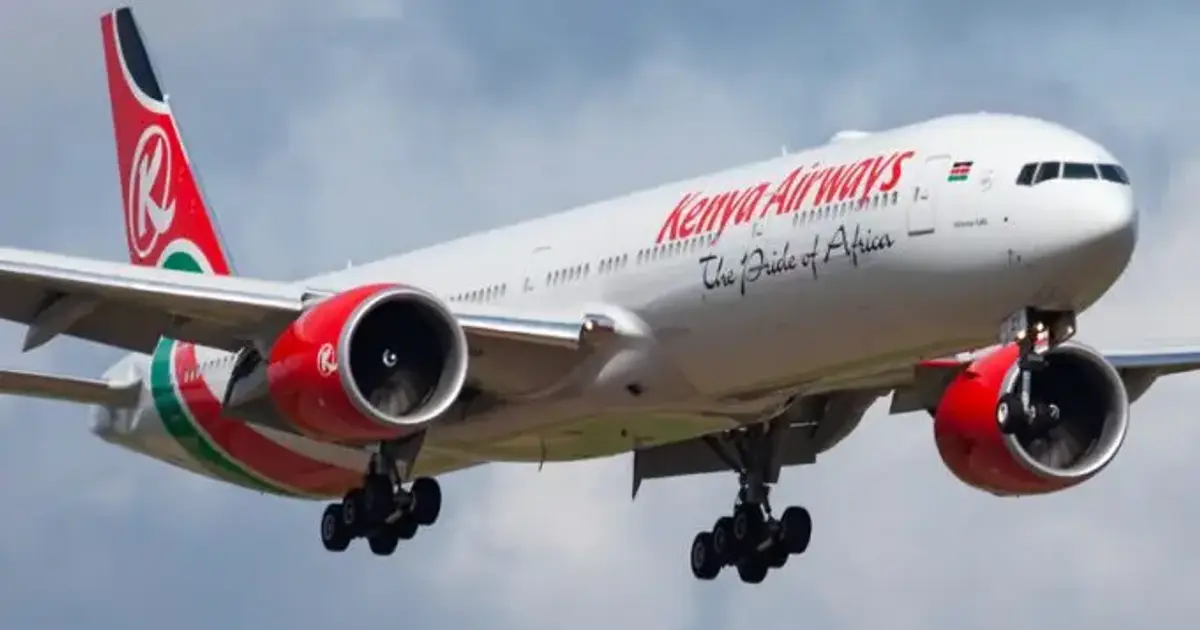
Kenya Airways is the “Pride of Africa”, a national flag carrier that became the first on the continent to be successfully privatised.
It is also one of the most volatile and most closely watched counters on the NSE: a company that has lost money in 13 of the last 16 years, was frozen out of trading for four and a half years, has negative shareholder equity, and is now looking to raise as much as US$1.5 billion. Here’s the full picture.
History and Founding Story
Kenya Airways was established by the Kenyan government on 22 January 1977, after the collapse of East African Airways, the regional carrier that fell apart when the first East African Community broke up in the mid 1970s.
Flights began on 4 February 1977 with two Boeing 707s leased from British Midland Airways, flying the Nairobi to Frankfurt to London route.
On regional and domestic routes, the new airline used aircraft left over from East African Airways, and Aer Lingus supplied technical and management support in the early years.
The following year it formed a charter subsidiary, Kenya Flamingo Airlines.
For its first two decades the airline was wholly owned by the government.
Privatisation was decided in principle in 1986 but took almost ten years to complete.
In 1995 and 1996 the Dutch carrier KLM bought 26% for US$26 million as strategic partner, chosen after interest from several airlines, and in 1996 the government floated much of the rest on the Nairobi exchange.
The share offering was the biggest in Kenya’s history at the time and was oversubscribed by 82%.
The company cross listed on the Dar es Salaam exchange a couple of years later and on the Uganda Securities Exchange in March 2002, which was the second cross listing in Uganda’s market.
Growth through the 2000s made the airline a regional heavyweight. It joined SkyTeam in June 2010, partnered with KLM and Air France (KLM merged with Air France in 2004), and launched the low cost carrier Jambojet in 2013.
An ambitious fleet and route expansion then left it heavily indebted, and in 2017 its lenders converted debt into equity, with the lenders’ stake held through a vehicle called KQ Lenders Company 2017 Limited.
The airline reported a near collapse in 2018, and the government has relied on supporting it since.
In July 2020 the NSE suspended trading in the share at KSh3.83 after a proposed law, the Kenya Aviation Management Bill 2020, floated consolidating KQ with the Kenya Airports Authority into a state holding company, an idea that effectively left more than 77,000 retail investors stuck for four and a half years. Trading resumed on 6 January 2025 at the same KSh3.83, and the price doubled within eight days.
Core Business Lines / Revenue Streams
Kenya Airways earns money from flying people and freight, and from the services built around its operation.
- Passenger flights: Long haul routes on Boeing 787-8 Dreamliners and 777-300ERs, medium haul on Boeing 737-800s, and regional routes on Embraer E190s, from a hub at Jomo Kenyatta International Airport in Nairobi. The airline serves 40 to 50 destinations, heavily weighted toward Africa, plus London, Amsterdam, Paris, New York, Dubai, Mumbai, and Guangzhou.
- Cargo: Freight and mail, including perishable exports such as flowers and vegetables, supported by subsidiary Kenya Airfreight Handling (51%). Cargo revenue rose 18% to about KSh8.8 billion in the first half of 2026.
- Jambojet: A wholly owned low cost carrier for domestic and regional routes.
- Ground handling and engineering: African Cargo Handling Limited and an expanding maintenance business, which is trying to win work from other African airlines.
- Partnerships: Codeshares and alliances including SkyTeam, KLM and Air France, and a Qatar Airways codeshare, alongside co-branded Visa cards and a technology partnership with Safaricom.
Competitive Position in Its Industry
Kenya Airways is one of Africa’s larger carriers and the only African member of the SkyTeam alliance, which gives it global connections that smaller African airlines lack. Its home market is the busiest air gateway in East Africa.
But it competes against much larger and better funded rivals on its long haul routes, including Gulf carriers and Ethiopian Airlines, and management has acknowledged that the airline is sub scale, with a fleet of about 30 aircraft that it hopes to grow to 100 by 2030.
The financial record explains why the stock is so volatile. The airline lost money in 13 of the 16 years to 2025. In 2024 it posted a net profit of KSh5.4 billion, its first full year profit in more than a decade, helped partly by foreign exchange gains from a stronger shilling.
Then 2025 turned bad again. Three Dreamliners were grounded for much of the year because of a shortage of spare parts and expensive engine overhauls (one engine overhaul costs about US$15 million), cutting capacity by about 20%.
For the full year, revenue fell 14% to KSh161.5 billion and the airline posted a net loss of KSh17.2 billion, a loss per share of KSh2.94 against earnings of KSh0.95 in 2024.
It has not improved in 2026. In the six months to June 2026, revenue rose 9% to KSh81.25 billion, helped by cargo, but operating costs jumped by about KSh11 billion to KSh91.9 billion, driven by soaring jet fuel prices linked to conflict in the Middle East, and the net loss widened to KSh16.08 billion from KSh12.15 billion a year earlier. Fuel now makes up 20% to 30% of operating costs.
READ ALSO:Inside the NSE: Crown Paints Kenya (CRWN)
Management says aircraft are returning to service, including one Boeing 787-8 in mid July 2026 and a 777-300ER delivered into service, which should help the second half.
Ownership Structure
Kenya Airways is a public private partnership, with the state the largest single owner and local banks holding a big block through the 2017 debt for equity swap.
- Government of Kenya (National Treasury): The largest shareholder, with 48.9%.
- KQ Lenders Company 2017 Limited: 38.1%, held by a consortium of local banks that converted debt into shares in 2017.
- Air France-KLM: About 7.8%, the legacy of KLM’s original strategic stake.
- Other investors: The rest is held by institutions and retail shareholders trading on the NSE, with some shares also tradable in Uganda and Tanzania.
There are 5.68 billion shares in issue. The airline has negative equity, meaning its liabilities exceed its assets, and fixing that is a stated goal of the planned capital raise.
Why It’s Listed on the NSE Specifically
Kenya Airways listed in 1996 as the centrepiece of the government’s privatisation of the airline.
The IPO was designed to bring in public capital, reduce the state’s burden of funding the carrier, and, together with the KLM partnership, give the company a stronger governance and commercial footing.
Selling shares to Kenyans in what was then the largest offer in the country’s history also helped build the retail shareholder base that has since become a defining feature of the stock.
The cross listings on the Uganda and Tanzania exchanges came from the same regional ambition.
The listing’s importance became vivid in 2020, when the share was frozen for four and a half years during the proposed state consolidation plan, an episode that showed both the protections and the political risks that come with a stock the government effectively controls.
More recently, being listed has allowed the airline to plan an equity raise, with a US$1.5 billion target reported in June 2026 under chairman Kiprono Kittony, who was appointed on 5 March 2026. The options being considered include selling a stake, bringing in strategic partners, and attracting new investors.
Current Stock Price
The share has been all over the map. After trading resumed at KSh3.83 in January 2025, it climbed above KSh5, was KSh4.70 in mid August 2025, and then fell almost 20% in one day after the first half 2025 loss.
Unlike many counters in this series, KQ is actively traded: indicative trading liquidity over the twelve months to early August 2026 was about US$11.2 million (around KSh1.4 billion).
That makes the quote more reliable, but the price still reacts sharply to results and capital raising news. Share prices move daily.
For a live quote, check the NSE’s official market data page or a licensed brokerage platform before making any decisions.
How to Buy Kenya Airways Shares
You don’t need to be in Kenya to buy KQ shares; it can be bought locally or from abroad:
- Open a CDS (Central Depository System) account. This is Kenya’s electronic share registry account, required to hold any NSE listed stock. It’s opened through a licensed stockbroker or investment bank.
- Choose a licensed NSE stockbroker or investment bank. Examples include firms like Standard Investment Bank, AIB-AXYS Africa, Genghis Capital, and Faida Investment Bank. A full list of licensed trading participants is available on the NSE website.
- Fund your trading account via bank transfer, mobile money (M-Pesa is widely supported), or card, depending on the broker.
- Place an order for KQ through the broker’s trading platform, app, or by instructing your broker directly. Prices can swing widely around results announcements, so consider limit orders.
- For non resident and diaspora investors, several online platforms (such as mystocks.africa and similar cross border brokerages) let you open an account remotely, fund it in USD or your local currency, and buy NSE listed shares like KQ without needing an in country presence, though you should confirm licensing and custody arrangements before using any platform.
- Hold and track. Shares are held electronically in your CDS account. Do not expect dividend income: no dividend was declared for 2025, and none was paid in the first half of 2026. I did not confirm the date of the last payout. A planned capital raise could also change the share count and dilute existing holders, so watch for rights issue or placement announcements.
This profile is for informational and editorial purposes and is not investment advice. Stock prices, especially, change constantly, so always verify current figures with the NSE or a licensed broker before making any investment decision.
Other figures reflect the most recent publicly reported data as of 2026 and may change with new financial disclosures. Kenya Airways has negative shareholder equity and a history of losses and state support, and the outcome of its planned capital raise is uncertain.







Leave a Reply