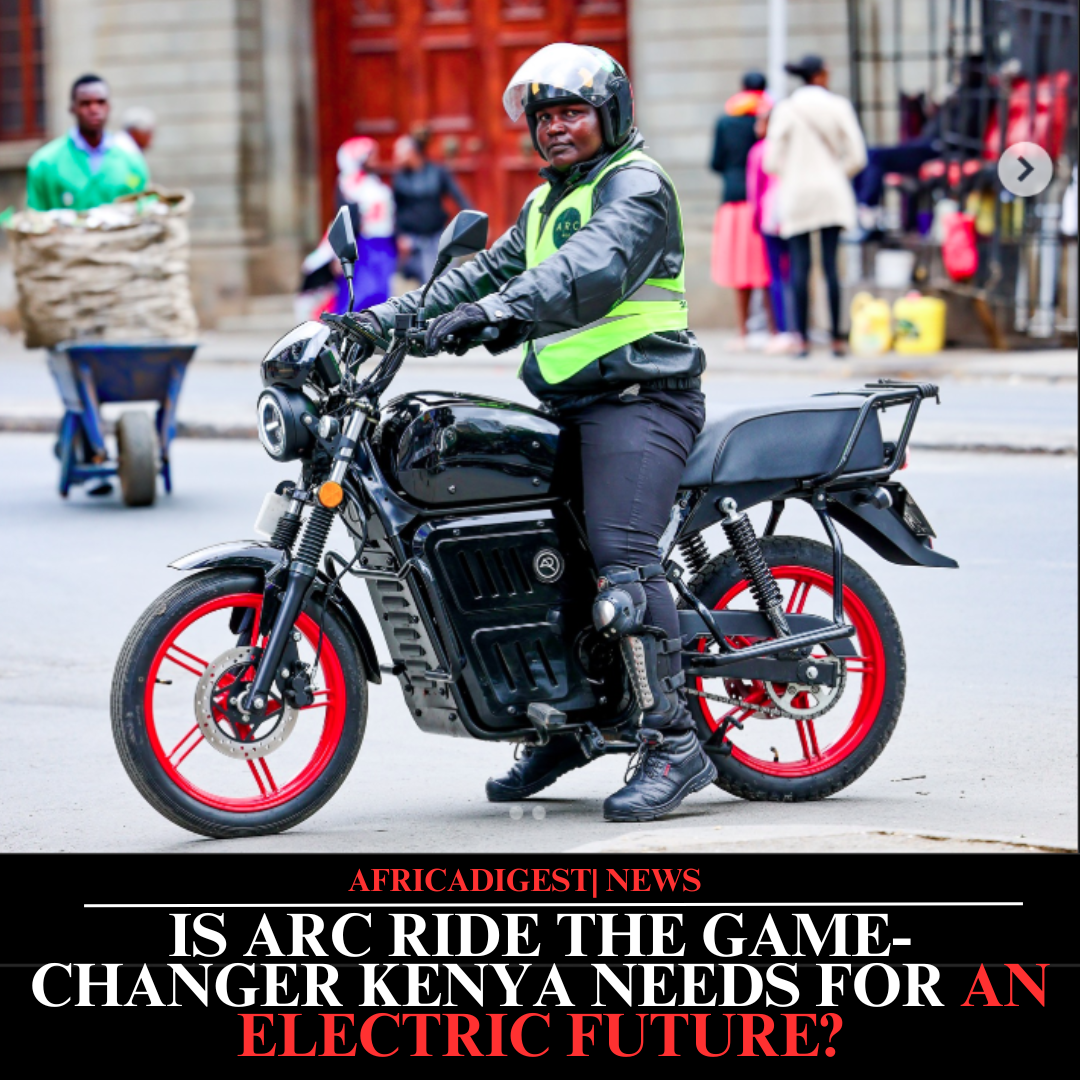
In a landmark move for Kenya’s sustainable transport sector, British International Investment (BII), the UK’s development finance institution, has announced a $5 million financing deal with Nairobi-based ARC Ride.
This investment aims to accelerate the adoption of electric mobility by scaling ARC Ride’s fleet of electric two-wheelers and expanding its innovative battery-swapping network across Nairobi.
By supporting the rollout of 5,000 electric motorcycles, ARC Ride estimates it could save over 100,000 metric tonnes of CO₂ emissions annually, contributing to Kenya’s decarbonisation goals.
The Importance of Electrifying Kenya’s Boda Boda Sector
Kenya’s boda boda industry, comprising over 1.2 million motorcycle taxi riders, is a cornerstone of urban mobility, providing affordable transport and employment opportunities across cities like Nairobi.
However, the sector’s reliance on petrol-powered motorcycles makes it a significant contributor to transport-related greenhouse gas emissions, worsening air pollution and climate challenges in urban centres.
As Kenya generates over 90% of its electricity from renewable sources, primarily hydropower and geothermal energy, the country is uniquely positioned to transition to electric vehicles (EVs).
Electrifying the boda boda sector offers a dual benefit: reducing carbon emissions and improving air quality, while also lowering operational costs for riders, who often spend up to 40% of their daily income on fuel and maintenance.
READ ALSO:
Climate Tech Startups Across Africa Get $55M Funding Boost from Equator
ARC Ride’s Vision for Electric Mobility
Founded in 2020, ARC Ride has quickly emerged as a leader in Kenya’s e-mobility space, focusing on providing clean and cost-effective alternatives to traditional motorcycles.
The company’s battery-swapping technology is a game-changer, addressing one of the biggest barriers to EV adoption for commercial riders: long charging times.
By allowing riders to exchange depleted batteries for fully charged ones at designated stations in under a minute, ARC Ride ensures that boda boda operators, who often work 12-hour shifts, can maintain their productivity without interruption.
Why BII’s Investment Matters
British International Investment (BII), formerly known as CDC Group, is the UK’s development finance institution, with a mission to support sustainable infrastructure and climate-focused innovation in emerging markets.
The $5 million investment in ARC Ride is part of BII’s broader commitment to invest £3 billion in climate finance globally by 2026, aligning with the goals of the Paris Agreement.
Over the past decade, the UK has invested more than £600 million in climate-related projects in Kenya, spanning off-grid solar, green manufacturing, and now, e-mobility.
Kenya’s E-Mobility Transition: A Competitive Landscape
Kenya’s e-mobility sector is gaining momentum, with several startups competing to capture the growing demand for clean transport solutions.
Alongside ARC Ride, companies like Ampersand, Ecobodaa, and Roam are developing electric motorcycles and supporting infrastructure tailored to the needs of boda boda riders.
These companies are betting on the cost savings of electric motorcycles, which require less maintenance and no fuel, making them an attractive alternative for riders.
The Kenyan government has also signalled strong support for e-mobility, introducing tax exemptions and duty waivers for electric vehicles to stimulate adoption.
However, challenges such as infrastructure development, standardisation, and access to affordable financing remain hurdles to large-scale adoption. ARC Ride’s battery-swapping model addresses some of these challenges by providing a scalable and user-friendly solution for commercial riders.
Environmental and Economic Benefits of Electric Boda Bodas
The shift to electric motorcycles offers significant advantages for both the environment and boda boda riders:
- Reduced Carbon Emissions: ARC Ride estimates that its fleet of 5,000 electric motorcycles could save over 100,000 metric tonnes of CO₂ emissions annually, contributing to Kenya’s climate goals.
- Improved Air Quality: By replacing petrol-powered bikes, electric motorcycles reduce harmful pollutants, making cities like Nairobi healthier and more liveable.
- Cost Savings for Riders: Electric motorcycles eliminate fuel costs and reduce maintenance expenses, allowing riders to retain a larger share of their earnings.
- Job Creation: The expansion of battery-swapping stations and e-mobility infrastructure creates new employment opportunities in manufacturing, maintenance, and operations.
- Scalability: ARC Ride’s battery-swapping model is designed to scale across Kenya and potentially other African markets, driving regional impact.
READ ALSO:
Local Businesses to Import Essential Commodities Through $50M African Trade Facility by GHIB & BII
The Road Ahead for ARC Ride and BII
With BII’s $5 million investment, ARC Ride is well-positioned to scale its operations and drive meaningful impact in Kenya’s transport sector.
The company plans to expand its fleet and battery-swapping network, with the goal of achieving millions of clean kilometres driven across Nairobi and beyond.
This initiative also sets the stage for ARC Ride’s pan-African expansion, as the company eyes other markets with similar demand for sustainable transport solutions.
For BII, this investment reinforces its commitment to supporting climate-focused innovation and sustainable infrastructure in emerging markets.
As part of its broader strategy, BII will continue to invest in projects that deliver both environmental and economic returns, aligning with global climate goals.
Ronnie Paul is a seasoned writer and analyst with a prolific portfolio of over 1,000 published articles, specialising in fintech, cryptocurrency, and digital finance at Africa Digest News.







Leave a Reply