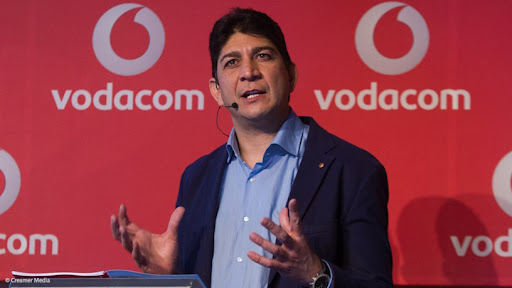
Vodacom Group Limited has completed the acquisition of an additional 20% effective stake in Safaricom PLC, increasing its shareholding to approximately 55% and making Vodacom the majority owner of East Africa’s most valuable telecommunications company.
The transaction, valued at $2.1 billion (R35 billion), follows the staying of a conservatory order by the Court of Appeal of Kenya on 26 June 2026 and the fulfilment of all remaining conditions precedent, clearing the final regulatory and legal hurdles for a deal first announced in December 2025.
The Transaction Structure
Vodacom’s completion of the $2.1 billion acquisition for a 55% Safaricom stake in 2026 combined two separate purchases into a single majority ownership outcome.
The deal included the purchase of a 15% stake from the Government of Kenya and an effective further 5% from Vodafone Group Plc, both priced at KES 34 per share.
The Government of Kenya retains a 20% stake in Safaricom, which remains listed on the Nairobi Securities Exchange, preserving public market access to the company even as control consolidates under Vodacom.
That structure matters for how the market should read the transaction. This is not a delisting or a full nationalisation reversal.
It is a controlling stake acquisition that leaves Safaricom publicly traded, with the Kenyan government retaining a meaningful minority position and the symbolic and practical influence that comes with it.
How the Vodacom Safaricom Deal Strengthens East Africa’s Digital and Financial Inclusion
It runs through the operational and strategic integration that majority ownership enables.
Shameel Joosub, CEO of Vodacom Group, described the completion as a landmark moment for Vodacom, Safaricom, and the communities served across East Africa, framing the acquisition as both a market leadership consolidation and an opportunity to drive digital and financial inclusion at scale in Kenya and Ethiopia.
Safaricom’s M-Pesa platform is the most consequential mobile money system on the continent, and Vodacom bringing it under full consolidation rather than associate accounting gives the group direct strategic control over how M-Pesa’s technology, product roadmap, and regional expansion evolve.
For Ethiopia, where Safaricom has been building out telecommunications infrastructure under a separate licence, majority Vodacom ownership of the parent company aligns incentives and capital allocation more directly between the two markets.
The Court of Appeal Conservatory Order and Regulatory Path to Completion
The Vodacom Safaricom transaction’s path through the Court of Appeal of Kenya conservatory order in 2026 reflects the legal scrutiny that a transaction of this scale and national significance attracts.
A conservatory order temporarily halting elements of the transaction is a standard legal mechanism in Kenya for parties seeking to pause a deal while underlying objections are heard.
READ ALSO :How Kenya’s Safaricom Privatisation Could Short-Change Taxpayers by Billions
Its staying on 26 June 2026 cleared the path for the transaction’s completion, confirming that the deal had satisfied the legal and regulatory tests required under Kenyan law.
For a transaction involving the sale of government-held shares in a company as economically significant as Safaricom, that level of legal process is appropriate and, in hindsight, validating.
The completion following the order’s staying signals that the structure and pricing of the deal withstood the scrutiny applied to it.
What Full Consolidation Means for Vodacom’s Financials
In accordance with IFRS, Safaricom’s financial results will now transition from an associate to full consolidation within Vodacom Group, a shift with material implications for how Vodacom’s group financials read going forward.
For context, Vodacom reported EBITDA of R63 billion in FY26, while Safaricom reported R29 billion.
Full consolidation means Safaricom’s revenue, costs, and earnings flow directly into Vodacom’s reported results rather than being reflected only through an equity-accounted share of profit.
That accounting shift will materially increase the scale of Vodacom’s reported group financials and gives investors a much clearer view of Safaricom’s contribution to the combined entity.
It also means Vodacom’s group strategy and capital allocation decisions will increasingly be made with Safaricom’s full financial profile in view, rather than as a separate associate investment evaluated somewhat independently.
Vodacom’s Vision 2030 and Safaricom’s Majority Ownership Strategy
Vodacom’s Vision 2030 strategy and Safaricom’s majority ownership position within East Africa in 2026 places this transaction at the centre of the group’s longer-term continental ambitions.
Vodacom now operates across a contiguous arc of high-growth African markets, with Safaricom at the strategic heart of its East African presence.
That geographic framing, an unbroken footprint across the continent rather than a scattered collection of disconnected markets, is central to how Vodacom positions its competitive advantage against both regional rivals and global telecommunications groups eyeing African growth.
What Comes Next
Vodacom intends to update the market on its medium-term targets on or around 27 July 2026, when it publishes its first quarter results.
That update will be the first opportunity for investors to see how Vodacom’s leadership frames the combined group’s strategy now that Safaricom sits fully within its consolidated financial structure.
For East Africa’s telecommunications and digital finance landscape, the completion of this transaction marks the beginning of a new ownership era for the region’s most influential technology company, one in which Vodacom’s continental ambitions and Safaricom’s East African dominance are now formally aligned under a single controlling shareholder.





Leave a Reply