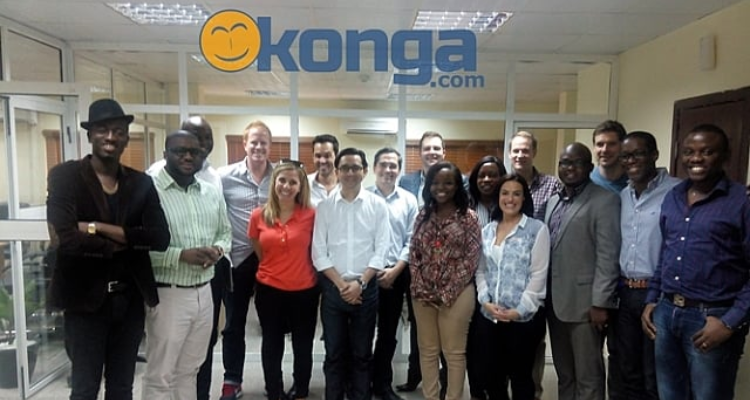
Konga, one of Nigeria’s leading e-commerce platforms, has invested $2.7 million in Stable, a stablecoin payments startup, to strengthen its capabilities in international payments and cross-border commerce.
The investment was announced by founder Nnamdi Ekeh at the E-commerce and Payments Forum hosted by Lagos Business School on 4 June 2026, positioning Konga as one of the first established Nigerian commerce platforms to make a direct equity bet on stablecoin infrastructure.
The Payment Problem Behind the Investment
The Konga $2.7 million investment in Stable stablecoin payments in Nigeria in 2026 is a response to a structural problem that predates the current macroeconomic environment but has intensified within it.
Nigerian businesses engaged in international trade face a persistent combination of currency volatility, limited access to foreign exchange, high correspondent banking fees, and the operational friction of managing multiple intermediaries for cross-border settlements.
For an e-commerce platform like Konga, whose merchant base increasingly sources inventory internationally and serves customers whose expectations are shaped by global platforms, those friction points are not abstract policy concerns.
They are transaction-level costs and delays that erode margins and limit the categories and suppliers Konga can offer competitively.
Ekeh was direct about the stakes: Nigeria’s competitive advantage is supposed to be manufacturing, and there is human capital available, but international payments remain a barrier to realising that potential.
The investment in Stable is framed as infrastructure for closing that gap.
How Konga Is Using Stablecoins to Solve Cross-Border Payment Challenges in Nigeria
It follows the same logic that has made stablecoin rails attractive across multiple African markets.
Stablecoins remove the correspondent banking layer from cross-border transfers, replacing a multi-step settlement process that can take days and extract fees at each hop with a peer-to-peer transaction that settles in seconds at a fraction of the cost.
Ekeh explained the product philosophy around abstraction: stablecoins abstract complexity and middlemen, and the goal is to get that benefit to the last mile. That framing is important.
The value of stablecoin payments is not realised at the level of the technology itself but at the level of the merchant or consumer who benefits from faster, cheaper access to international trade without needing to understand the underlying infrastructure.
READ ALSO:Flutterwave Integrates Tempo Network to Enable Faster USDC and USDT Payments
Stable, as the investee company, is presumably building the abstraction layer that makes stablecoin payments accessible to businesses that lack the technical capacity to integrate blockchain infrastructure directly.
Konga’s investment gives it both a financial stake in that infrastructure and a direct integration pathway for its own merchant and payments ecosystem.
Stablecoin Payments in Nigerian E-Commerce and International Trade
Stablecoin payments in Nigerian e-commerce for international trade in 2026 are moving from theoretical discussion to commercial deployment at a pace that reflects the urgency of the underlying problem.
Nigeria’s naira volatility since 2022 has made dollar-denominated stablecoin settlements particularly attractive for businesses managing import costs and international supplier relationships, where exchange rate unpredictability creates planning and pricing challenges that eat into operating margins.
The Konga stablecoin investment in Nigeria signals that established commerce players are no longer waiting for the traditional banking system to solve the cross-border payments problem on their behalf.
By investing in the infrastructure layer directly, Konga is positioning itself to control a payments capability that its competitors may continue to depend on third parties to provide.
The Forum Context: A Sector Confronting Structural Constraints
The E-commerce and Payments Forum at Lagos Business School brought together players from across Nigeria’s digital commerce ecosystem, including Moniepoint, Bumpa, Red Star Express, Glovo, and Qoray, to address the structural constraints limiting sector growth.
Discussions covered payment redundancy, chargeback management, last-mile logistics costs, and the potential of electric vehicles in delivery operations.
The Konga Nnamdi Ekeh stablecoin strategy for Nigeria’s digital commerce in 2026 emerged from that broader conversation about resilience.
In a sector dealing simultaneously with inflation, currency volatility, and infrastructure gaps, the companies that build payment redundancy and cross-border capability into their foundations will be better positioned to absorb macroeconomic shocks than those that rely on a single payment rail or a single currency settlement mechanism.
What the Bet Signals for Nigerian Fintech
The cross-border payments Nigeria fintech landscape is increasingly shaped by operators who are unwilling to wait for incumbent financial infrastructure to catch up with digital commerce requirements.
Konga’s Stable investment is a commercial statement that stablecoins are not a speculative technology to be observed from a distance but a practical payments infrastructure worth owning a stake in.
For Nigeria’s broader e-commerce and fintech sectors, the signal is clear.
When one of the country’s largest commerce platforms writes a $2.7 million cheque for stablecoin infrastructure, the conversation shifts from whether stablecoins belong in mainstream Nigerian commerce to how fast the integration will move and which platforms will have built the capability before the others.







Leave a Reply