
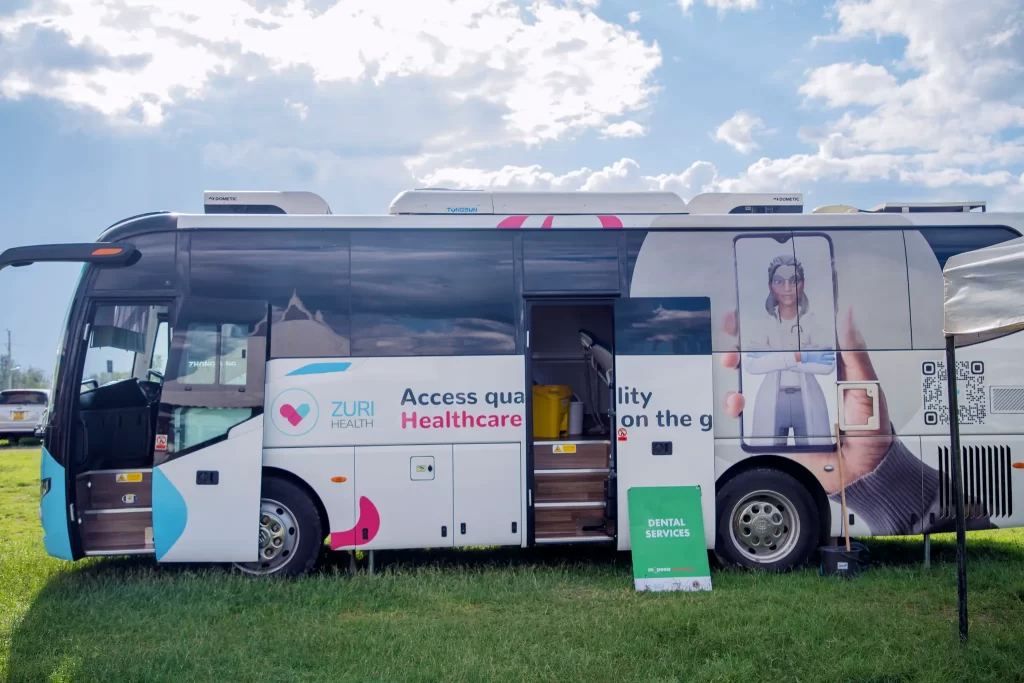
Zuri Health, a Kenya-based healthcare startup, has expanded its mobile clinic operations in Nairobi by adding two more buses, bringing the total fleet to three.
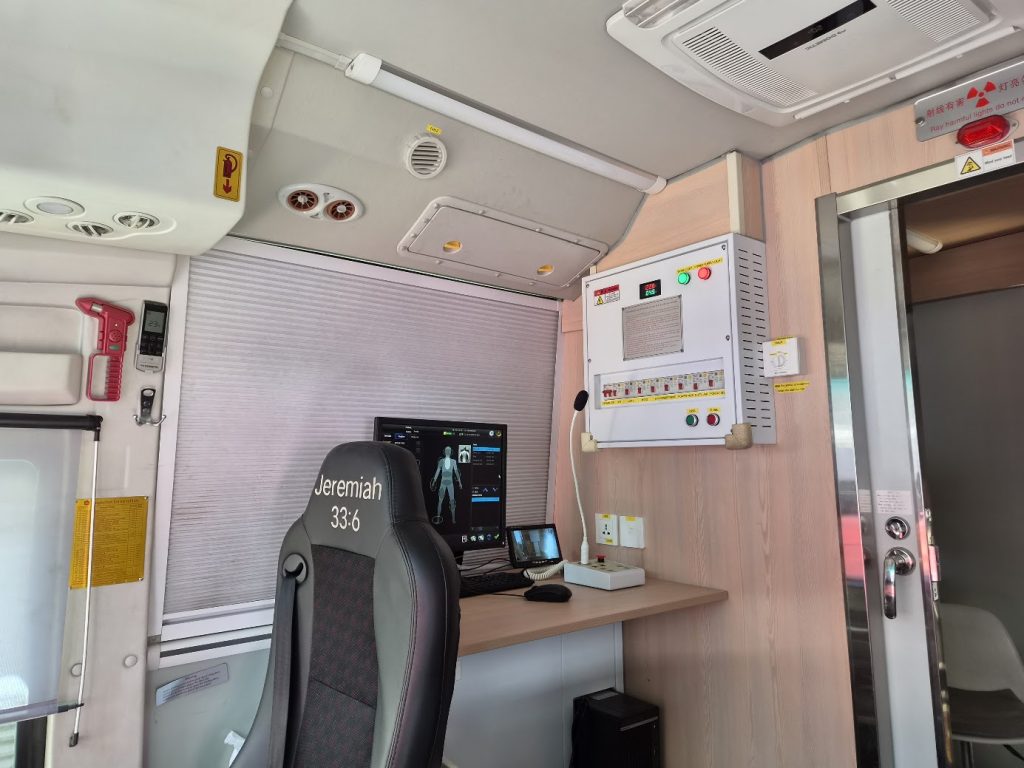
Two of the buses function as fully self-contained, solar-powered clinics equipped for diagnostics, dental care, and cervical cancer screening, while the third supports logistics and restocking. This enables continuous operations without reliance on fixed infrastructure.
The expansion follows the successful performance of the first bus, which achieved full cost recovery within its initial operational period.
Zuri Health deploys the clinics daily in high-density, high-traffic areas to reduce travel time and out-of-pocket costs for low-income workers, who often forgo care due to long journeys and extended waiting times at traditional facilities.
Service Model and Pricing
Zuri Health’s mobile clinics offer a practical, hospital-level service model that combines physical care with telemedicine capabilities. Key features include:
- Affordable Pricing: Consultations start at KES 500 (approximately US$3.87). A typical visit, including basic tests and medication, costs around KES 1,500 (approximately US$11.60).
- Revenue Streams: Income is generated from walk-in patients, corporate health checks, and partnerships with insurers such as the Social Health Authority (SHA), Britam, and Madison.
- Targeted Deployment: Buses are positioned daily in high-demand locations based on data-driven demand analysis, serving urban informal settlements and peri-urban communities.
The model brings essential healthcare closer to people, significantly reducing the time and financial burden associated with accessing traditional hospitals.
Ikechukwu Anoke, Chief Executive Officer of Zuri Health
A market trader will not have to close her stall or spend hours travelling to a hospital. We are taking the hospital to them
READ ALSO:Why Boehringer Is Investing in Zuri Health’s Rural Mobile Clinic Model
Strategic Significance and Scalability
The successful cost recovery of the first unit validates Zuri Health’s business model and demonstrates that mobile, solar-powered clinics can operate sustainably in urban environments.
The expansion to three buses allows the company to serve more patients daily while refining operational efficiency and data collection for future scaling.
This approach addresses critical gaps in Kenya’s healthcare system, particularly in primary care access for low-income populations.
By combining physical clinics with telemedicine and strategic insurer partnerships, Zuri Health is building a hybrid model that improves both accessibility and financial viability.
The initiative also contributes to broader goals of healthcare innovation in Africa by showcasing how technology and mobile infrastructure can deliver quality care at lower costs while generating revenue.
Future Outlook
Zuri Health’s expansion to three mobile clinics in Nairobi, following the cost recovery of its first unit, signals the viability of a scalable, revenue-generating model for delivering accessible primary healthcare in urban informal settlements.
With consultations starting at KES 500 and full visits averaging KES 1,500, the service significantly reduces barriers for low-income workers.
This development positions Zuri Health to further scale its operations across Kenya while demonstrating a practical solution to healthcare access challenges in Africa.
For the most current information on clinic locations, services, or partnerships, refer to official announcements from Zuri Health.
Digital Health Overview
M-Pesa Foundation partnered with Zuri Health to expand access to affordable telemedicine and community health services in Kenya.
The Mpesa Foundation Zuri Health collaboration focuses on virtual consultations, pharmacy access, and preventive care.
Zuri Health Kenya location
Zuri Health operates in Nairobi with digital-first services delivered via mobile, USSD, and WhatsApp, alongside partnerships with clinics and pharmacies nationwide.
Digital Health Authority is the body responsible for coordinating digital health systems and standards.
The Digital Health Act Kenya establishes governance, data standards, interoperability, and licensing for digital health providers.
The Digital health strategy Kenya guides implementation of e-health platforms, national health data exchange, and telemedicine.
The Kenya Digital Health Strategy 2025–2028 focuses on interoperability, universal health coverage support, patient digital IDs, and scaling nationwide digital health infrastructure.








Leave a Reply