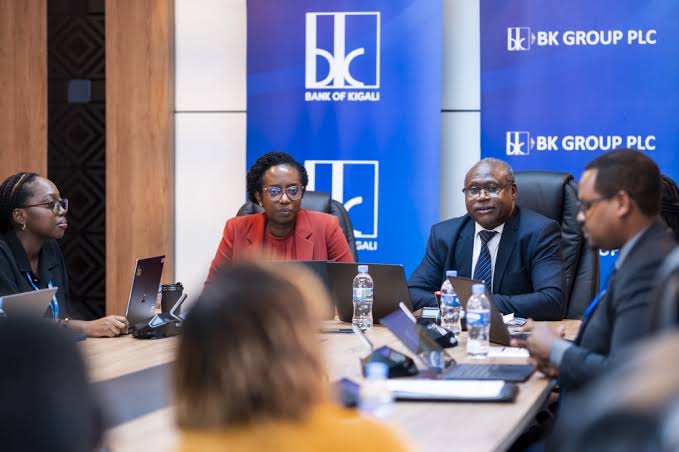
BK Group is not a Kenyan bank at all, but Rwanda’s largest financial institution, cross listed on the Nairobi Securities Exchange.
Its story begins on December 22, 1966, when Bank of Kigali was incorporated as a joint venture between the Government of Rwanda and Banque Belgolaise, each holding 50 percent of the ordinary share capital. The bank opened its first branch in Kigali the following year.
Belgolaise was later absorbed into Fortis Group, which began withdrawing from its African operations in 2005.
In 2007, the Government of Rwanda bought out Belgolaise’s shareholding entirely, briefly giving the state full ownership of the bank.
In 2011, the bank changed its legal name from Bank of Kigali S.A. to Bank of Kigali Limited, and that same year it listed on the newly established Rwanda Stock Exchange through an initial public offering, becoming one of the exchange’s founding listed companies.
The bank’s regional ambitions took shape later in the decade. In 2018, following a rights issue that raised Ksh 7 billion, Bank of Kigali Group cross listed on the Nairobi Securities Exchange on November 30, becoming just the second company to cross list there, after Uganda’s Umeme in 2012, and the first Rwandan company to do so.
Trading opened at a reserve price of Sh30 per share. Around the same period, the group restructured into a holding company, Bank of Kigali Group Plc, later shortened simply to BK Group Plc, sitting above the banking subsidiary and a growing family of non bank businesses.
BK Group briefly maintained a physical representative office in Nairobi, first authorized by the Central Bank of Kenya in 2013, making it the first East African Community bank to open one in Kenya.
That changed in April 2024, when BK Group voluntarily closed the office as part of a strategic shift toward digital service delivery, while keeping its shares cross listed and actively traded on the NSE.
Core Business Lines and Revenue Streams
BK Group operates through several subsidiaries built around its core banking business:
- Bank of Kigali Plc: the flagship commercial bank, organized into three segments, retail banking (current and savings accounts, fixed deposits, consumer loans, and mortgage based lending), corporate banking (fixed deposits, overdrafts, loans, and credit facilities in local and foreign currencies), and central treasury (funding, debt issuance, and investment in liquid assets).
- BK General Insurance: providing non life insurance products including motor, transport, engineering, and personal accident cover.
- BK Capital: an investment and brokerage arm offering wealth management, stock brokerage, and corporate finance advisory services.
- BK TecHouse: a technology subsidiary building digital solutions across sectors including EdTech, AgriTech, retail, fintech, and the Internet of Things.
- BK Foundation: the group’s corporate social responsibility arm, funding education and innovation initiatives, including scholarships in technical and STEM fields.
The bank serves over 223,000 individual customers and 20,000 legal entities through a network of roughly 79 branches, plus ATMs and agent outlets across Rwanda.
For the 2024 financial year, the group reported revenue of about Ksh 224.65 billion (a measure that reflects gross income across its Rwandan franc denominated operations), up nearly 6 percent year on year, with earnings up over 21 percent.
READ ALSO:Standard Chartered Bank Kenya (SCBK): Everything You Need to Know
Competitive Position in the Industry
BK Group is, by a wide margin, Rwanda’s largest bank. It has historically commanded roughly a third of the domestic banking market by assets, and it remains the dominant lender in a market far smaller and less crowded than Kenya’s, where the largest players compete across dozens of licensed banks.
That scale has made BK Group something of a regional trophy asset. It became the first dual listed company to enter the NSE 20 Share Index, a milestone widely seen at the time as validation of Rwanda’s growing capital markets and BK’s own financial strength.
The bank has also picked up a long list of “Best Bank in Rwanda” awards from international publications including Euromoney, The Banker, Global Finance Magazine, and EMEA Finance.
Its approach to the Kenyan market has been notably different from other Rwandan or regional lenders looking to expand physically.
Rather than building out a branch network in Kenya, BK Group closed its Nairobi representative office in 2024 in favor of a purely digital and capital markets presence there, betting that Kenyan investors and its NSE listing offer more value than a costly physical footprint, particularly as Kenyan bank customers themselves have been shifting toward mobile and digital banking channels over branch visits.
Ownership Structure
BK Group’s ownership reflects its origins as a state backed institution. The Government of Rwanda remains the single largest shareholder, historically holding around 29.5 percent of the group directly, alongside the Rwanda Social Security Board, a public pension fund, which has held roughly 25.1 percent.
Together, these two state linked entities have controlled more than half the company in recent years, giving the Rwandan state effective, if indirect, control without an outright majority stake in the hands of any single shareholder.
The remaining shares are split between international institutional investors, which have held around 14 percent, and a broader base of local and cross border retail shareholders trading the stock on both the Rwanda Stock Exchange and the NSE.
This structure sets BK Group apart from every other bank on this list: it’s the only one where a foreign government, rather than a private family, a corporate group, or a diversified public float, sits at the top of the ownership chain.
Why It’s Listed on the NSE Specifically
Unlike every other company in this series, BK Group’s primary listing isn’t the NSE at all, its primary listing is the Rwanda Stock Exchange, where it has traded since 2011.
Its NSE presence is a cross listing, and the reasons behind that choice are different from a typical Kenyan bank’s:
- Access to a deeper, more liquid market: Rwanda’s capital market is young and comparatively thin, so cross listing on the NSE, one of East Africa’s largest and most liquid exchanges, gave BK Group access to a much broader pool of investors and greater share liquidity than the Rwanda Stock Exchange alone could offer.
- Combining a cross listing with a capital raise: BK Group’s 2018 NSE entry was structured alongside a rights issue, making it, according to Renaissance Capital at the time, the first East African company to combine a cross listing with a capital raise in a single transaction, a structure designed to tap fresh Kenyan capital directly.
- Regional financial integration: Kenyan and Rwandan regulators have worked toward integrating East African capital markets under a shared regional blueprint, and the Capital Markets Authority explicitly framed BK Group’s NSE listing as strengthening cross border investment and positioning Nairobi as a gateway for regional capital flows.
- Reputational and strategic signaling: as the first Rwandan company to list in Nairobi, BK Group’s cross listing served as a visible statement of Rwanda’s capital market ambitions and gave Kenyan and international investors a direct way to gain exposure to Rwanda’s fast growing economy without needing a Rwandan brokerage account.
Current Stock Price
As of early September 2026, BKG was trading around Sh63.00 on the Nairobi Securities Exchange, having touched an all time high of Sh70.00 on August 31, 2026.
That put the group’s market capitalization at roughly Sh58.5 billion, with the stock up close to 66 percent over the preceding year, though it had pulled back slightly, down about 5 percent over the most recent week of trading.
Given how sharply the stock has moved over the past year, treat this figure as a historical snapshot rather than today’s number.
Check the live price through the NSE website, your broker’s trading platform, or a live data source such as African Markets or myStocks before making any decisions, and be aware that as a cross listed stock, BKG’s price can also be influenced by trading activity on its primary listing, the Rwanda Stock Exchange.
How to Buy BK Group Shares
Buying BKG shares through the NSE follows the standard process used across the Kenyan market, with a couple of extra considerations given its cross listed status:
- Open a CDS account. A Central Depository System (CDS) account holds your shares electronically. You can open one through the Central Depository and Settlement Corporation (CDSC), though most investors do this through a licensed stockbroker as part of onboarding.
- Choose a licensed stockbroker. You’ll need an NSE licensed brokerage, such as Faida Investment Bank, AIB-AXYS Africa, or Genghis Capital, to place trades. Most offer mobile or online trading platforms, and BK Group’s own brokerage arm, BK Capital, can also facilitate trades on the Rwanda Stock Exchange side if you prefer that market instead.
- Fund your trading account. Deposit money into the account linked to your broker, typically through bank transfer or mobile money, depending on what the brokerage supports.
- Place your buy order. Specify the ticker (BKG on the NSE), the number of shares, and your price, either a market order at the prevailing price or a limit order at a price you set. Orders match through the NSE’s electronic trading system.
- Diaspora and foreign investor options. Kenyans abroad and foreign investors can buy BKG shares too. Many Kenyan brokerages support remote account opening with certified identification, and some platforms allow USD settlement, letting diaspora investors trade without being physically present in Kenya. Investors with existing exposure to Rwanda may also consider buying the same underlying shares directly on the Rwanda Stock Exchange under the ticker BOK, depending on where they already hold accounts.
- Track your holding. Once the trade settles, usually within a few business days, the shares reflect in your CDS account. You can follow price movement, dividend announcements, and corporate actions through your broker’s platform, the NSE website, or financial data sites carrying live NSE quotes, keeping in mind that as a cross listed stock, its price can move on news from either the Kenyan or Rwandan market.
As with any equity investment, share prices can go down as well as up, and this isn’t financial advice. It’s worth doing your own research, or speaking with a licensed financial advisor, before buying.




Leave a Reply