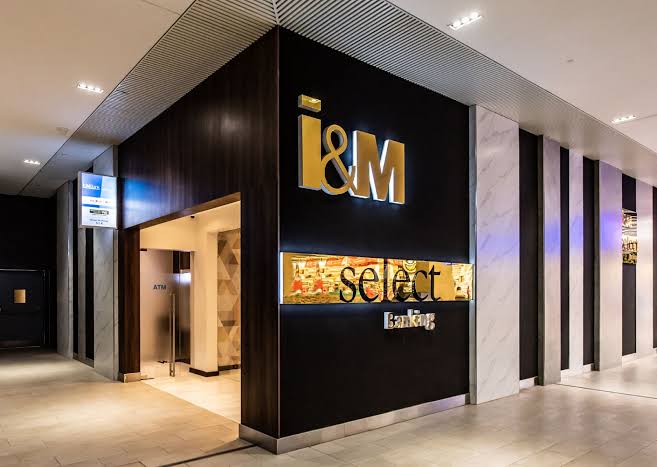
I&M Group’s roots split into two separate stories that later merged into one.
The banking side began on May 14, 1974, when a company called Investments & Mortgages Limited was incorporated in Kenya, based out of Phoenix House in Nairobi.
It started as a personalized financial services provider for the city’s business community, was formally registered as a financial institution under the Banking Act in 1980, and converted into a fully fledged commercial bank in 1996, when it took the name Investments & Mortgages Bank Limited. The name was shortened again in 2008 to I&M Bank Limited.
The listing side of the story starts even earlier. City Trust Limited, an investment holding company, was incorporated on August 16, 1950, and became one of the very first companies to list on the Nairobi Securities Exchange.
Decades later, in June 2013, I&M Bank executed a reverse takeover of City Trust, which changed its name first to I&M Holdings and eventually to I&M Group PLC, giving I&M Bank a public listing without a separate IPO of its own, and moving the combined entity from the exchange’s smaller Alternative Investment Market segment to its Main Investment Market segment.
Along the way, the bank grew through a string of acquisitions: Biashara Bank of Kenya in 2003, a controlling stake in Tanzania’s CF Union Bank in 2010 (rebranded I&M Bank Tanzania), a majority stake in Rwanda’s Banque Commerciale du Rwanda in 2012, and the absorption of Giro Commercial Bank into I&M Bank Kenya, completed in February 2017.
More recently, the group entered Uganda through the acquisition of Orient Bank, and its Mauritius joint venture, Bank One, gave it a further regional foothold.
Today the flagship bank sits under I&M Group PLC as a non operating holding company, with banking, insurance, and investment subsidiaries spanning five countries.
Core Business Lines and Revenue Streams
I&M Group operates as a diversified financial services holding company built around several pillars:
- Personal and retail banking: current and savings accounts, cards, mortgages, personal loans, and digital and mobile banking, an area the group has pushed hard into in recent years.
- Business and SME banking: business accounts, trade finance, asset finance, cash management, and insurance premium financing tailored to small and medium sized enterprises.
- Corporate and institutional banking: the group’s traditional strength, serving medium and large corporates with lending, trade finance, and treasury services.
- Investment management: through I&M Capital, a fund manager licensed by Kenya’s Capital Markets Authority.
- Insurance: through GA Insurance, one of Kenya’s oldest general insurance companies, which the group acquired in 2005.
- Regional banking subsidiaries: I&M Bank Rwanda, I&M Bank Tanzania, I&M Bank Uganda, and its Bank One joint venture in Mauritius, which together generate a meaningful share of group revenue outside Kenya.
Geographically, Kenya still accounts for roughly 72 percent of net sales, with Rwanda contributing about 15.6 percent, Tanzania 7.1 percent, and Uganda 5.3 percent.
For the 2025 financial year, the group reported revenue of about Ksh 51.6 billion, up 22 percent year on year, and net income of Ksh 18.8 billion, also up 22 percent, continuing a multi year run of accelerating growth, in part driven by a strategic push into retail and SME banking under a plan the group calls iMara 3.0.
Competitive Position in the Industry
I&M Group has climbed the ranks of Kenya’s banking sector faster than almost any of its peers in recent years.
READ ALSO:Inside the NSE:NCBA Group (NCBA)
It’s widely recognized as a Tier 1 institution, and by March 2026 its total assets reached about Sh742.5 billion, edging past NCBA Group’s Sh741.1 billion to become the fourth largest lender in the country by balance sheet size, trailing only KCB Group, Equity Group, and Co-operative Bank.
That milestone came from a deliberate shift in strategy. Historically built around corporate and institutional banking, I&M has spent recent years diversifying into small and medium sized enterprises and mass retail banking, adding new branches (bringing its Kenyan network past 100 outlets) and pushing digital adoption to the point where roughly 98 percent of its customers now transact digitally.
The bank has also been closing the profitability gap with NCBA, narrowing the difference in net profit from around Sh8.1 billion in 2023 to about Sh3.55 billion in 2025, as I&M’s net income grew 24.4 percent that year.
Regionally, I&M’s subsidiaries in Rwanda, Tanzania, and Uganda give it a diversified earnings base that smaller Kenyan focused banks lack, helping cushion the group against downturns in any single market.
Ownership Structure
I&M Group has one of the more concentrated ownership structures among NSE listed banks, anchored by the Shah family.
The family controls the bank primarily through three investment vehicles, Minard Holdings Limited, Tecoma Limited, and Ziyungi Limited, which together held a combined 54.93 percent stake as of May 2026.
A related entity, the Bhagwanji Raja Charitable Foundation, holds a further 2.43 percent.
Adding named personal holdings of family members on top of these vehicles brings the family’s total economic interest in the group to well over half, and by some estimates closer to 70 percent when every related holding is counted.
Key family figures include Suresh Bhagwanji R. Shah and Sarit S. Raja Shah, who also serve in senior roles at the group, including as executive director.
The remaining shares are held by local and international institutional investors, pension funds, and individual shareholders trading freely on the NSE.
This concentrated family ownership has coexisted with strong recent shareholder returns: the group paid a total dividend of Sh3.75 per share for the 2025 financial year, up from Sh3.00 the year before, with the Shah family alone banking roughly Sh936 million in dividends in May 2026.
Why It’s Listed on the NSE Specifically
I&M Group’s NSE listing is unusual among Kenyan banks in that it predates the bank itself. The logic for staying listed domestically includes:
- One of the exchange’s oldest listings: the group’s predecessor, City Trust Limited, was among the very first companies to list on the Nairobi Securities Exchange back in 1950, giving today’s I&M Group a listing history stretching back more than seven decades.
- A reverse takeover rather than a fresh IPO: when I&M Bank wanted to go public in 2013, it achieved that by taking over the already listed City Trust, a structure only possible because a suitable, long established NSE listed shell company existed locally.
- Local incorporation and regulation: I&M Bank is incorporated in Kenya and regulated by the Central Bank of Kenya, the Capital Markets Authority, and the NSE itself, making a domestic listing the natural fit for its primary regulatory relationships.
- Access to local capital and governance standards: the NSE listing let the bank raise capital from Kenyan institutional and retail investors while subjecting the historically family controlled business to public disclosure and governance requirements, including regular reporting of significant shareholders.
- A regional holding structure anchored in Nairobi: even as the group has expanded into Rwanda, Tanzania, Uganda, and Mauritius, the parent holding company remains listed in Nairobi, keeping its primary public market and regulatory home in Kenya.
Current Stock Price
As of August 19, 2026, IMH closed at Sh71.75 on the Nairobi Securities Exchange, up 1.1 percent from the prior close of Sh71.00, giving the group a market capitalization of roughly Sh125 billion.
The stock has had a strong run, having started the year around Sh42.45, a gain of close to 70 percent driven largely by strong 2025 profit growth and rising dividends across Kenya’s banking sector.
Because prices move daily, and this stock has been especially strong performing over the past year, treat this figure as a historical snapshot rather than today’s number.
Check the live price through the NSE website, your broker’s trading platform, or a live data source such as African Markets or myStocks before making any decisions.
How to Buy I&M Group Shares
Buying IMH shares (or any NSE listed stock) follows the standard process used across the Kenyan market:
- Open a CDS account. A Central Depository System (CDS) account holds your shares electronically. You can open one through the Central Depository and Settlement Corporation (CDSC), though most investors do this through a licensed stockbroker as part of onboarding.
- Choose a licensed stockbroker. You’ll need an NSE licensed brokerage, such as Faida Investment Bank, AIB-AXYS Africa, Genghis Capital, or SBG Securities, to place trades. Most offer mobile or online trading platforms.
- Fund your trading account. Deposit money into the account linked to your broker, typically through bank transfer or mobile money, depending on what the brokerage supports.
- Place your buy order. Specify the ticker (IMH), the number of shares, and your price, either a market order at the prevailing price or a limit order at a price you set. Orders match through the NSE’s electronic trading system.
- Diaspora and foreign investor options. Kenyans abroad and foreign investors can buy IMH shares too. Many Kenyan brokerages support remote account opening with certified identification, and some platforms allow USD settlement, letting diaspora investors trade without being physically present in Kenya.
- Track your holding. Once the trade settles, usually within a few business days, the shares reflect in your CDS account. You can follow price movement, dividend announcements, and corporate actions through your broker’s platform, the NSE website, or financial data sites carrying live NSE quotes.
As with any equity investment, share prices can go down as well as up, and this isn’t financial advice. It’s worth doing your own research, or speaking with a licensed financial advisor, before buying.




Leave a Reply