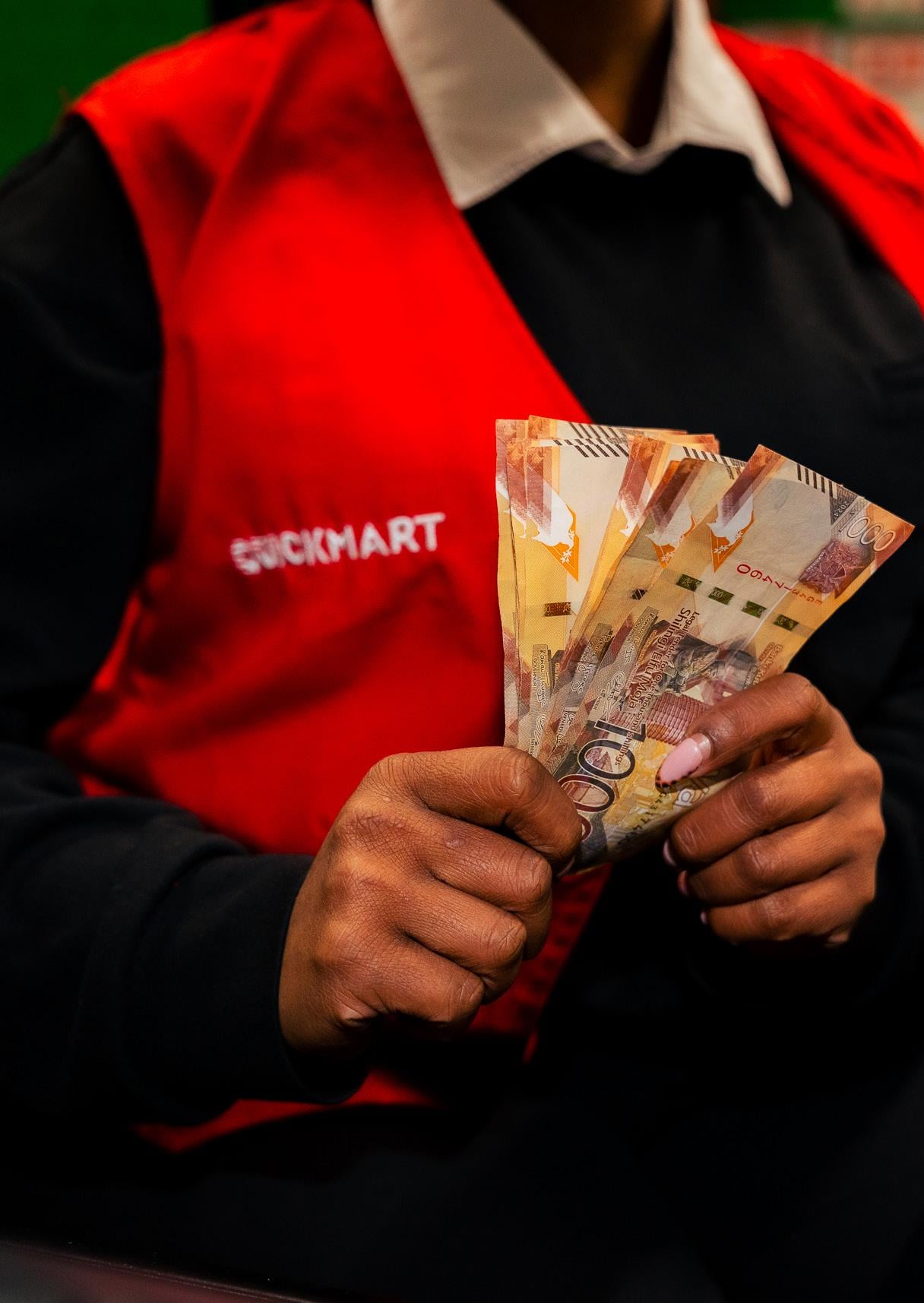
Most people picture an IPO as a company raising money to grow. Quickmart’s is a different kind, called an offer for sale.
- Who sells: Sokoni Retail Kenya Limited, which owns 100% of Quickmart today, is selling 2 billion of its existing shares. That is half of Quickmart’s 4 billion issued shares.
- What is not happening: no new shares are issued, and the company’s cash balance does not change.
- Where the money goes: the net proceeds, estimated by the company at about Ksh 14.4 billion, go to Sokoni Retail Kenya. The seller also pays the offer costs.
- What the company says about growth: Quickmart plans to fund store expansion mainly from its own cash flow, with a stated aim of 10 to 15 new stores a year.
So your money buys a slice of an existing business from its owners. It is closer to buying shares from a seller than funding a new project, and the usual “use of proceeds” story does not apply.
Who Is the Seller?
Sokoni Retail Kenya is a holding company. According to the company’s own FAQ, its ownership is:
- Sokoni Retail Holdings Limited, 50.8% (itself 95.7% owned by two funds managed by Adenia Partners, a private equity firm)
- The Kinuthia family, who founded Quickmart, 31.9% combined
- The founders of Tumaini, the supermarket chain Quickmart combined with, 12.0% combined
- Peter Kang’iri, Quickmart’s group chief executive, 5.4%
The sale proceeds are shared among these owners in proportion to what they hold. Their percentages in Sokoni do not change, but because Sokoni’s stake in Quickmart halves, each owner’s indirect stake in Quickmart halves too. The company says its executive leadership will not change because of the listing.
What the Shares Actually Are
The offered shares are ordinary shares that rank equally with all other Quickmart shares, including for dividends.
They will list on the Main Investment Market Segment of the Nairobi Securities Exchange.
After the sale, Sokoni keeps 50%, and it has agreed not to sell 60% of its remaining shares for 24 months after listing, subject to limited exceptions in the Information Memorandum.
That lock-up is worth remembering. When it expires, the seller could sell more of its stake, which can weigh on a share price. No further sale has been announced.
The Business Behind the Shares
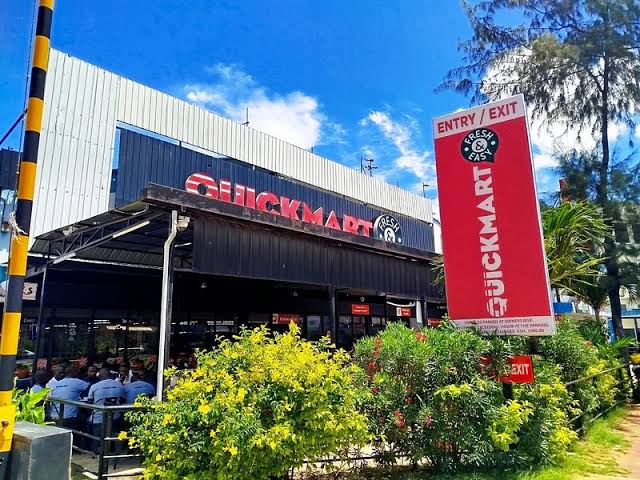
Quickmart describes itself as Kenya’s second-largest supermarket chain by store count and turnover, with an estimated 15% share of formal grocery retail.
That is the company’s own estimate. It started as a single store in Nakuru in 2006 and combined with Tumaini Supermarkets effective January 1, 2020.
Figures as of the offer documents (October 2026):
- Revenue grew from about Ksh 25.7 billion in 2021 to Ksh 50.4 billion in 2025, a compound annual growth rate of 18.4%.
- 2025 profit after tax was Ksh 1.51 billion as reported, or about Ksh 1.7 billion on the company’s adjusted basis, which leaves out items it treats as one-offs.
- First half of 2026 revenue was about Ksh 27.3 billion, with profit of about Ksh 873 million.
- Store count was 68 at June 30, 2026, and 72 after four openings in July and August 2026.
- The company’s forecast, not audited results, is Ksh 58.2 billion revenue and Ksh 2.1 billion profit for 2026.
READ ALSO:How to Buy Quickmart Shares in the 2026 NSE IPO
What You Are Paying For
The fixed offer price is Sh7.50 per share, which values the whole company at Ksh 30 billion.
On the offer documents’ own figures, that is about 12.9 times forecast 2026 adjusted earnings, or about 14.3 times on unadjusted forecast earnings. These are multiples of forecasts, so they only hold if the forecast holds.
The Dividend Promise, and Its Fine Print
The company says it intends to pay out 95% of profit for 2026, 90% for 2027, and at least 80% a year after that, in two payments a year.
On the forecast 2026 dividend of about Ksh 2.0 billion, that implies a yield near 6.7% at the offer price.
Note better:
- These are targets set at the board’s discretion, not guaranteed payments.
- Reports on the offer documents note that the company paid Ksh 1.65 billion in dividends for 2025, more than that year’s reported profit of Ksh 1.51 billion.
- The same reports say owners received a Ksh 1.1 billion “shareholders’ advance” in the first half of 2026, and that new shareholders’ first dividend would cover the second half of 2026, paid in the first half of 2027. The documents reportedly do not say how the forecast Ksh 2.0 billion splits between halves.
A payout this high leaves little cushion if profit falls short of forecast.
Risks Worth Weighing
- Supplier-funded cash flow: Quickmart collects from shoppers immediately and pays suppliers later. The company calls this a negative working capital model. Reports put trade payables at about Ksh 10.9 billion at the end of 2025, and say the memorandum lists withdrawal of supplier credit as a risk.
- Thin retail margins: supermarkets earn small margins on large revenue, so modest cost or pricing shocks matter.
- A track record to live down: several well-known Kenyan supermarket chains collapsed in recent years, and the company addresses this directly in its FAQ, pointing to its governance and its financial discipline on stock and supplier payments.
- Seller overhang: the owners are cashing out half and will keep half, with a lock-up that eventually ends.
- No safety net in the offer: it is not underwritten. It needs valid applications for at least 75% of the shares (1.5 billion) and an allotment to at least 250 investors, or it lapses and money is refunded.
How the Offer Works
As published by the company (check the website for any change):
- Minimum application: 500 shares (Sh3,750), then multiples of 100 shares. There is no maximum.
- Applications are irrevocable. You cannot withdraw or amend them without the company’s written consent.
- If a category is oversubscribed, applications are scaled back pro rata, and unused money is refunded.
- Original timetable: offer open October 5 to October 30, 2026 (5:00 p.m.), results announced November 6, refunds and CDS crediting from November 11, and trading targeted for November 12.
- The cornerstone investor named in the company’s FAQ is the IFC, which has conditionally agreed to buy about Ksh 1.94 billion of shares (about 12.9% of the offer), subject to its own board approval. The company says this is not a recommendation.
Allocation changed. The company’s FAQ lists an indicative split of 20% Kenyan retail, 35% Kenyan institutions, 12% East African, 20% foreign, and 13% cornerstone.
News reports on a supplementary Information Memorandum, published around October 26, say three more cornerstone investors were admitted.
They report cornerstone investors now take 48% (960 million shares) and are not scaled back, with Kenyan and East African institutions at 32%, Kenyan and East African retail at 12% (240 million shares, about Ksh 1.8 billion), and foreign investors at 8%.
Allocations are not binding and can change with demand. If the smaller retail slice is oversubscribed, expect to receive fewer shares than you ask for.
How to Apply and What to Do After Listing
You need a CDS account first, which any licensed stockbroker can open.
The company lists three ways to apply: its online portal, USSD (for payments up to Ksh 250,000), or a physical form through a placing agent.
Kenyans abroad can apply as Kenyan retail investors, but must check that taking part is lawful where they live, since selling restrictions apply in several countries.
After listing, the shares trade like any other NSE stock through your broker, with no minimum holding period. Prices can go down as well as up, and there is no guarantee you can sell at or above the offer price.
Tax, as stated in the company’s FAQ at the time of writing and subject to change: a final withholding tax of 5% on dividends for Kenyan residents and East African citizens (15% for non-residents, or a lower treaty rate), no capital gains tax on sales of NSE-listed shares, and no stamp duty on transfers. Confirm with a tax adviser.
Before You Decide
Read the Information Memorandum, especially the “Risk Factors and Mitigants” section, which prevails over any summary, including this one. This post is not investment, legal, or tax advice.



Leave a Reply