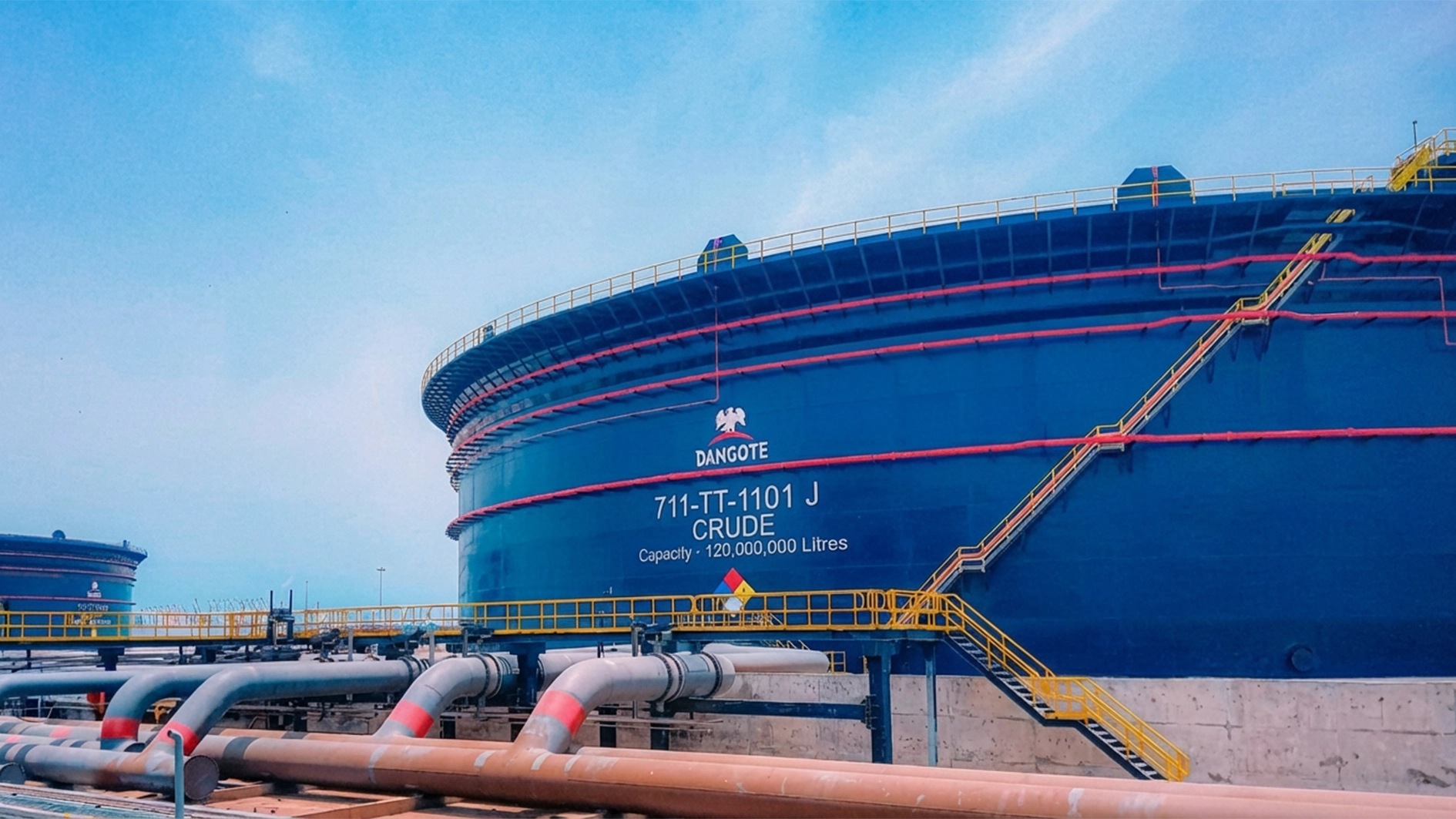
The Dangote Refinery IPO is being billed as the biggest share sale in African history, and Kenyans can take part through a special NSE route.
Before you put money in, here is what the offer actually is, what the numbers do and don’t tell you, and how to buy.
The Quick Take
- You are buying a small slice (about 3.3%) of a very large, very new, and very cyclical business. Founder Aliko Dangote keeps roughly 84% after the offer.
- The refinery swung from a loss in 2025 to a large profit in the first half of 2026, helped by unusually wide margins. Whether that lasts is the central question.
- The money raised goes to the company’s expansion, not to existing owners. That is the opposite of the Quickmart IPO, where the owner is selling.
- Kenyans cannot buy the shares directly on the NSE. The route is a Global Depositary Receipt (GDR), with its own extra risks.
The Offer at a Glance
| Item | Detail (as of October 26, 2026) |
|---|---|
| Company | Dangote Petroleum Refinery & Petrochemicals FZE (DPRP), Lekki, Lagos |
| What’s offered | Up to 4.1 billion new ordinary shares |
| Price | ₦525 per share |
| Raise | About ₦2.15 trillion (about $1.6 billion), or about ₦2.11 trillion after offer costs |
| Extra shares | A greenshoe of up to 30% more shares if demand is strong, subject to approval |
| Implied value | About ₦65.2 trillion (about $49 billion) after the offer |
| Minimum (Nigeria) | 10 shares (₦5,250) |
| Offer period | September 14 to October 27, 2026 (extended from October 13) |
| Primary listing | Nigerian Exchange (NGX), expected around early December 2026 |
What Is This Company, Exactly?
DPRP owns the Dangote refinery and petrochemicals complex near Lagos, which cost about $20 billion to build.
It is a separate company from Dangote Cement, Dangote Sugar and the wider Dangote Group, so buying it is not the same as buying shares in those.
Sources describe the refinery’s capacity as roughly 650,000 to 700,000 barrels a day, and the company sells fuel in Nigeria and exports products such as jet fuel across Africa and into Europe.
Why Is It Raising Money?
The proceeds are meant to part-fund a plan to double capacity to 1.4 million barrels a day, with reports citing a target of around 2029.
Reports based on the prospectus say all net proceeds go to this expansion, split between process units, utilities and construction.
The expansion is estimated to cost about $14.3 billion, so analysts note the IPO covers only a small part of it (about 11%), with the rest to come from operating cash flow and other financing.
The Numbers, and What They Don’t Tell You
The company’s prospectus shows a dramatic turnaround:
- A net loss of about $476 million for the whole of 2025.
- First half of 2026 revenue of about ₦19.1 trillion (roughly $14 billion) and a net profit of about ₦2.55 trillion ($1.82 billion).
Be careful with that second number. Reuters reported that the refinery benefited from supply disruptions linked to the Iran war, and analysts point out that profit depends on the gap between crude costs and fuel prices, which was unusually wide in early 2026.
A six-month profit during a favorable stretch is not a guide to a full cycle. Reports on the prospectus also flag crude supply concentration (the state oil company NNPC is a supplier, a roughly 6.8% shareholder, and a competitor in fuel imports), currency risk, heavy debt and construction-cost risk on the expansion, and a tax risk: free-zone benefits depend on limiting domestic sales, and profits from domestic sales may become taxable from January 2028.
Who Owns It?
According to the prospectus as reported, Aliko Dangote holds about 87% through several entities before the offer and about 84% after it, with NNPC at about 6.8% before the offer.
Public investors in this offer get about 3.3% of the company. That means minority holders have little power to challenge related-party deals, dividend policy or capital allocation, a point independent analysts have raised.
A $2.5 billion private placement in July 2026 at $0.35 a share is reported to carry a 365-day lock-up, which would expire around July 2027 and could add shares to the market then.
Will It Pay Dividends?
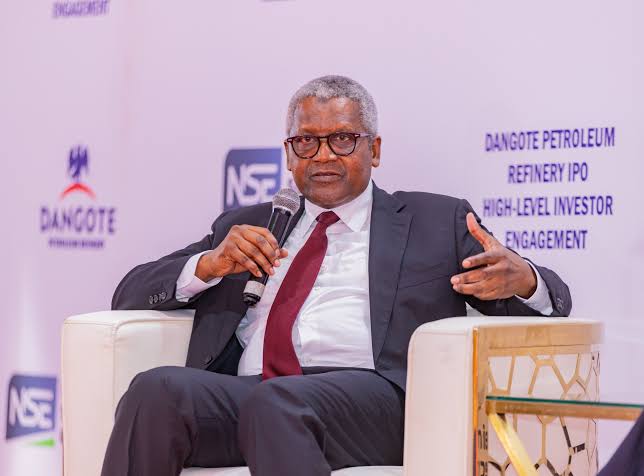
The company says it intends to declare dividends in US dollars, subject to law and financing covenants, and Aliko Dangote told investors at the launch that dividends would be paid in dollars.
No dividend has been declared, and the policy is not a promise. For Kenyan GDR holders, dividends would be converted to shillings and paid net of fees and withholding taxes.
Is It Worth the Price? Experts Disagree
Valuation is where opinions split, so treat any single number with caution:
- Renaissance Capital values the shares at about ₦694 to ₦700, roughly 32% above the offer price. Note that Renaissance is also the adviser behind the Kenyan GDR route, so it has a stake in the deal.
- An independent analyst writing on Substack argues the price assumes margins and expansion outcomes that are too optimistic, putting fair value nearer ₦200.
Neither view is a forecast you can rely on. What the gap shows is how much of the price rests on assumptions about margins, crude supply and the expansion.
How to Buy From Kenya: The GDR Route
You cannot subscribe to the Nigerian shares directly on the NSE. The Capital Markets Authority approved a GDR programme run by Renaissance Capital (Kenya), with Stanbic Bank Kenya as custodian and receiving bank.
Each GDR represents one Dangote share. As of October 2026:
- Price: Sh53.50 per GDR, paid in full when you apply.
- Minimum: 10 GDRs (Ksh 535). It was originally 2,000 GDRs (Ksh 107,000) and was cut after the offer opened.
- Deadline: Tuesday, October 27, 2026, extended from October 13. One notice gives 5:00 p.m.
- How to apply: online at dangotegdr.e-offer.app, by USSD on 483250#, or through a broker. You need a valid CDS account first.
- What happens next: GDRs are credited to your CDS account and are intended to list on the NSE around December 8, 2026, subject to approvals.
Because this route has its own risks (no guaranteed allocation, listing conditional on Nigeria’s SEC, no individual voting rights, currency and tax friction), read our companion guide, “How Kenyan Investors Can Buy Into the Dangote Refinery IPO Through NSE GDRs,” before you apply.
Safety tip: only use the official portal and USSD code above. The offer documents warn that anyone selling “pre-IPO,” “discounted” or “guaranteed allocation” Dangote shares is not part of this offer.
The Direct Route Through Nigeria
Nigerians can subscribe through licensed Nigerian brokers or investment apps using a BVN (bank verification number), a Nigerian bank account and a CSCS account.
For non-Nigerians the picture is unclear: one source says foreign investors can participate through a Nigerian brokerage using a non-resident BVN, while another says foreign nationals generally cannot apply through retail brokers. If you are not Nigerian, confirm with a Nigerian broker before relying on this route. For most Kenyans, the GDR route is the practical one.
If You Miss the Offer
Once Dangote’s shares list on the NGX, and if the GDRs list on the NSE, you can buy after listing like any other share: through a CDS account and a licensed broker for GDRs, or through a Nigerian broker for the shares themselves.
After listing, prices are set by the market, so you may pay more or less than the offer price. The GDR’s price will also differ from the Nigerian price because of currency moves, expenses and Nairobi investor sentiment.
Before You Decide
Read the Kenya GDR Information Memorandum and Dangote’s own prospectus dated September 7, 2026. The CMA has said its approval is not a recommendation. Share prices can go down as well as up, and you could lose some or all of your money. This guide is not investment, legal, or tax advice.



Leave a Reply